Latest action · Jul 30, 2018Placed on Senate Legislative Calendar under General Orders. Calendar No. 548.
Progress
Where this bill reached, and when. A stage with no date
was not reached; one that failed a vote and later carried shows the
date it carried.
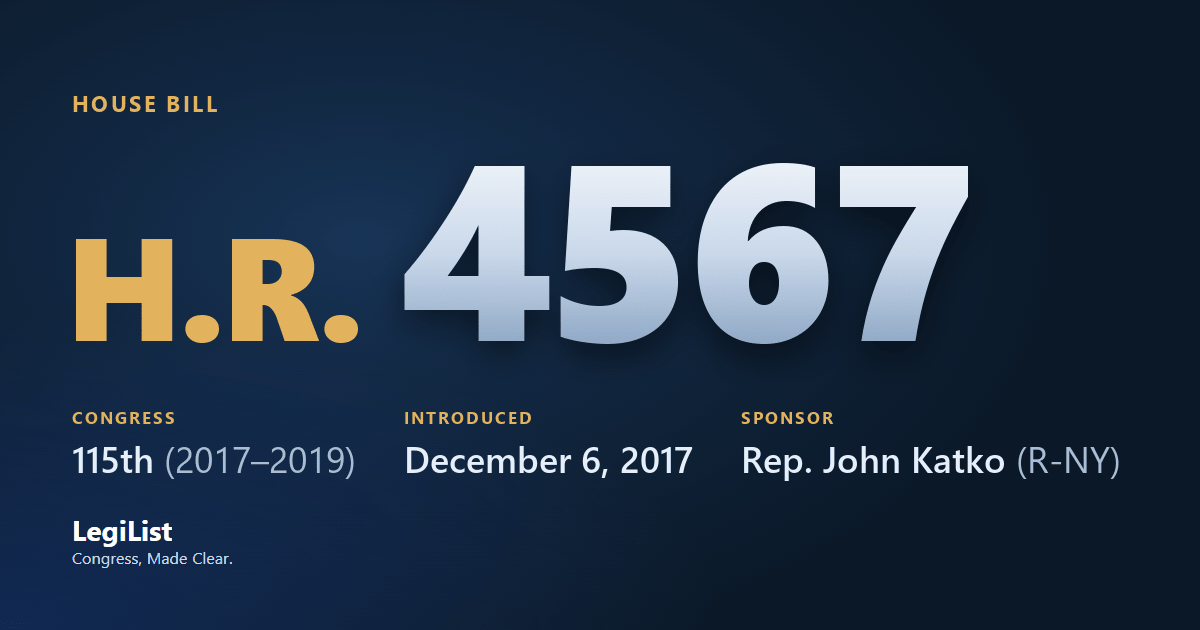
IntroducedDec 6, 2017
Passed HouseJan 10, 2018
Passed SenateNot reached
To the PresidentNot reached
Became lawNot reached
Summary
DHS Overseas Personnel Enhancement Act of 2017
(Sec. 2) This bill directs the Department of Homeland Security (DHS), by 90 days after the submission of the 3-year strategy for DHS international programs required under the National Defense Authorization Act for Fiscal Year 2017 and every 180 days thereafter, to brief the congressional homeland security committees on DHS personnel with primary duties that take place outside of the United States.
The briefing shall include:
a detailed summary of each type of personnel position with such duties and how each such position contributes to DHS's counterterrorism mission,
information related to how the geographic and regional placement of such positions contributes to such mission,
information related to the position-specific training received by such personnel before and during placement at a foreign location,
challenges that may impede the communication of counterterrorism information between DHS personnel at foreign locations and DHS entities in the United States,
the status of efforts to implement the three-year strategy for DHS international programs, and
the status of efforts to implement a plan to enhance the effectiveness of DHS personnel at foreign locations.
(Sec. 3) DHS shall submit to the congressional homeland security committees a plan to enhance the effectiveness of DHS personnel at foreign locations, which shall include proposals to:
improve efforts of DHS personnel for purposes of providing foreign partner capacity development and furthering DHS's counterterrorism mission;
redeploy DHS personnel to respond to changing threats to the United States;
enhance collaboration among DHS personnel at foreign locations, other federal personnel at foreign locations, and foreign partners;
improve the communication of counterterrorism information between DHS personnel at foreign locations and DHS entities in the United States; and
maintain practices to guard against counter-espionage threats associated with DHS personnel.
(Sec. 4) The briefing requirement shall terminate four years after the submission of the three-year strategy for DHS international programs.
Recorded votes 1
Newest first. Open one to see how every member voted.
Days the Record’s own index lists this bill, newest first, with the pages and the members it names. Pages starting H are the House, S the Senate, E Extensions of Remarks.
What has been written about this bill: committee reports, cost estimates,
the sponsor’s authority statement, printed hearings and the Congressional Research Service’s work.
Congress has the power to enact this legislation pursuant to the following: Article 1, Section 8, Clause 18 To make all Laws which shall be necessary and proper for carrying into Execution for the foregoing Powers, and all other Powers vested by this Constitution in the Government of the United States or in any Department or Officer thereof.
The sponsor’s statement, as printed in the Congressional Record, vol. 163, no. 199, December 6, 2017, page H9709.
Titles 5
Every title it has carried, official and short, at each stage.
Official Title as Introduced
To require a Department of Homeland Security overseas personnel enhancement plan, and for other purposes.
Short Titles as Introduced
DHS Overseas Personnel Enhancement Act of 2017
Short Titles as Reported to House
DHS Overseas Personnel Enhancement Act of 2017
Short Titles as Reported to Senate
DHS Overseas Personnel Enhancement Act of 2017
Short Titles as Passed House
DHS Overseas Personnel Enhancement Act of 2017
Subjects
Assigned by the Library of Congress. Policy area: Emergency Management.
Processed by Stripe in a separate window. LegiList never sees card details.
Everything here is as published by Congress: the summary is the
Congressional Research Service's, the action wording is the clerks',
and the subjects are the Library of Congress's. How far it got is read
from the actions themselves, taking the most recent one of each kind,
so a bill that failed a vote and later passed is shown as having passed.
Records come from
this bill on Congress.gov
and govinfo.gov; cost estimates
are the Congressional Budget Office's, and the hearings are the printed
hearings GovInfo publishes, which can appear months after the hearing.