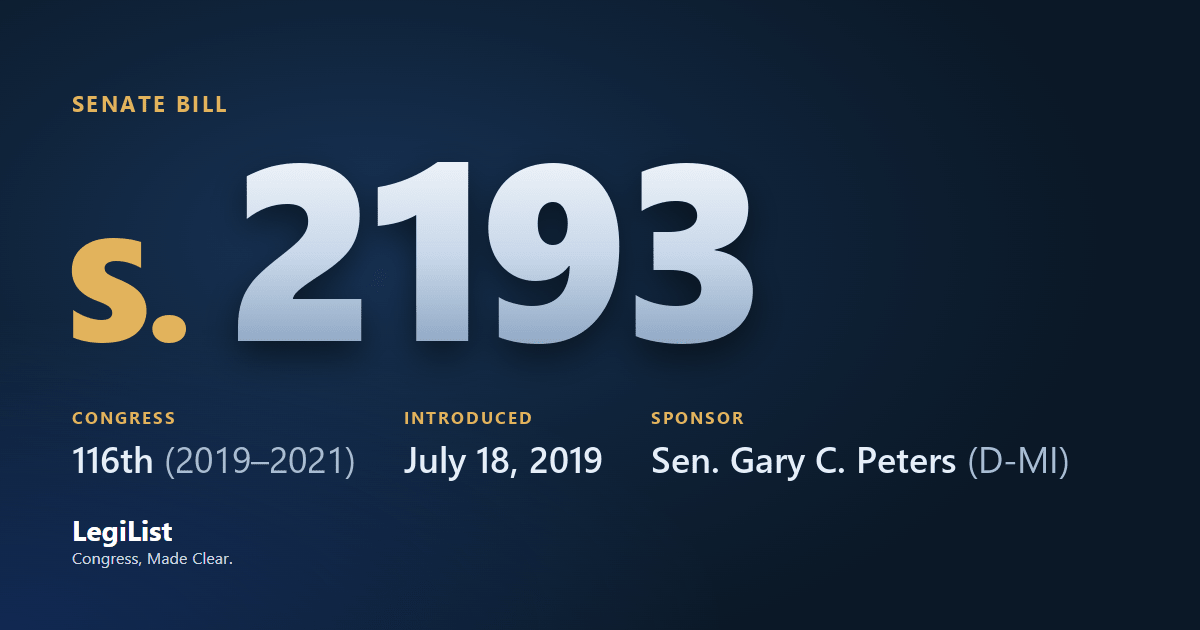
Charging Helps Agencies Realize General Efficiencies Act or the CHARGE Act
This bill requires the General Services Administration to issue (1) guidance to clarify that federal agencies may use a charge card to pay to charge federal electric motor vehicles at commercial charging stations, and (2) a charge card for such payments to each agency for each of the agency's electric motor vehicles.
Recorded votes 1
Newest first. Open one to see how every member voted.
Sep 14, 2020Mrs. Maloney, Carolyn B. moved to suspend the rules and pass the bill.
Sep 14, 2020Considered under suspension of the rules. (consideration: CR H4350-4351)
Sep 14, 2020DEBATE - The House proceeded with forty minutes of debate on S. 2193.
Sep 14, 2020At the conclusion of debate, the Yeas and Nays were demanded and ordered. Pursuant to the provisions of clause 8, rule XX, the Chair announced that further proceedings on the motion would be postponed.
Sep 14, 2020Considered as unfinished business. (consideration: CR H4370-4371)
Sep 14, 2020Passed/agreed to in House: On motion to suspend the rules and pass the bill Agreed to by the Yeas and Nays: (2/3 required): 403 - 2 (Roll no. 184). (text: CR H4350)
Sep 14, 2020Motion to reconsider laid on the table Agreed to without objection.
Nov 26, 2019Received in the House.
Nov 26, 2019Referred to the House Committee on Oversight and Reform.
Nov 25, 2019Message on Senate action sent to the House.
Nov 21, 2019Passed/agreed to in Senate: Passed Senate with amendments by Unanimous Consent. (consideration: CR S6764; text: CR S6764)
Sep 10, 2019Committee on Homeland Security and Governmental Affairs. Reported by Senator Johnson with amendments. With written report No. 116-95.
Sep 10, 2019Placed on Senate Legislative Calendar under General Orders. Calendar No. 199.
Jul 24, 2019Committee on Homeland Security and Governmental Affairs. Ordered to be reported with an amendment favorably.
Jul 18, 2019Introduced in Senate
Jul 18, 2019Read twice and referred to the Committee on Homeland Security and Governmental Affairs.
In the Congressional Record 2
Days the Record’s own index lists this bill, newest first, with the pages and the members it names. Pages starting H are the House, S the Senate, E Extensions of Remarks.
Where
In the Record
Members
Date
House
Debate and remarksH4350, H4351Text printedH4350Recorded votesH4370enactListsH4371Votes recorded by proxy on S. 2193, Charging Helps Agencies Realize General Efficiencies (CHARGE) Act
What has been written about this bill: committee reports, cost estimates,
the sponsor’s authority statement, printed hearings and the Congressional Research Service’s work.
Every title it has carried, official and short, at each stage.
Official Title as Introduced
A bill to require the Administrator of General Services to issue guidance to clarify that Federal agencies may pay by charge card for the charging of Federal electric motor vehicles, and for other purposes.
Short Titles as Passed House
CHARGE Act
Charging Helps Agencies Realize General Efficiencies Act
Short Titles as Enacted
Charging Helps Agencies Realize General Efficiencies Act
CHARGE Act
Short Title(s) as Introduced
CHARGE Act
Charging Helps Agencies Realize General Efficiencies Act
Short Title(s) as Reported to Senate
Charging Helps Agencies Realize General Efficiencies Act
CHARGE Act
Short Title(s) as Passed Senate
CHARGE Act
Charging Helps Agencies Realize General Efficiencies Act
Short Titles from ENR (Enrolled) bill text
CHARGE Act
Charging Helps Agencies Realize General Efficiencies Act
Short Titles from RFH (Referred to House) bill text
CHARGE Act
Charging Helps Agencies Realize General Efficiencies Act
Subjects
Assigned by the Library of Congress. Policy area: Government Operations and Politics.
Processed by Stripe in a separate window. LegiList never sees card details.
Other amounts
Everything here is as published by Congress: the summary is the
Congressional Research Service's, the action wording is the clerks',
and the subjects are the Library of Congress's. How far it got is read
from the actions themselves, taking the most recent one of each kind,
so a bill that failed a vote and later passed is shown as having passed.
Records come from
this bill on Congress.gov
and govinfo.gov; cost estimates
are the Congressional Budget Office's, and the hearings are the printed
hearings GovInfo publishes, which can appear months after the hearing.