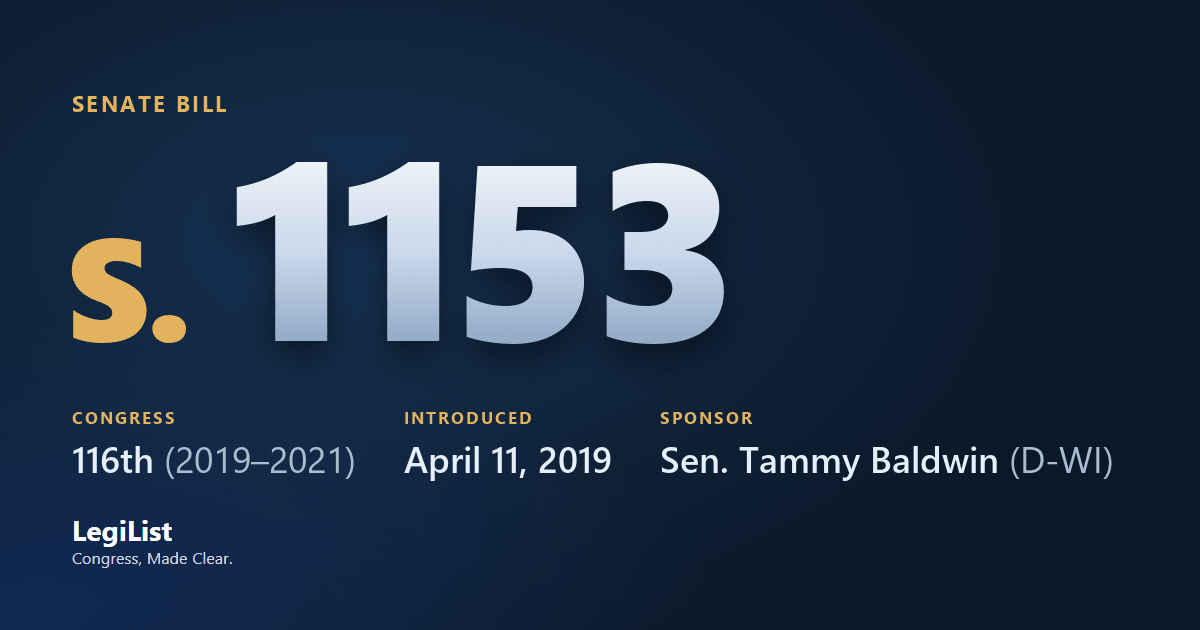
Stop Student Debt Relief Scams Act of 2019
Latest action · Dec 22, 2020 Became Public Law No: 116-251.
Progress
Where this bill reached, and when. A stage with no date was not reached; one that failed a vote and later carried shows the date it carried.
- IntroducedApr 11, 2019
- Passed SenateDec 1, 2020
- Passed HouseDec 7, 2020
- To the PresidentDec 11, 2020
- Became lawDec 22, 2020Public Law 116-251
Summary
Stop Student Debt Relief Scams Act of 2019
This bill establishes criminal penalties for unauthorized access of certain student loan information and expands the requirements for student loan exit counseling.
Specifically, the bill makes it a crime to knowingly use an access device (e.g., account number) that was issued to another person or was fraudulently obtained to access Department of Education (ED) information technology systems for commercial advantage or private financial gain. A violator is subject to criminal penalties—a fine, a prison term of up to five years, or both.
Further, the bill expands loan exit counseling requirements to require an institution of higher education that participates in federal student-aid programs to provide an explanation to borrowers cautioning them about third-party student debt relief companies.
It also requires ED to prevent unauthorized access to the central database for student aid (i.e., the National Student Loan Data System) and warn borrowers of suspicious activity regarding their student loan accounts.
Cosponsors 8
Members who signed on, in the order they did. Signatures ran from Apr 11, 2019 to Nov 18, 2020; 3 are original cosponsors, there from the day it was introduced.
| Seat | Cosponsor | Signed on | |
|---|---|---|---|
| R-NE | Deb Fischer | Original | Apr 11, 2019 |
| D-NH | Jeanne Shaheen | Original | Apr 11, 2019 |
| R-IN | Mike Braun | Original | Apr 11, 2019 |
| R-TN | Lamar Alexander | Dec 9, 2019 | |
| R-NC | Richard Burr | Dec 18, 2019 | |
| D-NH | Margaret Wood Hassan | Jan 6, 2020 | |
| D-DE | Christopher A. Coons | Jun 15, 2020 | |
| D-MN | Amy Klobuchar | Nov 18, 2020 |
Committees 1
Where it was sent and what each committee and subcommittee did with it, in order.
| Chamber | Committee | What it did |
|---|---|---|
| Senate | Health, Education, Labor, and Pensions Committee | Referred Apr 11, 2019Discharged Dec 1, 2020 |
Actions 16
Everything that happened, newest first.
- Dec 22, 2020Signed by President.
- Dec 22, 2020Became Public Law No: 116-251.
- Dec 11, 2020Presented to President.
- Dec 7, 2020Ms. Stevens moved to suspend the rules and pass the bill.
- Dec 7, 2020Considered under suspension of the rules. (consideration: CR H6880-6883)
- Dec 7, 2020DEBATE - The House proceeded with forty minutes of debate on S. 1153.
- Dec 7, 2020Passed/agreed to in House: On motion to suspend the rules and pass the bill Agreed to by voice vote. (text: CR H6881)
- Dec 7, 2020Motion to reconsider laid on the table Agreed to without objection.
- Dec 2, 2020Message on Senate action sent to the House.
- Dec 2, 2020Received in the House.
- Dec 2, 2020Held at the desk.
- Dec 1, 2020Senate Committee on Health, Education, Labor, and Pensions discharged by Unanimous Consent.(consideration: CR S7141-7142)
- Dec 1, 2020Senate Committee on Health, Education, Labor, and Pensions discharged by Unanimous Consent. (consideration: CR S7141-7142)
- Dec 1, 2020Passed/agreed to in Senate: Passed Senate without amendment by Unanimous Consent. (text: CR S7141-7142)
- Apr 11, 2019Introduced in Senate
- Apr 11, 2019Read twice and referred to the Committee on Health, Education, Labor, and Pensions.
In the Congressional Record 2
Days the Record’s own index lists this bill, newest first, with the pages and the members it names. Pages starting H are the House, S the Senate, E Extensions of Remarks.
| Where | In the Record | Members | Date |
|---|---|---|---|
| House | Debate and remarks H6880–H6883Text printed H6881 | Haley M. Stevens D-MI, Lloyd Smucker R-PA, Sheila Jackson Lee D-TX | Dec 7, 2020 |
| Senate | Debate and remarks S7141Text printed S7141 | Mitch McConnell R-KY | Dec 1, 2020 |
Research
What has been written about this bill: committee reports, cost estimates, the sponsor’s authority statement, printed hearings and the Congressional Research Service’s work.
CRS reports 2
Congressional Research Service work that CRS links to this bill or the law it became, newest first.
Cite it 2
Products on other subjects that cite it, usually among other measures.
| Product | Title | Kind | Published |
|---|---|---|---|
| R46143 | The Office of Federal Student Aid as a Performance-Based Organization | Report | Dec 4, 2025 |
| IF10853 | Chemical Facility Anti-Terrorism Standards Archived | Resource | Feb 14, 2020 |
Related bills 1
Companion bills and other measures the record links to this one.
| Bill | Title | Relationship | Latest action |
|---|---|---|---|
| HR 2888 | Stop Student Debt Relief Scams Act of 2019 | Identical bill | May 22, 2019 |
Titles 5
Every title it has carried, official and short, at each stage.
- Official Title as Introduced
- A bill to explicitly make unauthorized access to Department of Education information technology systems and the misuse of identification devices issued by the Department of Education a criminal act.
- Short Titles as Passed House
- Stop Student Debt Relief Scams Act of 2019
- Short Title(s) as Introduced
- Stop Student Debt Relief Scams Act of 2019
- Short Title(s) as Passed Senate
- Stop Student Debt Relief Scams Act of 2019
- Short Titles from ENR (Enrolled) bill text
- Stop Student Debt Relief Scams Act of 2019
Subjects
Assigned by the Library of Congress. Policy area: Education.
- Computer security and identity theft
- Computers and information technology
- Consumer affairs
- Education
- Fraud offenses and financial crimes
- Government information and archives
- Government lending and loan guarantees
- Higher education
- Performance measurement
- Public contracts and procurement
- Student aid and college costs
Text 3
Each version as it was printed, newest first.
- —Enrolled Bill
- Dec 1, 2020Engrossed in Senate
- Apr 11, 2019Introduced in Senate
Everything here is as published by Congress: the summary is the Congressional Research Service's, the action wording is the clerks', and the subjects are the Library of Congress's. How far it got is read from the actions themselves, taking the most recent one of each kind, so a bill that failed a vote and later passed is shown as having passed. Records come from this bill on Congress.gov and govinfo.gov; cost estimates are the Congressional Budget Office's, and the hearings are the printed hearings GovInfo publishes, which can appear months after the hearing.