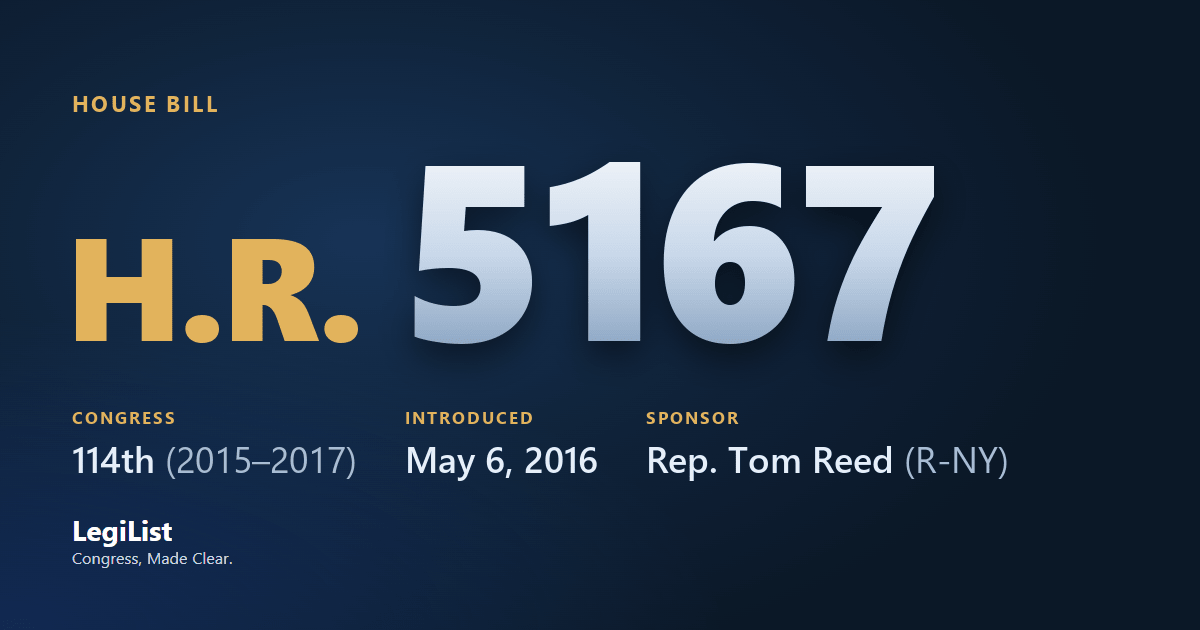
Technologies for Energy Security Act
Latest action · May 6, 2016 Referred to the House Committee on Ways and Means.
Progress
Where this bill reached, and when. A stage with no date was not reached; one that failed a vote and later carried shows the date it carried.
- IntroducedMay 6, 2016
- Passed HouseNot reached
- Passed SenateNot reached
- To the PresidentNot reached
- Became lawNot reached
Summary
Technologies for Energy Security Act
This bill amends the Internal Revenue Code to extend and modify the tax credits for residential energy efficient property and investments in energy property.
The bill modifies the tax credit for residential energy efficient property to extend through 2021 the credits for expenditures for fuel cell property, small wind energy property, and geothermal heat pump property. For each extended credit, the bill phases out the current credit rate of 30% of expenditures by reducing it to 26% or 22%, depending on the date that the property is placed in service.
The bill extends the tax credit for investments in energy property for the following property with construction that begins before January 1, 2022:
- fiber-optic solar energy property,
- fuel cell property,
- microturbine property,
- combined heat and power system property,
- small wind energy property, and
- thermal energy property.
The bill phases out the current credit rate of 30% for investments in fuel cell property, small wind energy property, and fiber-optic solar energy property by reducing it to 26% or 22%, depending on the date that the property is placed in service.
Cosponsors 40
Members who signed on, in the order they did. Signatures ran from May 6, 2016 to Dec 1, 2016, with 3 there on the day it was introduced.
| Seat | Cosponsor | Signed on | |
|---|---|---|---|
| D-OR | Earl Blumenauer | Original | May 6, 2016 |
| D-CA | Mike Thompson | Original | May 6, 2016 |
| R-PA | Patrick Meehan | Original | May 6, 2016 |
| R-OH | James B. Renacci | May 18, 2016 | |
| D-NY | Paul Tonko | May 18, 2016 | |
| R-NY | Christopher P. Gibson | May 23, 2016 | |
| D-CT | John B. Larson | May 23, 2016 | |
| D-WI | Ron Kind | Jun 22, 2016 | |
| R-OH | Steve Stivers | Jun 22, 2016 | |
| D-NY | Brian Higgins | Jun 28, 2016 | |
| R-NY | Elise M. Stefanik | Jun 28, 2016 | |
| D-CT | Elizabeth H. Esty | Jun 28, 2016 | |
| R-OK | Tom Cole | Jun 28, 2016 | |
| R-WA | David G. Reichert | Jul 5, 2016 | |
| R-OH | Bob Gibbs | Jul 6, 2016 | |
| R-IA | Rod Blum | Jul 8, 2016 | |
| R-MT | Ryan K. Zinke | Jul 11, 2016 | |
| R-MN | Tom Emmer | Jul 12, 2016 | |
| R-NH | Frank C. Guinta | Jul 13, 2016 | |
| R-PA | Ryan A. Costello | Jul 14, 2016 | |
| D-CA | Alan S. Lowenthal | Sep 6, 2016 | |
| R-ND | Kevin Cramer | Sep 6, 2016 | |
| D-AZ | Ruben Gallego | Sep 6, 2016 | |
| D-NY | Charles B. Rangel | Sep 7, 2016 | |
| R-TX | Lamar Smith | Sep 13, 2016 | |
| R-UT | Mia B. Love | Sep 13, 2016 | |
| D-MN | Timothy J. Walz | Sep 13, 2016 | |
| D-CA | Tony Cárdenas | Sep 15, 2016 | |
| R-SC | Jeff Duncan | Sep 21, 2016 | |
| D-IA | David Loebsack | Sep 28, 2016 | |
| D-CA | Jared Huffman | Sep 28, 2016 | |
| D-WI | Mark Pocan | Sep 28, 2016 | |
| R-IL | Darin LaHood | Nov 14, 2016 | |
| R-NJ | Frank A. LoBiondo | Nov 14, 2016 | |
| R-ID | Michael K. Simpson | Nov 14, 2016 | |
| D-HI | Tulsi Gabbard | Nov 14, 2016 | |
| D-ME | Chellie Pingree | Nov 29, 2016 | |
| R-IN | Todd Rokita | Nov 29, 2016 | |
| R-OK | Markwayne Mullin | Nov 30, 2016 | |
| D-CA | Zoe Lofgren | Dec 1, 2016 |
Actions 2
Everything that happened, newest first.
- May 6, 2016Introduced in House
- May 6, 2016Referred to the House Committee on Ways and Means.
Related bills 2
Companion bills and other measures the record links to this one.
| Bill | Title | Relationship | Latest action |
|---|---|---|---|
| HR 2412 | New Energy for America Act | Related bill | May 19, 2015 |
| HR 5172 | To amend the Internal Revenue Code of 1986 to extend and phaseout the energy credit for certain property. | Related bill | May 6, 2016 |
Subjects
Assigned by the Library of Congress. Policy area: Taxation.
Text 1
Each version as it was printed, newest first.
- May 6, 2016Introduced in House
Everything here is as published by Congress: the summary is the Congressional Research Service's, the action wording is the clerks', and the subjects are the Library of Congress's. How far it got is read from the actions themselves, taking the most recent one of each kind, so a bill that failed a vote and later passed is shown as having passed. Records come from this bill on Congress.gov and govinfo.gov.