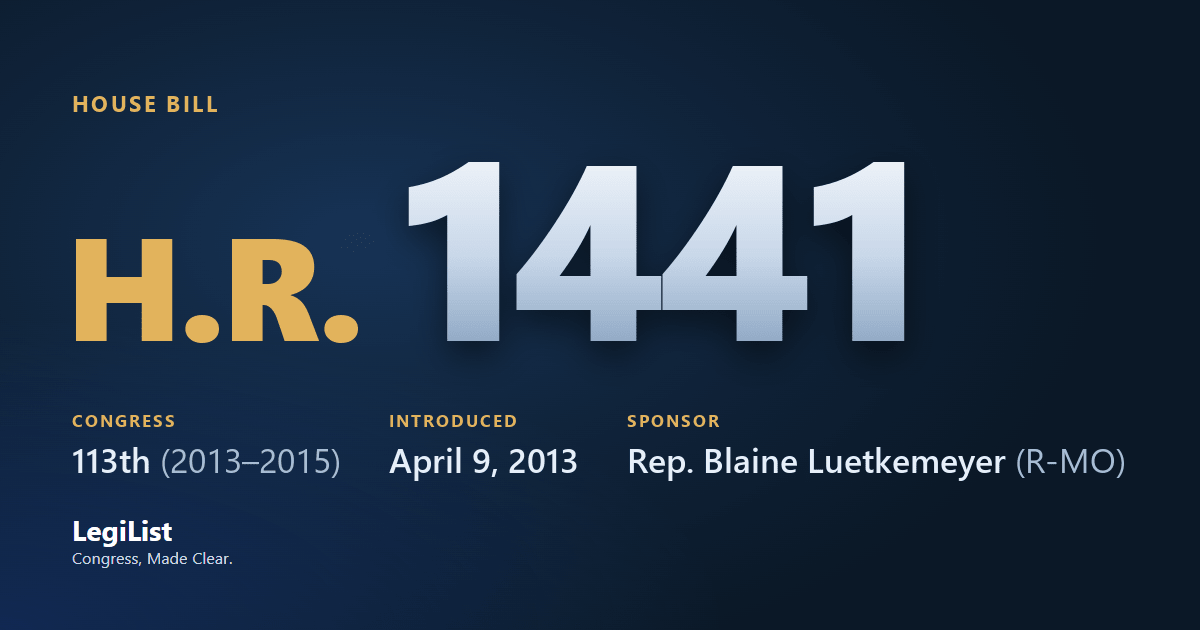
Electronic Life Safety and Security Systems Federal Background Check Act of 2013
Latest action · Apr 30, 2013 Referred to the Subcommittee on Crime, Terrorism, Homeland Security, and Investigations.
Progress
Where this bill reached, and when. A stage with no date was not reached; one that failed a vote and later carried shows the date it carried.
- IntroducedApr 9, 2013
- Passed HouseNot reached
- Passed SenateNot reached
- To the PresidentNot reached
- Became lawNot reached
Summary
Electronic Life Safety and Security Systems Federal Background Check Act of 2013 - Directs the Attorney General to establish a method to permit employers in the electronic life safety and security systems industry to request a fitness determination based on state and federal fingerprint-based criminal history background checks.
Requires the Attorney General to:
- inform such employers about how to request background checks;
- complete a check of the national criminal history records system;
- establish procedures for the secure receipt of criminal history records;
- make determinations regarding whether the criminal history records received in response to a background check indicate a criminal history that may bear on the employee's or prospective employee's fitness for employment in such industry based on whether that individual has, during the preceding 10 years, been convicted of or imprisoned for a felony or an offense involving dishonesty, false statement, or the use of force against another;
- convey such fitness determination to the employer requesting the background check;
- provide an affected employee or prospective employee his or her criminal history records and notification of the right to challenge the accuracy or completeness of such records or to withdraw consent to participate in the determination;
- collect fees from employers to offset fitness determination costs; and
- issue regulations to ensure the enforcement of nondisclosure requirements for criminal history records.
Cosponsors 11
Members who signed on, in the order they did. Signatures ran from Apr 9, 2013 to May 19, 2014; 1 is an original cosponsor, there from the day it was introduced.
| Seat | Cosponsor | Signed on | |
|---|---|---|---|
| D-ME | Michael H. Michaud | Original | Apr 9, 2013 |
| R-NC | Howard Coble | Apr 11, 2013 | |
| R-MN | Erik Paulsen | May 16, 2013 | |
| R-TX | Blake Farenthold | May 17, 2013 | |
| R-LA | Bill Cassidy | Jun 11, 2013 | |
| R-PA | Lou Barletta | Jul 18, 2013 | |
| R-ND | Kevin Cramer | Dec 19, 2013 | |
| D-NY | Steve Israel | Apr 30, 2014 | |
| D-NJ | Bill Pascrell, Jr. | May 1, 2014 | |
| D-MN | Betty McCollum | May 9, 2014 | |
| R-NC | Mark Meadows | May 19, 2014 |
Committees 1
Where it was sent and what each committee and subcommittee did with it, in order.
| Chamber | Committee | What it did |
|---|---|---|
| House | Judiciary Committee | Referred Apr 9, 2013 |
| Crime and Federal Government Surveillance Subcommittee | Referred Apr 30, 2013 |
Actions 3
Everything that happened, newest first.
- Apr 30, 2013Referred to the Subcommittee on Crime, Terrorism, Homeland Security, and Investigations.
- Apr 9, 2013Introduced in House
- Apr 9, 2013Referred to the House Committee on the Judiciary.
Research
What has been written about this bill: committee reports, cost estimates, the sponsor’s authority statement, printed hearings and the Congressional Research Service’s work.
Constitutional authority
The sponsor’s statement, as printed in the page H1859.
Titles 2
Every title it has carried, official and short, at each stage.
- Official Title as Introduced
- To provide for background checks of persons working in the electronic life safety and security systems industry, and for other purposes.
- Short Titles as Introduced
- Electronic Life Safety and Security Systems Federal Background Check Act of 2013
Subjects
Assigned by the Library of Congress. Policy area: Crime and Law Enforcement.
Text 1
Each version as it was printed, newest first.
- Apr 9, 2013Introduced in House
Everything here is as published by Congress: the summary is the Congressional Research Service's, the action wording is the clerks', and the subjects are the Library of Congress's. How far it got is read from the actions themselves, taking the most recent one of each kind, so a bill that failed a vote and later passed is shown as having passed. Records come from this bill on Congress.gov and govinfo.gov; cost estimates are the Congressional Budget Office's, and the hearings are the printed hearings GovInfo publishes, which can appear months after the hearing.