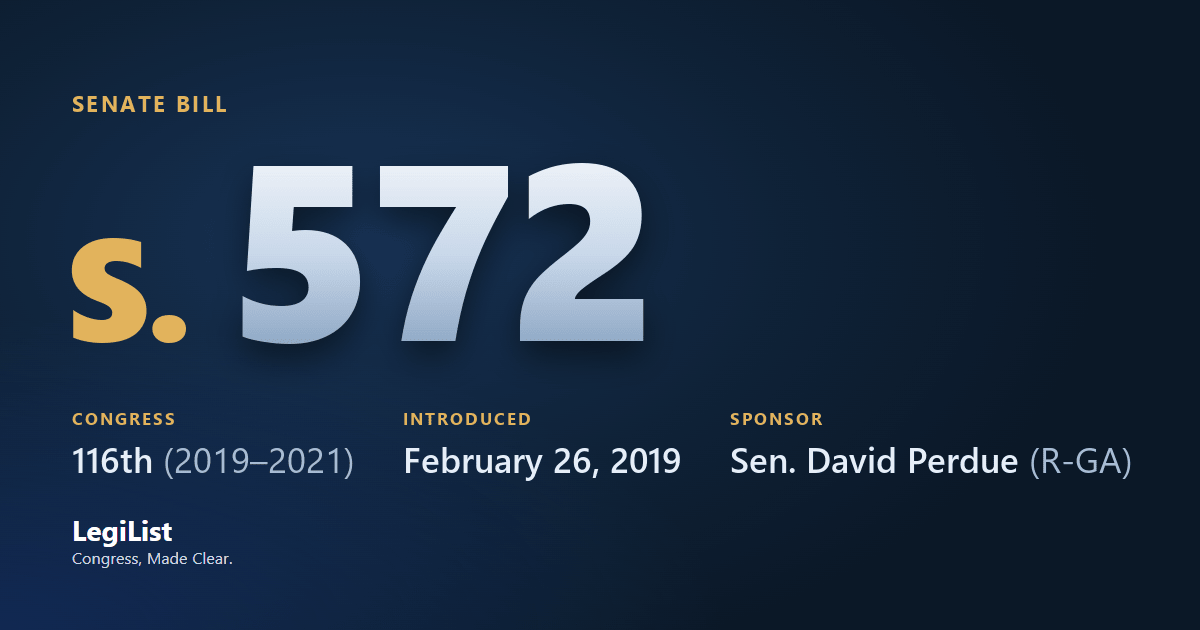
Additional Supplemental Appropriations for Disaster Relief, 2019
Latest action · Feb 26, 2019 Read twice and referred to the Committee on Appropriations.
Progress
Where this bill reached, and when. A stage with no date was not reached; one that failed a vote and later carried shows the date it carried.
- IntroducedFeb 26, 2019
- Passed SenateNot reached
- Passed HouseNot reached
- To the PresidentNot reached
- Became lawNot reached
Summary
Additional Supplemental Appropriations for Disaster Relief, 2019
This bill provides FY2019 supplemental appropriations to several federal departments and agencies for expenses related to the consequences of recent wildfires, hurricanes, volcanos, earthquakes, typhoons, and other natural disasters.
The funding provided by this bill is designated as emergency spending, which is exempt from discretionary spending limits and other budget enforcement rules.
The bill includes appropriations for
- the Department of Agriculture,
- the Department of Commerce,
- the Department of Justice,
- the Department of Defense,
- the U.S. Army Corps of Engineers,
- the Department of the Interior,
- the U.S. Coast Guard,
- the Environmental Protection Agency,
- the Forest Service,
- the Department of Health and Human Services,
- the Department of Labor,
- the Department of Education,
- the Government Accountability Office,
- the Department of Veterans Affairs,
- the Department of Transportation, and
- the Department of Housing and Urban Development.
Cosponsors 8
Members who signed on, in the order they did. Signatures ran from Feb 26, 2019 to Feb 27, 2019; 7 are original cosponsors, there from the day it was introduced.
| Seat | Cosponsor | Signed on | |
|---|---|---|---|
| R-AK | Dan Sullivan | Original | Feb 26, 2019 |
| D-AL | Doug Jones | Original | Feb 26, 2019 |
| R-GA | Johnny Isakson | Original | Feb 26, 2019 |
| R-FL | Marco Rubio | Original | Feb 26, 2019 |
| R-FL | Rick Scott | Original | Feb 26, 2019 |
| R-NC | Thom Tillis | Original | Feb 26, 2019 |
| R-SC | Tim Scott | Original | Feb 26, 2019 |
| R-SC | Lindsey Graham | Feb 27, 2019 |
Committees 1
Where it was sent and what each committee and subcommittee did with it, in order.
| Chamber | Committee | What it did |
|---|---|---|
| Senate | Appropriations Committee | Referred Feb 26, 2019 |
Actions 2
Everything that happened, newest first.
- Feb 26, 2019Introduced in Senate
- Feb 26, 2019Read twice and referred to the Committee on Appropriations.
In the Congressional Record 2
Days the Record’s own index lists this bill, newest first, with the pages and the members it names. Pages starting H are the House, S the Senate, E Extensions of Remarks.
| Where | In the Record | Members | Date |
|---|---|---|---|
| Senate | Debate and remarks S1573 | Patrick J. Leahy D-VT | Feb 28, 2019 |
| Senate | Debate and remarks S1522 | David Perdue R-GA | Feb 27, 2019 |
Related bills 3
Companion bills and other measures the record links to this one.
| Bill | Title | Relationship | Latest action |
|---|---|---|---|
| HR 268 | Supplemental Appropriations Act, 2019 | Related bill | Apr 1, 2019 |
| S 811 | Additional Supplemental Appropriations for Border Security and Disaster Relief, 2019 | Related bill | Mar 14, 2019 |
| HR 2157 | Additional Supplemental Appropriations for Disaster Relief Act, 2019 | Related bill | Jun 6, 2019 |
Titles 2
Every title it has carried, official and short, at each stage.
- Official Title as Introduced
- A bill to provide for additional supplemental appropriations for disaster relief.
- Short Title(s) as Introduced
- Additional Supplemental Appropriations for Disaster Relief, 2019
Subjects
Assigned by the Library of Congress. Policy area: Emergency Management.
- Accounting and auditing
- Agricultural marketing and promotion
- Agricultural prices, subsidies, credit
- Agricultural research
- Appropriations
- Army Corps of Engineers
- Atmospheric science and weather
- Aviation and airports
- Child safety and welfare
- Coast guard
- Congressional agencies
- Congressional oversight
- Correctional facilities and imprisonment
- Defense spending
- Department of Agriculture
- Department of Commerce
- Department of Defense
- Department of Education
- Department of Energy
- Department of Health and Human Services
- Department of Homeland Security
- Department of Housing and Urban Development
- Department of Justice
- Department of Labor
- Department of the Interior
- Department of Transportation
- Department of Veterans Affairs
- Disaster relief and insurance
- Economic development
- Education programs funding
- Electric power generation and transmission
- Elementary and secondary education
- Emergency Management
- Employment and training programs
- Environmental health
- Environmental Protection Agency (EPA)
- Executive agency funding and structure
- Family services
- Fires
- Floods and storm protection
- Forests, forestry, trees
- Government Accountability Office (GAO)
- Government studies and investigations
- Government trust funds
- Health facilities and institutions
- Health programs administration and funding
- Historic sites and heritage areas
- Housing and community development funding
- Law enforcement administration and funding
- Law enforcement officers
- Lawyers and legal services
- Legal Services Corporation
- Marine and coastal resources, fisheries
- Medical research
- Mental health
- Military facilities and property
- Mississippi River
- National Guard and reserves
- National Institutes of Health (NIH)
- Natural disasters
- Oil and gas
- Parks, recreation areas, trails
- Public contracts and procurement
- Public transit
- Research administration and funding
- Roads and highways
- Rural conditions and development
- Solid waste and recycling
- Transportation programs funding
- U.S. territories and protectorates
- Utah
- Veterans' medical care
- Water quality
- Water resources funding
- Water use and supply
- Watersheds
Text 1
Each version as it was printed, newest first.
- Feb 26, 2019Introduced in Senate
Everything here is as published by Congress: the summary is the Congressional Research Service's, the action wording is the clerks', and the subjects are the Library of Congress's. How far it got is read from the actions themselves, taking the most recent one of each kind, so a bill that failed a vote and later passed is shown as having passed. Records come from this bill on Congress.gov and govinfo.gov; cost estimates are the Congressional Budget Office's, and the hearings are the printed hearings GovInfo publishes, which can appear months after the hearing.