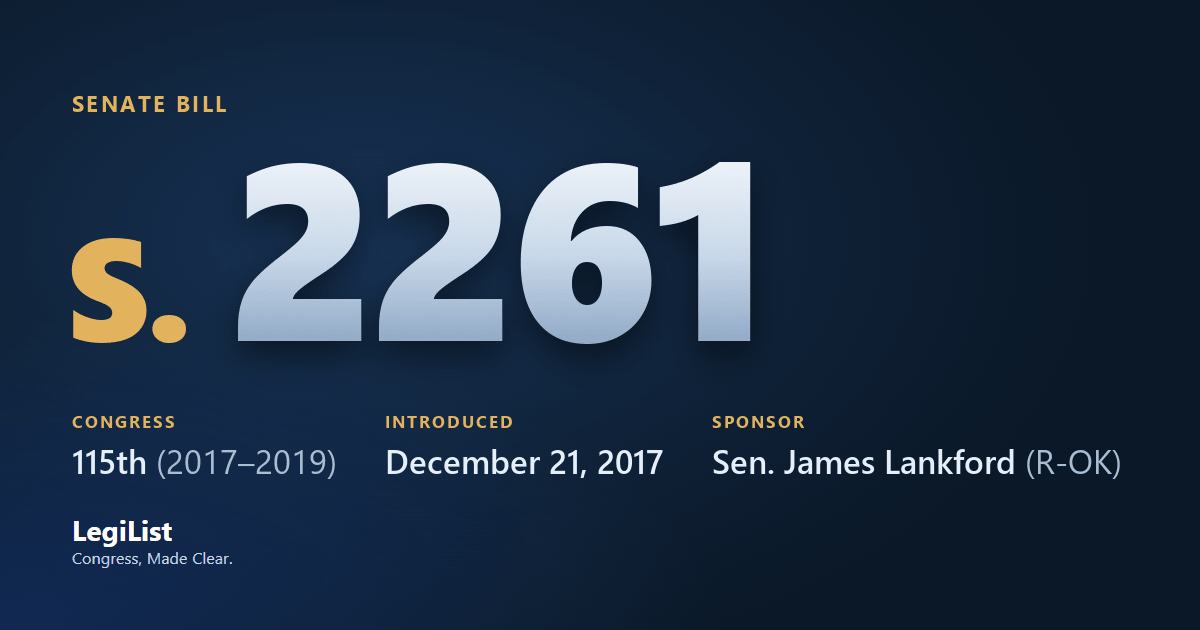
Secure Elections Act
Latest action · Jun 20, 2018 Committee on Rules and Administration. Hearings held. Hearings printed: S.Hrg. 115-648.
Progress
Where this bill reached, and when. A stage with no date was not reached; one that failed a vote and later carried shows the date it carried.
- IntroducedDec 21, 2017
- Passed SenateNot reached
- Passed HouseNot reached
- To the PresidentNot reached
- Became lawNot reached
Summary
Secure Elections Act
This bill gives the Department of Homeland Security (DHS) primary responsibility within the federal government for sharing information about election cybersecurity incidents, threats, and vulnerabilities with federal entities and election agencies.
DHS shall establish an advisory panel of independent experts to develop guidelines on election cybersecurity, including standards for procuring, maintaining, testing, auditing, operating, and updating election systems.
DHS shall award election system cybersecurity and modernization grants to states to implement the advisory panel's guidelines. Grants shall be awarded to: (1) remediate vulnerabilities identified by a cybersecurity evaluation, (2) replace electronic voting systems that are not optical scanners that read paper ballots, and (3) reimburse states for the inspection of marked paper ballots.
DHS shall establish a Hack the Election program, including a recurring competition, to facilitate and encourage the identification and reporting of election cybersecurity vulnerabilities by independent technical experts.
Cosponsors 5
Members who signed on, in the order they did. All signed on Dec 21, 2017.
| Seat | Cosponsor | Signed on | |
|---|---|---|---|
| D-MN | Amy Klobuchar | Original | Dec 21, 2017 |
| D-CA | Kamala D. Harris | Original | Dec 21, 2017 |
| R-SC | Lindsey Graham | Original | Dec 21, 2017 |
| D-NM | Martin Heinrich | Original | Dec 21, 2017 |
| R-ME | Susan M. Collins | Original | Dec 21, 2017 |
Committees 1
Where it was sent and what each committee and subcommittee did with it, in order.
| Chamber | Committee | What it did |
|---|---|---|
| Senate | Rules and Administration Committee | Referred Dec 21, 2017Hearings Jun 20, 2018 |
Actions 3
Everything that happened, newest first.
- Jun 20, 2018Committee on Rules and Administration. Hearings held. Hearings printed: S.Hrg. 115-648.
- Dec 21, 2017Introduced in Senate
- Dec 21, 2017Read twice and referred to the Committee on Rules and Administration.
In the Congressional Record 4
Days the Record’s own index lists this bill, newest first, with the pages and the members it names. Pages starting H are the House, S the Senate, E Extensions of Remarks.
| Where | In the Record | Members | Date |
|---|---|---|---|
| Senate | Debate and remarks S5821 | James Lankford R-OK | Aug 22, 2018 |
| Senate | Debate and remarks S1374 | Amy Klobuchar D-MN | Mar 6, 2018 |
| Senate | Debate and remarks S671, S672 | Amy Klobuchar D-MN | Feb 7, 2018 |
| Senate | Debate and remarks S145 | Charles E. Schumer D-NY | Jan 11, 2018 |
Research
What has been written about this bill: committee reports, cost estimates, the sponsor’s authority statement, printed hearings and the Congressional Research Service’s work.
CRS reports 3
Congressional Research Service work that CRS links to this bill or the law it became, newest first.
Cite it 3
Products on other subjects that cite it, usually among other measures.
| Product | Title | Kind | Published |
|---|---|---|---|
| IF11286 | Election Security: Federal Funding for Securing Election Systems | Resource | Apr 20, 2026 |
| IF11962 | Establishing and Funding Elections Grant Programs: Policy Options | Resource | Apr 20, 2026 |
| R46646 | Election Administration: Federal Grant Programs for States and Localities | Report | Apr 20, 2026 |
Related bills 3
Companion bills and other measures the record links to this one.
| Bill | Title | Relationship | Latest action |
|---|---|---|---|
| S 2593 | Secure Elections Act | Related bill | Mar 22, 2018 |
| HR 6188 | Prevent Election Hacking Act of 2018 | Related bill | Jun 21, 2018 |
| HR 6663 | Secure Elections Act | Related bill | Aug 10, 2018 |
Titles 2
Every title it has carried, official and short, at each stage.
- Official Title as Introduced
- A bill to protect the administration of Federal elections against cybersecurity threats.
- Short Titles as Introduced
- Secure Elections Act
Subjects
Assigned by the Library of Congress. Policy area: Government Operations and Politics.
- Accounting and auditing
- Advisory bodies
- Computer security and identity theft
- Congressional oversight
- Department of Homeland Security
- Elections, voting, political campaign regulation
- Government ethics and transparency, public corruption
- Government information and archives
- Government Operations and Politics
- Government studies and investigations
- Intelligence activities, surveillance, classified information
- Intergovernmental relations
- Public participation and lobbying
- Right of privacy
- Sanctions
- State and local government operations
- Subversive activities
- Technology assessment
Text 1
Each version as it was printed, newest first.
- Dec 21, 2017Introduced in Senate
Support LegiList
This page is free, carries no paywall, and is built and maintained by one person. If the record here is useful to you, a few dollars keeps it going.
Everything here is as published by Congress: the summary is the Congressional Research Service's, the action wording is the clerks', and the subjects are the Library of Congress's. How far it got is read from the actions themselves, taking the most recent one of each kind, so a bill that failed a vote and later passed is shown as having passed. Records come from this bill on Congress.gov and govinfo.gov; cost estimates are the Congressional Budget Office's, and the hearings are the printed hearings GovInfo publishes, which can appear months after the hearing.