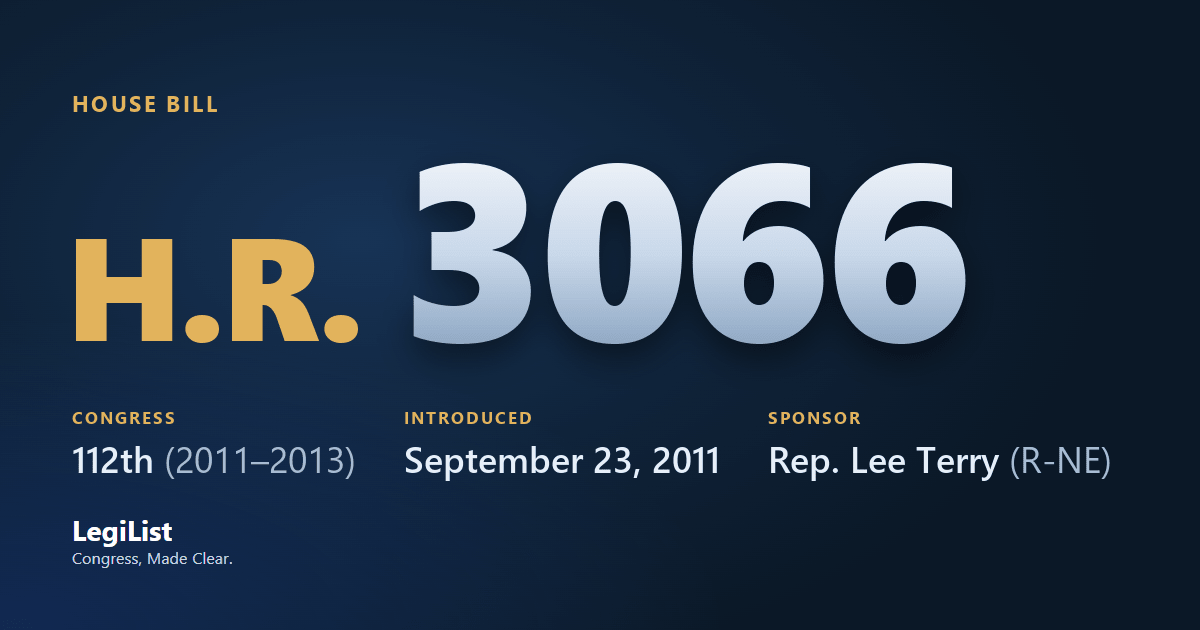
Companionship Exemption Protection Act
Latest action · Sep 23, 2011 Referred to the House Committee on Education and the Workforce.
Progress
Where this bill reached, and when. A stage with no date was not reached; one that failed a vote and later carried shows the date it carried.
- IntroducedSep 23, 2011
- Passed HouseNot reached
- Passed SenateNot reached
- To the PresidentNot reached
- Became lawNot reached
Summary
Companionship Exemption Protection Act - Amends the Fair Labor Standards Act of 1938, with respect to the exemption from minimum wage and maximum hour requirements of domestic service employment to provide companionship services for individuals who because of age or infirmity are unable to care for themselves, to specify that such companionship services include third party non-medical in-home care companionship, light housekeeping, meal preparation, errands, assistance to appointments, laundry, medication reminders, bathing, and assistance with incontinence and grooming.
Cosponsors 23
Members who signed on, in the order they did. Signatures ran from Oct 6, 2011 to May 31, 2012.
| Seat | Cosponsor | Signed on | |
|---|---|---|---|
| R-LA | Jeffrey M. Landry | Oct 6, 2011 | |
| R-TX | Ron Paul | Oct 24, 2011 | |
| R-MS | Gregg Harper | Oct 25, 2011 | |
| R-MS | Alan Nunnelee | Nov 1, 2011 | |
| R-GA | Lynn A. Westmoreland | Nov 3, 2011 | |
| R-NE | Adrian Smith | Nov 16, 2011 | |
| R-WI | Thomas E. Petri | Nov 29, 2011 | |
| R-TN | Scott DesJarlais | Dec 7, 2011 | |
| R-IN | Larry Bucshon | Dec 12, 2011 | |
| R-PA | Lou Barletta | Dec 16, 2011 | |
| R-IN | Todd Rokita | Jan 23, 2012 | |
| R-SD | Kristi L. Noem | Feb 2, 2012 | |
| R-AR | Steve Womack | Feb 2, 2012 | |
| R-IA | Tom Latham | Feb 2, 2012 | |
| R-NC | Howard Coble | Feb 17, 2012 | |
| R-SC | Joe Wilson | Feb 27, 2012 | |
| R-MS | Steven M. Palazzo | Feb 29, 2012 | |
| R-FL | Dennis A. Ross | Mar 19, 2012 | |
| D-GA | John Barrow | Mar 26, 2012 | |
| R-GA | Jack Kingston | Apr 16, 2012 | |
| R-FL | Cliff Stearns | May 8, 2012 | |
| R-OR | Greg Walden | May 25, 2012 | |
| R-TN | Diane Black | May 31, 2012 |
Committees 1
Where it was sent and what each committee and subcommittee did with it, in order.
| Chamber | Committee | What it did |
|---|---|---|
| House | Education and Workforce Committee | Referred Sep 23, 2011 |
| Workforce Protections Subcommittee | Referred Nov 18, 2011 |
Actions 2
Everything that happened, newest first.
- Sep 23, 2011Introduced in House
- Sep 23, 2011Referred to the House Committee on Education and the Workforce.
In the Congressional Record 1
Days the Record’s own index lists this bill, newest first, with the pages and the members it names. Pages starting H are the House, S the Senate, E Extensions of Remarks.
Research
What has been written about this bill: committee reports, cost estimates, the sponsor’s authority statement, printed hearings and the Congressional Research Service’s work.
Constitutional authority
The sponsor’s statement, as printed in the page H6457.
Related bills 2
Companion bills and other measures the record links to this one.
| Bill | Title | Relationship | Latest action |
|---|---|---|---|
| S 3280 | Companionship Exemption Protection Act | Related bill | Jun 7, 2012 |
| HR 5969 | Ensuring Access to Affordable and Quality Companion Care Act | Related bill | Sep 26, 2012 |
Titles 2
Every title it has carried, official and short, at each stage.
- Official Title as Introduced
- To preserve the companionship services exemption for minimum wage and overtime pay under the Fair Labor Standards Act of 1938.
- Short Titles as Introduced
- Companionship Exemption Protection Act
Subjects
Assigned by the Library of Congress. Policy area: Labor and Employment.
Text 1
Each version as it was printed, newest first.
- Sep 23, 2011Introduced in House
Everything here is as published by Congress: the summary is the Congressional Research Service's, the action wording is the clerks', and the subjects are the Library of Congress's. How far it got is read from the actions themselves, taking the most recent one of each kind, so a bill that failed a vote and later passed is shown as having passed. Records come from this bill on Congress.gov and govinfo.gov; cost estimates are the Congressional Budget Office's, and the hearings are the printed hearings GovInfo publishes, which can appear months after the hearing.