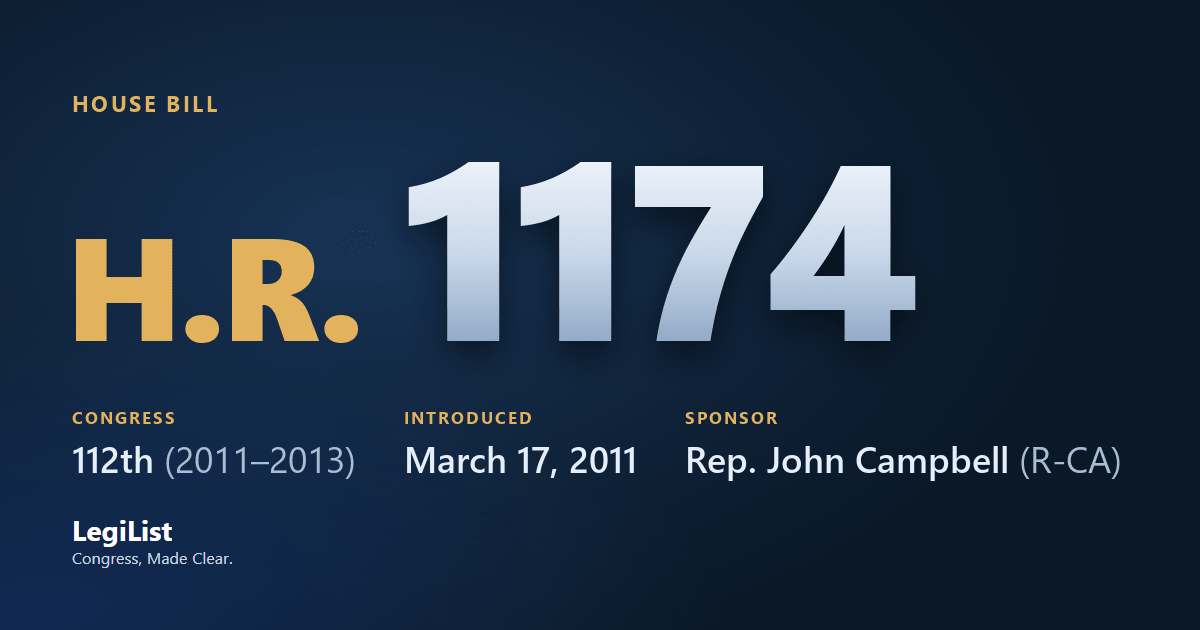
Internet Gambling Regulation, Consumer Protection, and Enforcement Act
Latest action · Jun 1, 2011 Referred to the Subcommittee on Crime, Terrorism, and Homeland Security.
Progress
Where this bill reached, and when. A stage with no date was not reached; one that failed a vote and later carried shows the date it carried.
- IntroducedMar 17, 2011
- Passed HouseNot reached
- Passed SenateNot reached
- To the PresidentNot reached
- Became lawNot reached
Summary
Internet Gambling Regulation, Consumer Protection, and Enforcement Act - Grants the Secretary of the Treasury regulatory and enforcement jurisdiction over the Internet Gambling Licensing Program established by this Act.
Prescribes administrative and licensing requirements for Internet betting, including background check requirements and suitability standards for license applicants. Prohibits any person from operating an Internet gambling facility that knowingly accepts bets or wagers from persons located in the United States without a license issued by the Secretary.
Prescribes safeguards to: (1) ensure the legal age of any wagering individual as well as a permissible location for placing the wager; (2) combat fraud, money laundering, and terrorist finance; and (3) combat compulsive Internet gambling.
Directs the Secretary to: (1) compile and make available to the public, on the Secretary's website, datasets on player behavior; (2) assess civil penalties on licensees or other persons for willful violations of this Act; (3) monitor, evaluate, and measure compliance effectiveness of software and other mechanisms used by licensees to prevent minors from Internet wagering and impose a fine for ineffective protections; and (4) place court-ordered child support delinquents on the self-exclusion list (established by this Act) as long as they remain delinquent in their support obligations.
Requires the Secretary and any qualified state or tribal regulatory body to prescribe regulations for: (1) development of a Problem Gambling, Responsible Gambling, Consumer Safeguards, and Self-Exclusion Program; (2) a list of persons self-excluded from gambling activities at licensee sites; and (3) a program to alert the public to the existence, consequences, and availability of the self-exclusion list.
Prohibits a person who is prohibited from gambling with a licensee, including anyone on the self-exclusion list, from collecting any winnings or recovering any losses that arise as a result of prohibited gambling activity.
Shields a financial transaction provider from liability for engaging in financial activities and transactions on behalf of a licensee, or involving a licensee, including payments processing activities, unless the provider has knowledge that the specific financial activities or transactions are conducted in violation of federal or state law.
Requires the Director of the Financial Crimes Enforcement Network to submit to the Secretary a list of unlawful Internet gambling enterprises which violate this Act for distribution in electronic format to all persons required to comply with regulations under this Act.
Permits states and Indian tribal authorities to opt-out of Internet gambling activities within their respective jurisdictions. Prohibits licensees from engaging in the operation of an Internet gambling facility that knowingly accepts bets or wagers initiated by persons who reside in any opt-out state or the tribal lands of any opt-out Indian tribe.
Prohibits: (1) sports betting on the Internet, except pari-mutuel racing, and the use of credit cards for Internet gambling; and (2) electronic cheating devices.
Directs the Secretary to: (1) report to Congress on the licensing and regulation of Internet gambling operators, and (2) conduct a feasibility study on safeguards to address gambling while impaired.
Cosponsors 29
Members who signed on, in the order they did. Signatures ran from Mar 17, 2011 to Jul 14, 2011; 3 are original cosponsors, there from the day it was introduced.
| Seat | Cosponsor | Signed on | |
|---|---|---|---|
| D-MA | Barney Frank | Original | Mar 17, 2011 |
| D-CO | Ed Perlmutter | Original | Mar 17, 2011 |
| R-NY | Peter T. King | Original | Mar 17, 2011 |
| D-NY | Carolyn McCarthy | May 13, 2011 | |
| D-NY | Charles B. Rangel | May 13, 2011 | |
| R-AK | Don Young | May 13, 2011 | |
| D-OR | Earl Blumenauer | May 13, 2011 | |
| D-NY | Gary L. Ackerman | May 13, 2011 | |
| D-CA | George Miller | May 13, 2011 | |
| D-MA | James P. McGovern | May 13, 2011 | |
| D-CO | Jared Polis | May 13, 2011 | |
| D-CT | John B. Larson | May 13, 2011 | |
| D-MI | John Conyers, Jr. | May 13, 2011 | |
| R-IL | Judy Biggert | May 13, 2011 | |
| D-CA | Lynn C. Woolsey | May 13, 2011 | |
| D-MA | Michael E. Capuano | May 13, 2011 | |
| D-CA | Michael M. Honda | May 13, 2011 | |
| D-VA | Robert C. "Bobby" Scott | May 13, 2011 | |
| R-TX | Ron Paul | May 13, 2011 | |
| D-NV | Shelley Berkley | May 13, 2011 | |
| D-TN | Steve Cohen | May 13, 2011 | |
| D-NY | William L. Owens | May 13, 2011 | |
| D-WA | Adam Smith | Jun 1, 2011 | |
| D-VA | Gerald E. Connolly | Jun 1, 2011 | |
| D-CT | Joe Courtney | Jun 1, 2011 | |
| R-NY | Michael G. Grimm | Jun 1, 2011 | |
| D-NJ | Steven R. Rothman | Jun 13, 2011 | |
| D-CA | Howard L. Berman | Jun 15, 2011 | |
| D-CA | Bob Filner | Jul 14, 2011 |
Committees 3
Where it was sent and what each committee and subcommittee did with it, in order.
| Chamber | Committee | What it did |
|---|---|---|
| House | Financial Services Committee | Referred Mar 17, 2011 |
| Consumer Protection and Financial Institutions Subcommittee | Referred Apr 4, 2011 | |
| House | Judiciary Committee | Referred Mar 17, 2011 |
| Crime and Federal Government Surveillance Subcommittee | Referred Jun 1, 2011 | |
| House | Energy and Commerce Committee | Referred Mar 17, 2011 |
| Commerce, Manufacturing, and Trade Subcommittee | Referred Mar 28, 2011 |
Actions 5
Everything that happened, newest first.
- Jun 1, 2011Referred to the Subcommittee on Crime, Terrorism, and Homeland Security.
- Apr 4, 2011Referred to the Subcommittee on Financial Institutions and Consumer Credit.
- Mar 28, 2011Referred to the Subcommittee on Commerce, Manufacturing, and Trade.
- Mar 17, 2011Introduced in House
- Mar 17, 2011Referred to the Committee on Financial Services, and in addition to the Committees on the Judiciary, and Energy and Commerce, for a period to be subsequently determined by the Speaker, in each case for consideration of such provisions as fall within the jurisdiction of the committee concerned.
Research
What has been written about this bill: committee reports, cost estimates, the sponsor’s authority statement, printed hearings and the Congressional Research Service’s work.
Constitutional authority
The sponsor’s statement, as printed in the page H1987.
Printed hearings 1
Hearings whose printed record names this bill, newest first: hearings on it, and wider hearings where it came up.
| Number | Hearing | Committee | Held |
|---|---|---|---|
| Serial No. 112-105 | INTERNET GAMING: REGULATING IN AN ONLINE WORLD302 pages | Energy and Commerce Committee | Nov 18, 2011 |
Related bills 1
Companion bills and other measures the record links to this one.
| Bill | Title | Relationship | Latest action |
|---|---|---|---|
| HR 2366 | Internet Gambling Prohibition, Poker Consumer Protection, and Strengthening UIGEA Act of 2011 | Related bill | Aug 25, 2011 |
Titles 2
Every title it has carried, official and short, at each stage.
- Official Title as Introduced
- To amend title 31, United States Code, to provide for the licensing of Internet gambling activities by the Secretary of the Treasury, to provide for consumer protections on the Internet, to enforce the tax code, and for other purposes.
- Short Titles as Introduced
- Internet Gambling Regulation, Consumer Protection, and Enforcement Act
Subjects
Assigned by the Library of Congress. Policy area: Commerce.
- Administrative law and regulatory procedures
- Administrative remedies
- Business records
- Child safety and welfare
- Civil actions and liability
- Commerce
- Consumer affairs
- Consumer credit
- Criminal procedure and sentencing
- Department of the Treasury
- Federal-Indian relations
- Financial services and investments
- Fraud offenses and financial crimes
- Gambling
- Government information and archives
- Intergovernmental relations
- Internet and video services
- Internet, web applications, social media
- Licensing and registrations
- Marketing and advertising
- Right of privacy
- Separation, divorce, custody, support
- State and local government operations
- Tax administration and collection, taxpayers
- Terrorism
- User charges and fees
Text 1
Each version as it was printed, newest first.
- Mar 17, 2011Introduced in House
Support LegiList
This page is free, carries no paywall, and is built and maintained by one person. If the record here is useful to you, a few dollars keeps it going.
Everything here is as published by Congress: the summary is the Congressional Research Service's, the action wording is the clerks', and the subjects are the Library of Congress's. How far it got is read from the actions themselves, taking the most recent one of each kind, so a bill that failed a vote and later passed is shown as having passed. Records come from this bill on Congress.gov and govinfo.gov; cost estimates are the Congressional Budget Office's, and the hearings are the printed hearings GovInfo publishes, which can appear months after the hearing.