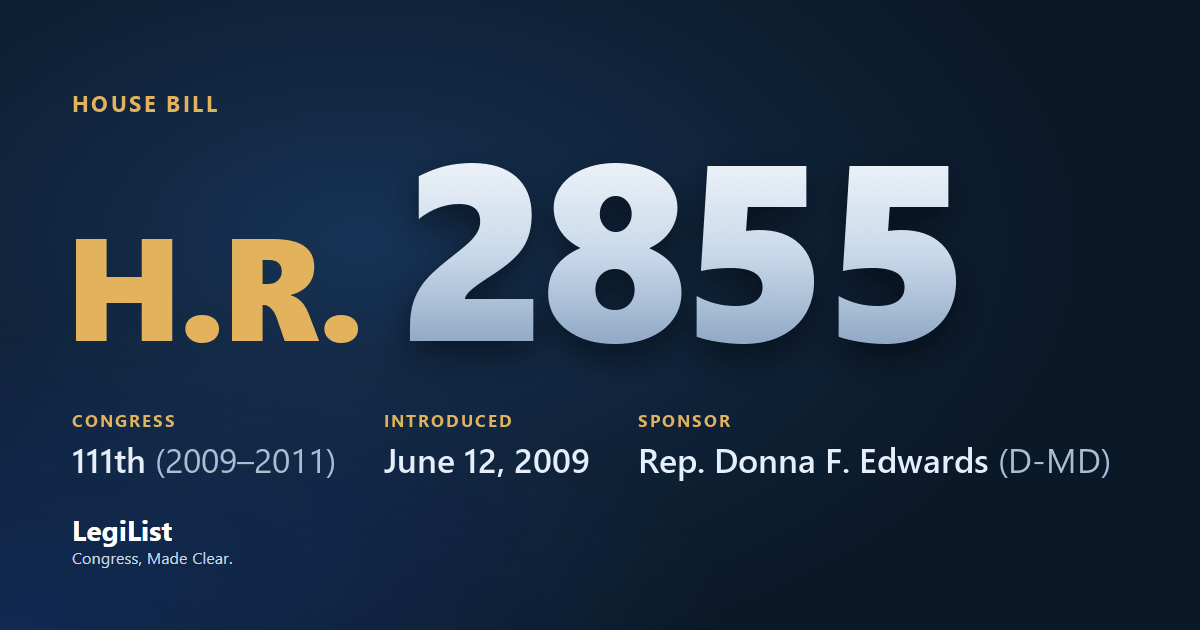
Drug Overdose Reduction Act
Latest action · Jun 15, 2009 Referred to the Subcommittee on Health.
Progress
Where this bill reached, and when. A stage with no date was not reached; one that failed a vote and later carried shows the date it carried.
- IntroducedJun 12, 2009
- Passed HouseNot reached
- Passed SenateNot reached
- To the PresidentNot reached
- Became lawNot reached
Summary
Drug Overdose Reduction Act - Requires the Director of the Centers for Disease Control and Prevention (CDC) to: (1) award grants or enter into cooperative agreements to enable eligible entities to reduce deaths occurring from drug overdoses; and (2) give priority to public health agencies or community-based organizations that have expertise in preventing deaths occurring from overdoses in high risk populations.
Conditions receipt of a grant or agreement on an entity agreeing to use the grant or agreement for: (1) purchasing and distributing drug overdose reversal agents; (2) training first responders, law enforcement and corrections officials, and other individuals in a position to respond to an overdose on the effective response; (3) implementing programs to provide overdose prevention, recognition, treatment, or response to individuals in need; and (4) evaluating, expanding, or replicating such programs.
Requires the Director to: (1) compile and publish data, annually, on fatal and nonfatal drug overdoses for the preceding year; (2) award grants to state, local, or tribal governments to improve drug overdose surveillance capabilities; and (3) develop and submit to Congress a plan to reduce the number of deaths occurring from overdoses.
Requires the Director of the National Institute on Drug Abuse (NIDA) to: (1) prioritize and conduct or support research on drug overdose and overdose prevention; and (2) support research on dosage forms of naloxone for the prehospital treatment of unintentional drug overdose.
Cosponsors 32
Members who signed on, in the order they did. Signatures ran from Jun 12, 2009 to Nov 29, 2010; 5 are original cosponsors, there from the day it was introduced.
| Seat | Cosponsor | Signed on | |
|---|---|---|---|
| D-RI | James R. Langevin | Original | Jun 12, 2009 |
| D-NY | Jose E. Serrano | Original | Jun 12, 2009 |
| D-NY | Maurice D. Hinchey | Original | Jun 12, 2009 |
| D-PR | Pedro R. Pierluisi | Original | Jun 12, 2009 |
| D-AZ | Raúl M. Grijalva | Original | Jun 12, 2009 |
| D-CA | Barbara Lee | Jul 9, 2009 | |
| D-OR | Peter A. DeFazio | Jul 9, 2009 | |
| D-TX | Al Green | Jul 31, 2009 | |
| D-CA | Grace F. Napolitano | Jul 31, 2009 | |
| D-IL | Janice D. Schakowsky | Dec 3, 2009 | |
| D-WI | Tammy Baldwin | Dec 3, 2009 | |
| D-WA | Rick Larsen | Dec 16, 2009 | |
| D-MO | Emanuel Cleaver | Jan 26, 2010 | |
| D-IN | André Carson | Feb 26, 2010 | |
| D-MO | Russ Carnahan | Feb 26, 2010 |
Committees 1
Where it was sent and what each committee and subcommittee did with it, in order.
| Chamber | Committee | What it did |
|---|---|---|
| House | Energy and Commerce Committee | Referred Jun 12, 2009 |
| Health Subcommittee | Referred Jun 15, 2009 |
Actions 3
Everything that happened, newest first.
- Jun 15, 2009Referred to the Subcommittee on Health.
- Jun 12, 2009Introduced in House
- Jun 12, 2009Referred to the House Committee on Energy and Commerce.
Titles 2
Every title it has carried, official and short, at each stage.
- Official Title as Introduced
- To reduce deaths occurring from drug overdoses.
- Short Titles as Introduced
- Drug Overdose Reduction Act
Subjects
Assigned by the Library of Congress. Policy area: Health.
- Drug trafficking and controlled substances
- Drug, alcohol, tobacco use
- Emergency medical services and trauma care
- Health
- Health information and medical records
- Health personnel
- Health programs administration and funding
- Health promotion and preventive care
- Medical education
- Medical research
- Medical tests and diagnostic methods
- Research administration and funding
Text 1
Each version as it was printed, newest first.
- Jun 12, 2009Introduced in House
Support LegiList
This page is free, carries no paywall, and is built and maintained by one person. If the record here is useful to you, a few dollars keeps it going.
Everything here is as published by Congress: the summary is the Congressional Research Service's, the action wording is the clerks', and the subjects are the Library of Congress's. How far it got is read from the actions themselves, taking the most recent one of each kind, so a bill that failed a vote and later passed is shown as having passed. Records come from this bill on Congress.gov and govinfo.gov; cost estimates are the Congressional Budget Office's, and the hearings are the printed hearings GovInfo publishes, which can appear months after the hearing.