To allow any business or individual in any State experiencing a power emergency to operate any type of power generation available to ensure their economic stability, and for other purposes.
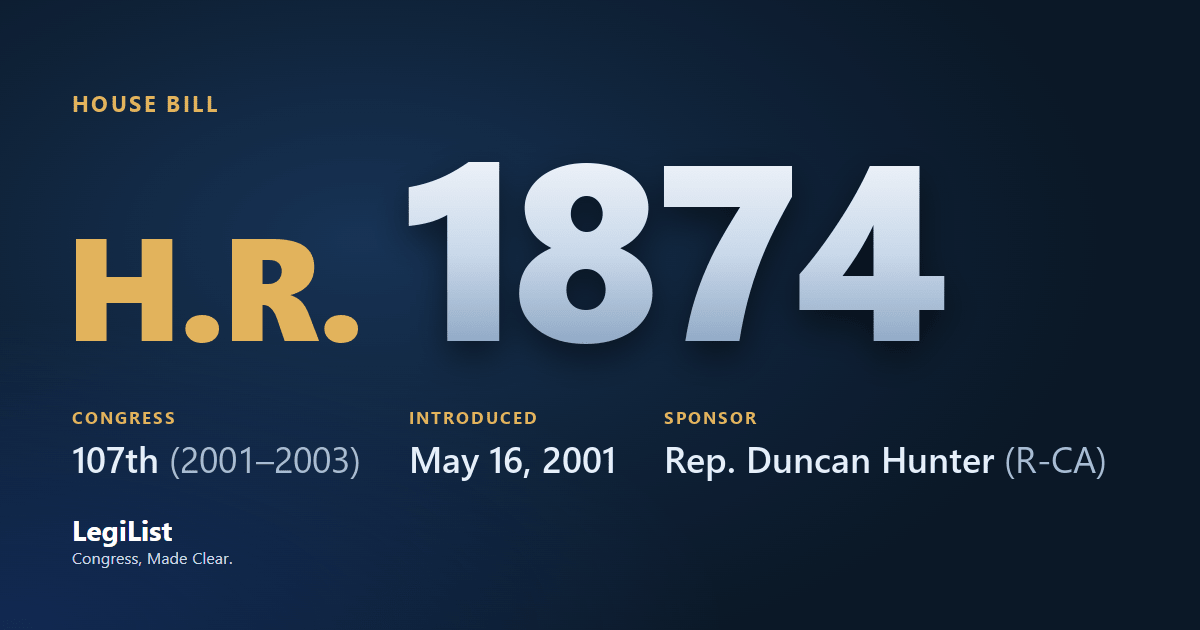
Latest action · Jun 1, 2001 Referred to the Subcommittee on Energy and Air Quality.
Progress
Where this bill reached, and when. A stage with no date was not reached; one that failed a vote and later carried shows the date it carried.
- IntroducedMay 16, 2001
- Passed HouseNot reached
- Passed SenateNot reached
- To the PresidentNot reached
- Became lawNot reached
Summary
Prohibits additional emissions attributable to generation permitted solely because of such power emergency from being taken into account for purposes of determining the attainment or nonattainment status of an area under the Clean Air Act.
Prohibits the Administrator of the Environmental Protection Agency from disapproving the State implementation plan, or promulgating a Federal implementation plan for the State, if the applicable plan for such State would not have been disapproved, and no Federal implementation plan promulgations would have been made, in the absence of such additional emissions.
Prohibits any judicial stay or injunctions against the Administrator or the State of California regarding any additional emissions attributable to electric power generation permitted solely by reason of this Act.
Cosponsors 18
Members who signed on, in the order they did. All signed on May 16, 2001.
| Seat | Cosponsor | Signed on | |
|---|---|---|---|
| R-CA | Christopher Cox | Original | May 16, 2001 |
| R-CA | Dana Rohrabacher | Original | May 16, 2001 |
| R-CA | Darrell Issa | Original | May 16, 2001 |
| R-CA | David Dreier | Original | May 16, 2001 |
| R-CA | Doug Ose | Original | May 16, 2001 |
| R-CA | Edward R. Royce | Original | May 16, 2001 |
| R-CA | Elton Gallegly | Original | May 16, 2001 |
| R-CA | Gary G. Miller | Original | May 16, 2001 |
| R-CA | George Radanovich | Original | May 16, 2001 |
| R-CA | Howard P. "Buck" McKeon | Original | May 16, 2001 |
| R-CA | Jerry Lewis | Original | May 16, 2001 |
| R-CA | John T. Doolittle | Original | May 16, 2001 |
| R-CA | Ken Calvert | Original | May 16, 2001 |
| R-CA | Mary Bono | Original | May 16, 2001 |
| R-CA | Randy (Duke) Cunningham | Original | May 16, 2001 |
Committees 1
Where it was sent and what each committee and subcommittee did with it, in order.
| Chamber | Committee | What it did |
|---|---|---|
| House | Energy and Commerce Committee | Referred May 16, 2001 |
| Energy Subcommittee | Referred Jun 1, 2001 |
Actions 3
Everything that happened, newest first.
- Jun 1, 2001Referred to the Subcommittee on Energy and Air Quality.
- May 16, 2001Introduced in House
- May 16, 2001Referred to the House Committee on Energy and Commerce.
Titles 1
Every title it has carried, official and short, at each stage.
- Official Title as Introduced
- To allow any business or individual in any State experiencing a power emergency to operate any type of power generation available to ensure their economic stability, and for other purposes.
Subjects
Assigned by the Library of Congress. Policy area: Energy.
- Administrative remedies
- Air pollution control
- Air quality
- California
- Commerce
- Economics and Public Finance
- Electric power
- Electric power production
- Emergency Management
- Energy
- Energy demand
- Energy shortages
- Energy supplies
- Environmental Protection
- Environmental Protection Agency
- Fines (Penalties)
- Government Operations and Politics
- Government paperwork
- Governors
- Industrial pollution
- Injunctions
- Law
- Standards
Text 1
Each version as it was printed, newest first.
- May 16, 2001Introduced in House
Everything here is as published by Congress: the summary is the Congressional Research Service's, the action wording is the clerks', and the subjects are the Library of Congress's. How far it got is read from the actions themselves, taking the most recent one of each kind, so a bill that failed a vote and later passed is shown as having passed. Records come from this bill on Congress.gov and govinfo.gov; cost estimates are the Congressional Budget Office's, and the hearings are the printed hearings GovInfo publishes, which can appear months after the hearing.