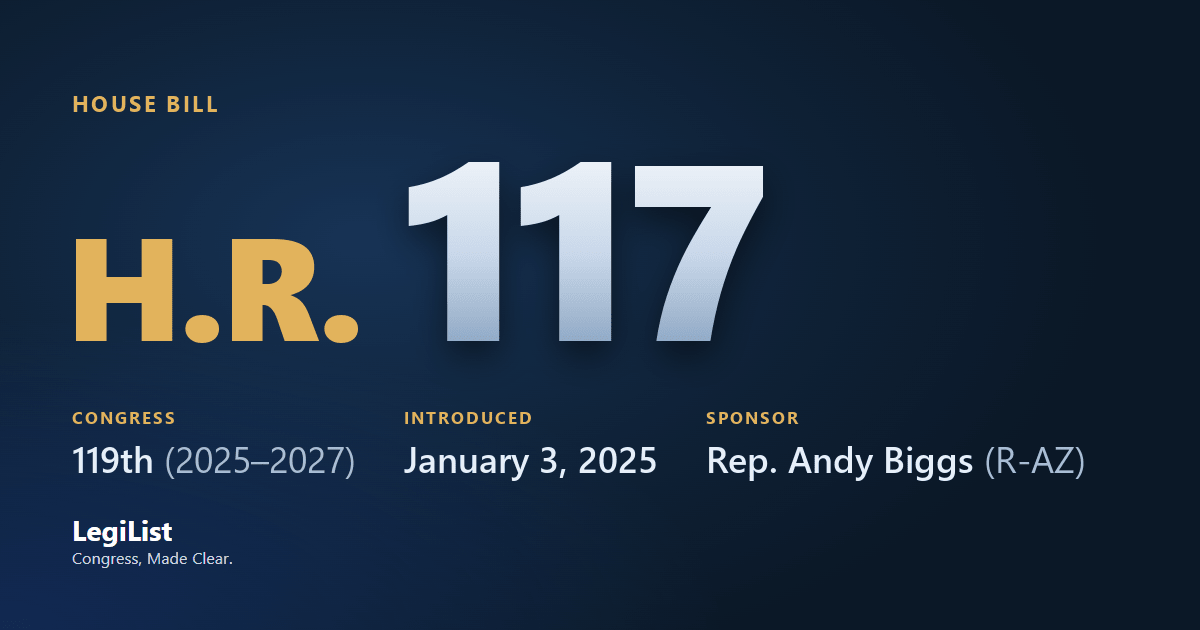
Fourth Amendment Restoration Act
Latest action · Jan 3, 2025 Referred to the Committee on the Judiciary, and in addition to the Committee on Intelligence (Permanent Select), for a period to be subsequently determined by the Speaker, in each case for consideration of such provisions as fall within the jurisdiction of the committee concerned.
Progress
Where this bill reached, and when. A stage with no date was not reached; one that failed a vote and later carried shows the date it carried.
- IntroducedJan 3, 2025
- Passed HouseNot reached
- Passed SenateNot reached
- To the PresidentNot reached
- Became lawNot reached
Summary
Fourth Amendment Restoration Act
This bill repeals the Foreign Intelligence Surveillance Act of 1978 (which authorizes various types of searches and surveillance for foreign intelligence purposes) and limits surveillance of U.S. citizens.
The bill requires that an officer of the U.S. government obtain a warrant for certain search and surveillance activities against a U.S. citizen, including (1) conducting electronic surveillance, (2) conducting physical searches of property under a U.S. citizen's exclusive control, or (3) targeting a U.S. citizen to acquire foreign intelligence information.
The bill provides for criminal penalties for a person who intentionally (1) violates these requirements without statutory authorization, or (2) discloses or uses information that the person knows (or has a reason to know) was obtained under color of law by methods that violate these requirements.
Information about a U.S. citizen acquired under Executive Order 12333 (relating to intelligence gathering) or during surveillance of a non-U.S. citizen shall not be used against the U.S. citizen in any civil, criminal, or administrative proceeding or investigation.
Cosponsors
Members who signed on, in the order they did.
Committees 2
Where it was sent and what each committee and subcommittee did with it, in order.
| Chamber | Committee | What it did |
|---|---|---|
| House | Judiciary Committee | Referred Jan 3, 2025 |
| House | Intelligence (Permanent Select) Committee | Referred Jan 3, 2025 |
Actions 2
Everything that happened, newest first.
- Jan 3, 2025Introduced in House
- Jan 3, 2025Referred to the Committee on the Judiciary, and in addition to the Committee on Intelligence (Permanent Select), for a period to be subsequently determined by the Speaker, in each case for consideration of such provisions as fall within the jurisdiction of the committee concerned.
Research
What has been written about this bill: committee reports, cost estimates, the sponsor’s authority statement, printed hearings and the Congressional Research Service’s work.
Constitutional authority
The sponsor’s statement, as printed in the Congressional Record, vol. 171, no. 1, January 3, 2025, page H39.
Titles 2
Every title it has carried, official and short, at each stage.
- Official Title as Introduced
- To repeal the Foreign Intelligence Surveillance Act.
- Short Title(s) as Introduced
- Fourth Amendment Restoration Act
Subjects
Assigned by the Library of Congress. Policy area: Armed Forces and National Security.
- Armed Forces and National Security
- Criminal investigation, prosecution, interrogation
- Criminal procedure and sentencing
- Evidence and witnesses
- Intelligence activities, surveillance, classified information
- Jurisdiction and venue
- Law enforcement officers
- Right of privacy
- Telephone and wireless communication
Text 1
Each version as it was printed, newest first.
- Jan 3, 2025Introduced in House
Support LegiList
This page is free, carries no paywall, and is built and maintained by one person. If the record here is useful to you, a few dollars keeps it going.
Everything here is as published by Congress: the summary is the Congressional Research Service's, the action wording is the clerks', and the subjects are the Library of Congress's. How far it got is read from the actions themselves, taking the most recent one of each kind, so a bill that failed a vote and later passed is shown as having passed. Records come from this bill on Congress.gov and govinfo.gov; cost estimates are the Congressional Budget Office's, and the hearings are the printed hearings GovInfo publishes, which can appear months after the hearing.