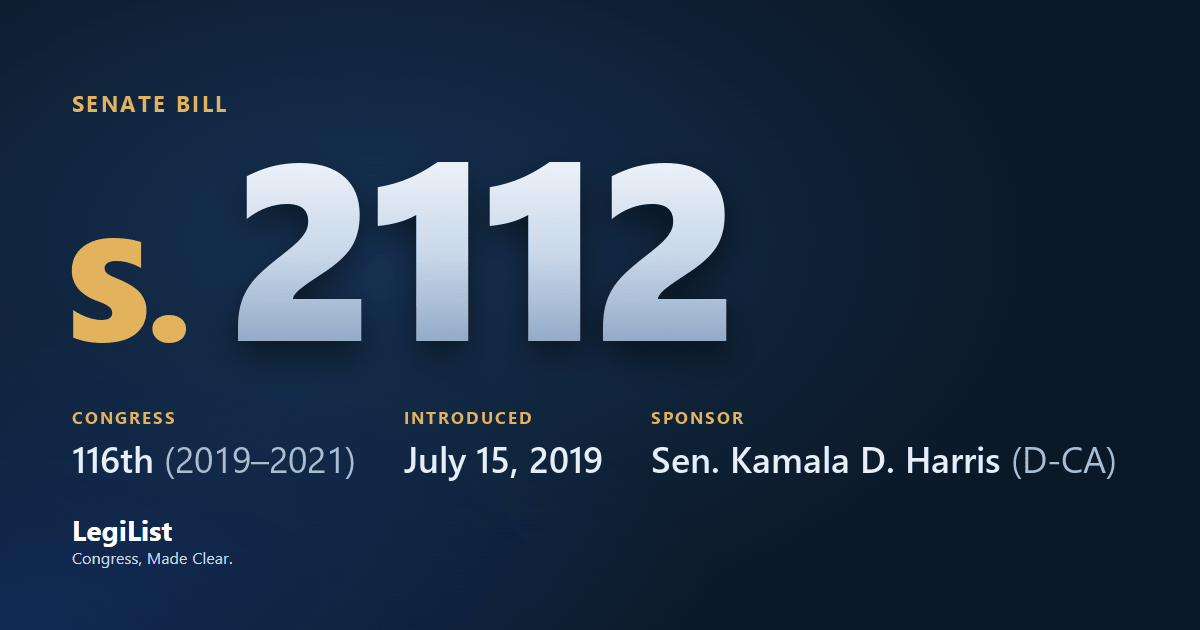
Domestic Workers Bill of Rights Act
Latest action · Jul 15, 2019 Read twice and referred to the Committee on Health, Education, Labor, and Pensions.
Progress
Where this bill reached, and when. A stage with no date was not reached; one that failed a vote and later carried shows the date it carried.
- IntroducedJul 15, 2019
- Passed SenateNot reached
- Passed HouseNot reached
- To the PresidentNot reached
- Became lawNot reached
Summary
Domestic Workers Bill of Rights Act
This bill provides rights and protections for domestic workers, including pay and leave rights, and health and safety protections.
The bill, among other things
- repeals the exemption under the Fair Labor Standards Act of 1938 for domestic live-in employees from certain minimum wage and maximum hour requirements;
- requires written notices of termination and allow other communications for live-in domestic employees;
- requires written agreements for domestic workers covering wages, sick leave, benefits, and other matters;
- allows domestic workers to request and receive changes to work schedules due to personal events;
- sets forth certain privacy rights for domestic workers;
- expands coverage to domestic workers under Title VII of the Civil Rights Act of 1964 against discrimination in employment; and
- increases the federal medical assistance percentage (FMAP) for certain Medicaid-funded medical services provided by domestic workers.
The Department of Labor shall (1) award grants for a domestic worker national hotline for reporting emergencies, training on hazards facing domestic workers, and workforce investment activities for domestic workers; and (2) establish a Domestic Worker Wage and Standards Board to investigate standards in the domestic workers industry.
Labor must provide domestic workers with a document that describes the rights and protections under the domestic workers bill of rights.
The Department of Health and Human Services must collect state Medicaid program data on the personal or home care aide workforce.
Cosponsors 12
Members who signed on, in the order they did. Signatures ran from Jul 15, 2019 to Oct 26, 2020; 5 are original cosponsors, there from the day it was introduced.
| Seat | Cosponsor | Signed on | |
|---|---|---|---|
| D-MN | Amy Klobuchar | Original | Jul 15, 2019 |
| I-VT | Bernard Sanders | Original | Jul 15, 2019 |
| D-NJ | Cory A. Booker | Original | Jul 15, 2019 |
| D-MA | Elizabeth Warren | Original | Jul 15, 2019 |
| D-NY | Kirsten E. Gillibrand | Original | Jul 15, 2019 |
| D-WI | Tammy Baldwin | Jul 22, 2019 | |
| D-NY | Charles E. Schumer | Jul 23, 2019 | |
| D-IL | Richard J. Durbin | Aug 1, 2019 | |
| D-OR | Jeff Merkley | Nov 18, 2019 | |
| D-MA | Edward J. Markey | Jan 15, 2020 | |
| D-CT | Richard Blumenthal | Jan 21, 2020 | |
| D-HI | Mazie K. Hirono | Oct 26, 2020 |
Committees 1
Where it was sent and what each committee and subcommittee did with it, in order.
| Chamber | Committee | What it did |
|---|---|---|
| Senate | Health, Education, Labor, and Pensions Committee | Referred Jul 15, 2019 |
Actions 2
Everything that happened, newest first.
- Jul 15, 2019Introduced in Senate
- Jul 15, 2019Read twice and referred to the Committee on Health, Education, Labor, and Pensions.
Related bills 1
Companion bills and other measures the record links to this one.
| Bill | Title | Relationship | Latest action |
|---|---|---|---|
| HR 3760 | Domestic Workers Bill of Rights Act | Identical bill | Jul 16, 2019 |
Titles 2
Every title it has carried, official and short, at each stage.
- Official Title as Introduced
- A bill to enhance the rights of domestic workers, and for other purposes.
- Short Title(s) as Introduced
- Domestic Workers Bill of Rights Act
Subjects
Assigned by the Library of Congress. Policy area: Labor and Employment.
- Advisory bodies
- Assault and harassment offenses
- Child care and development
- Child health
- Civil actions and liability
- Congressional oversight
- Criminal justice information and records
- Disability and paralysis
- Disability assistance
- Domestic violence and child abuse
- Emergency communications systems
- Employee benefits and pensions
- Employee hiring
- Employee leave
- Employment and training programs
- Employment discrimination and employee rights
- Food assistance and relief
- Foreign labor
- Foreign language and bilingual programs
- Government employee pay, benefits, personnel management
- Government information and archives
- Government studies and investigations
- Hazardous wastes and toxic substances
- Health care costs and insurance
- Health care coverage and access
- Health information and medical records
- Home and outpatient care
- Immigration status and procedures
- Internet and video services
- Internet, web applications, social media
- Labor and Employment
- Labor standards
- Landlord and tenant
- Lawyers and legal services
- Medicaid
- Medicare
- Mental health
- Personnel records
- Product safety and quality
- Right of privacy
- Sex offenses
- State and local finance
- Telephone and wireless communication
- Transportation costs
- Unemployment
- Wages and earnings
- Women's health
Text 1
Each version as it was printed, newest first.
- Jul 15, 2019Introduced in Senate
Support LegiList
This page is free, carries no paywall, and is built and maintained by one person. If the record here is useful to you, a few dollars keeps it going.
Everything here is as published by Congress: the summary is the Congressional Research Service's, the action wording is the clerks', and the subjects are the Library of Congress's. How far it got is read from the actions themselves, taking the most recent one of each kind, so a bill that failed a vote and later passed is shown as having passed. Records come from this bill on Congress.gov and govinfo.gov; cost estimates are the Congressional Budget Office's, and the hearings are the printed hearings GovInfo publishes, which can appear months after the hearing.