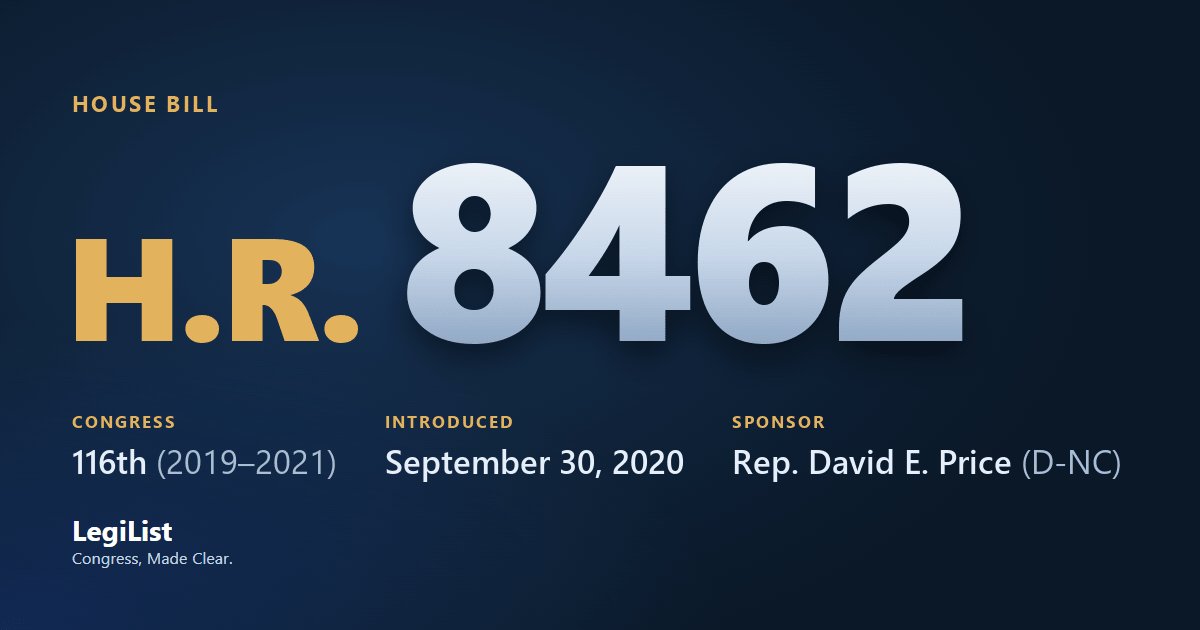
Flood Resiliency and Taxpayer Savings Act of 2020
Latest action · Oct 1, 2020 Referred to the Subcommittee on Economic Development, Public Buildings, and Emergency Management.
Progress
Where this bill reached, and when. A stage with no date was not reached; one that failed a vote and later carried shows the date it carried.
- IntroducedSep 30, 2020
- Passed HouseNot reached
- Passed SenateNot reached
- To the PresidentNot reached
- Became lawNot reached
Summary
Flood Resiliency and Taxpayer Savings Act of 2020
This bill requires federal agencies to take specified actions to evaluate and mitigate the risk of floods to federally funded projects.
Specifically, the bill directs federal agencies to evaluate the potential for flooding throughout the planned lifetime or duration of a federally funded project to reduce the risk of financial and property losses and prevent the disruption of critical services during floods.
Further, federal agencies must consider certain data and information (e.g., the most recent flood insurance rate map published by the Federal Emergency Management Agency) when evaluating whether a federally funded project is in a floodplain. If the agency determines the data and information are not adequate for understanding the flood risks to the project, then the agency must use an alternative design standard outlined by the bill.
Finally, the bill directs the Federal Interagency Floodplain Management Task Force to issue guidelines for federal agencies related to flood risk management.
Cosponsors 7
Members who signed on, in the order they did. Signatures ran from Sep 30, 2020 to Nov 5, 2020; 1 is an original cosponsor, there from the day it was introduced.
| Seat | Cosponsor | Signed on | |
|---|---|---|---|
| R-NY | Lee M. Zeldin | Original | Sep 30, 2020 |
| D-IL | Bill Foster | Oct 16, 2020 | |
| D-HI | Ed Case | Oct 16, 2020 | |
| D-VA | Elaine G. Luria | Oct 16, 2020 | |
| R-PR | Jenniffer González-Colón | Nov 5, 2020 | |
| D-WI | Ron Kind | Nov 5, 2020 | |
| D-TX | Sheila Jackson Lee | Nov 5, 2020 |
Committees 2
Where it was sent and what each committee and subcommittee did with it, in order.
| Chamber | Committee | What it did |
|---|---|---|
| House | Financial Services Committee | Referred Sep 30, 2020 |
| House | Transportation and Infrastructure Committee | Referred Sep 30, 2020 |
| Economic Development, Public Buildings, and Emergency Management Subcommittee | Referred Oct 1, 2020 |
Actions 3
Everything that happened, newest first.
- Oct 1, 2020Referred to the Subcommittee on Economic Development, Public Buildings, and Emergency Management.
- Sep 30, 2020Introduced in House
- Sep 30, 2020Referred to the Committee on Financial Services, and in addition to the Committee on Transportation and Infrastructure, for a period to be subsequently determined by the Speaker, in each case for consideration of such provisions as fall within the jurisdiction of the committee concerned.
Research
What has been written about this bill: committee reports, cost estimates, the sponsor’s authority statement, printed hearings and the Congressional Research Service’s work.
Constitutional authority
The sponsor’s statement, as printed in the Congressional Record, vol. 166, no. 170, September 30, 2020, page H5106.
Related bills 1
Companion bills and other measures the record links to this one.
| Bill | Title | Relationship | Latest action |
|---|---|---|---|
| HR 481 | Flood Resiliency and Taxpayer Savings Act of 2021 | Reintroduced Bill | Feb 4, 2021 |
Titles 2
Every title it has carried, official and short, at each stage.
- Official Title as Introduced
- To safeguard taxpayer resources and strengthen the Nation's resilience against severe storms and flooding.
- Short Title(s) as Introduced
- Flood Resiliency and Taxpayer Savings Act of 2020
Subjects
Assigned by the Library of Congress. Policy area: Water Resources Development.
- Administrative law and regulatory procedures
- Building construction
- Congressional oversight
- Emergency planning and evacuation
- Environmental assessment, monitoring, research
- Floods and storm protection
- Geography and mapping
- Government buildings, facilities, and property
- Hydrology and hydrography
- Water Resources Development
- Water resources funding
Text 1
Each version as it was printed, newest first.
- Sep 30, 2020Introduced in House
Support LegiList
This page is free, carries no paywall, and is built and maintained by one person. If the record here is useful to you, a few dollars keeps it going.
Everything here is as published by Congress: the summary is the Congressional Research Service's, the action wording is the clerks', and the subjects are the Library of Congress's. How far it got is read from the actions themselves, taking the most recent one of each kind, so a bill that failed a vote and later passed is shown as having passed. Records come from this bill on Congress.gov and govinfo.gov; cost estimates are the Congressional Budget Office's, and the hearings are the printed hearings GovInfo publishes, which can appear months after the hearing.