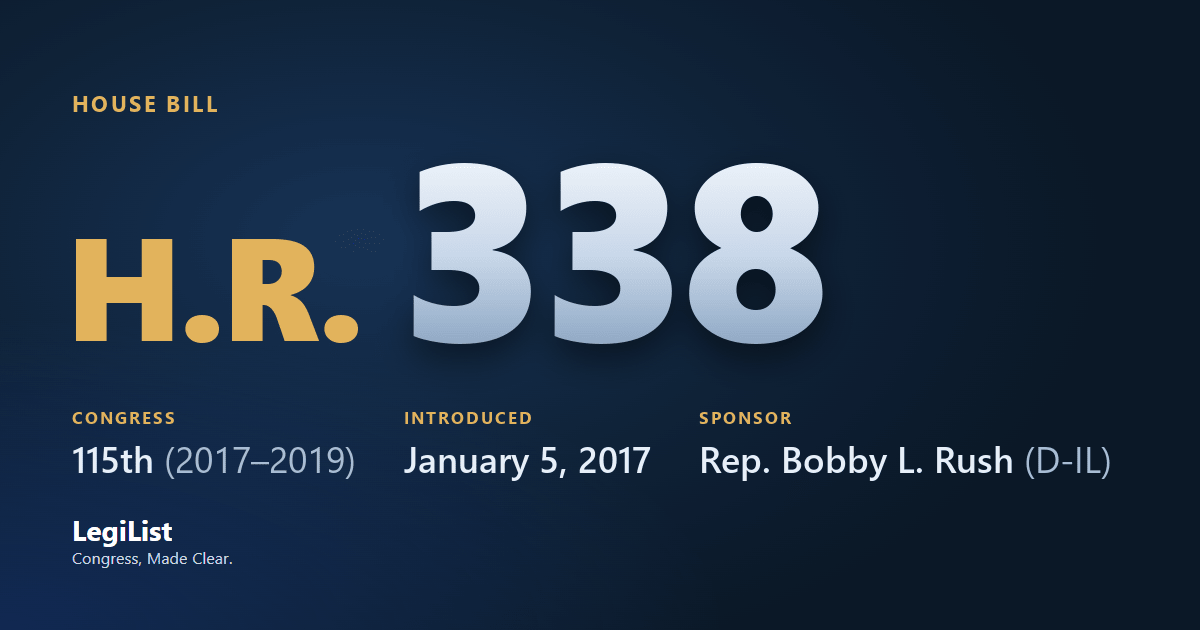
To promote a 21st century energy and manufacturing workforce.
Latest action · Jun 13, 2017 Received in the Senate and Read twice and referred to the Committee on Energy and Natural Resources.
Progress
Where this bill reached, and when. A stage with no date was not reached; one that failed a vote and later carried shows the date it carried.
- IntroducedJan 5, 2017
- Passed HouseJun 12, 2017
- Passed SenateNot reached
- To the PresidentNot reached
- Became lawNot reached
Summary
(This measure has not been amended since it was introduced. The summary has been expanded because action occurred on the measure.)
(Sec. 1) This bill directs the Department of Energy (DOE), in awarding grants, to prioritize education and training for energy and manufacturing jobs, including by encouraging state and local education agencies to equip students for those jobs and strengthening DOE programs and labs carrying out workforce development initiatives. DOE must prioritize educating and training workers from underrepresented groups such as minorities, women, and veterans. DOE may encourage, but not incentivize, require, or coerce any state or school district to adopt a curriculum to equip students with the skills and training necessary to fill employment opportunities in the energy and manufacturing industries.
In addition, DOE is directed to:
- establish a clearinghouse for information and guidance on job training and other workforce development programs for energy and manufacturing jobs; and
- work with the energy and manufacturing industries, educational institutions, and other government agencies to identify areas of workforce need and develop guidelines to implement the best practices for effective job training programs.
The bill requires DOE to consider increasing outreach to institutions that serve minority populations. The Minorities in Energy Initiative provides for DOE to:
- make existing resources available to minority serving institutions with the objective of increasing the number of minorities and women trained to work in the energy and manufacturing industries;
- encourage the energy and manufacturing industries to improve the amount of internships and cooperative work study programs available for minority students; and
- increase underrepresented groups' participation in internships, fellowships, and employment at DOE laboratories.
DOE must give special consideration to dislocated energy and manufacturing workers by:
- increasing outreach to employers and job trainers who train unemployed energy and manufacturing workers for re-entry into the job market,
- making existing resources available to institutions that provide job training to unemployed energy and manufacturing workers,
- encouraging the energy and manufacturing industries to improve opportunities for energy and manufacturing workers to participate in career pathway programs, and
- working with the energy and manufacturing industries to identify energy and manufacturing operations scheduled for closure and provide early intervention assistance to affected workers through partnerships with state and local workforce boards.
This bill does not authorize the creation of a new workforce development program.
(Sec. 2) DOE is required to submit a report to Congress, within five years, on the national outlook for the energy and manufacturing industries. The report must include a summary of energy and manufacturing jobs that have been created by this bill. In addition, the report must contain the:
- number of workforce training program participants served,
- percentage of workforce training program participants in competitive employment,
- median income of workforce training program participants, and
- percentage of workforce training program participants receiving industry-recognized credentials.
(Sec. 3) This bill does not authorize additional funding to carry out its requirements.
Cosponsors 5
Members who signed on, in the order they did. Signatures ran from Jan 5, 2017 to Jun 6, 2017; 1 is an original cosponsor, there from the day it was introduced.
| Seat | Cosponsor | Signed on | |
|---|---|---|---|
| R-NC | Richard Hudson | Original | Jan 5, 2017 |
| D-TX | Gene Green | Jan 11, 2017 | |
| R-WV | David B. McKinley | Jan 31, 2017 | |
| D-OH | Tim Ryan | May 3, 2017 | |
| D-NC | G. K. Butterfield | Jun 6, 2017 |
Committees 3
Where it was sent and what each committee and subcommittee did with it, in order.
| Chamber | Committee | What it did |
|---|---|---|
| House | Education and Workforce Committee | Referred Jan 5, 2017 |
| House | Energy and Commerce Committee | Referred Jan 5, 2017Markup Jun 7, 2017Reported Jun 12, 2017 |
| Energy Subcommittee | Referred Jan 25, 2017Discharged Jun 7, 2017 | |
| Senate | Energy and Natural Resources Committee | Referred Jun 13, 2017 |
Actions 13
Everything that happened, newest first.
- Jun 13, 2017Received in the Senate and Read twice and referred to the Committee on Energy and Natural Resources.
- Jun 12, 2017Reported by the Committee on Energy and Commerce. H. Rept. 115-168, Part I.
- Jun 12, 2017Mr. Upton moved to suspend the rules and pass the bill.
- Jun 12, 2017Considered under suspension of the rules. (consideration: CR H4831-4834)
- Jun 12, 2017DEBATE - The House proceeded with forty minutes of debate on H.R. 338.
In the Congressional Record 1
Days the Record’s own index lists this bill, newest first, with the pages and the members it names. Pages starting H are the House, S the Senate, E Extensions of Remarks.
| Where | In the Record | Members | Date |
|---|---|---|---|
| House | Debate and remarks H4831–H4834Text printed H4831 | Bobby L. Rush D-IL, Diana DeGette D-CO, Fred Upton R-MI, Gene Green D-TX, Richard Hudson R-NC | Jun 12, 2017 |
Research
What has been written about this bill: committee reports, cost estimates, the sponsor’s authority statement, printed hearings and the Congressional Research Service’s work.
Committee report
Congressional Budget Office cost estimate
- Jun 13, 2017H.R. 338, a bill to promote a 21st century energy and manufacturing workforceAs ordered reported by the House Committee on Energy and Commerce on June 7, 2017
Constitutional authority
The sponsor’s statement, as printed in the Congressional Record, vol. 163, no. 3, January 5, 2017, page H183.
Titles 1
Every title it has carried, official and short, at each stage.
- Official Title as Introduced
- To promote a 21st century energy and manufacturing workforce.
Subjects
Assigned by the Library of Congress. Policy area: Labor and Employment.
- Alternative and renewable resources
- Chemistry
- Coal
- Electric power generation and transmission
- Employment and training programs
- Energy efficiency and conservation
- Government information and archives
- Labor and Employment
- Manufacturing
- Minority education
- Minority employment
- Nuclear power
- Oil and gas
- Pipelines
- Student aid and college costs
- Unemployment
Text 3
Each version as it was printed, newest first.
- Jun 13, 2017Referred in Senate
- Jun 12, 2017Engrossed in House
- Jan 5, 2017Introduced in House
Support LegiList
This page is free, carries no paywall, and is built and maintained by one person. If the record here is useful to you, a few dollars keeps it going.
Everything here is as published by Congress: the summary is the Congressional Research Service's, the action wording is the clerks', and the subjects are the Library of Congress's. How far it got is read from the actions themselves, taking the most recent one of each kind, so a bill that failed a vote and later passed is shown as having passed. Records come from this bill on Congress.gov and govinfo.gov; cost estimates are the Congressional Budget Office's, and the hearings are the printed hearings GovInfo publishes, which can appear months after the hearing.