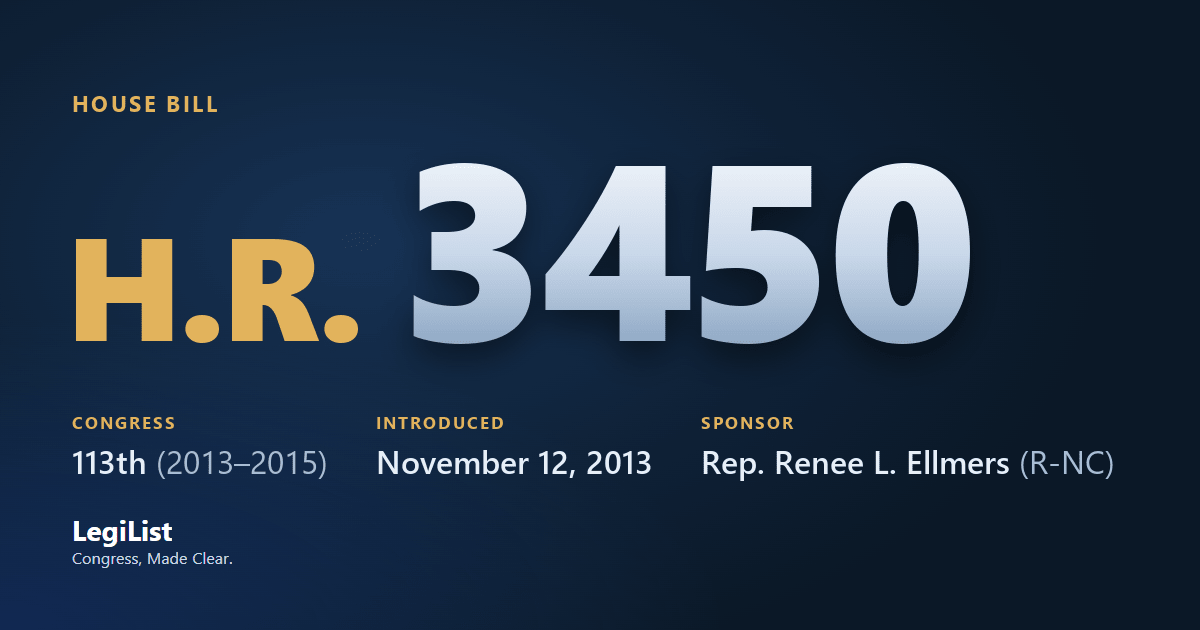
Health Insurance Freedom Act of 2013
Latest action · Nov 15, 2013 Referred to the Subcommittee on Health.
Progress
Where this bill reached, and when. A stage with no date was not reached; one that failed a vote and later carried shows the date it carried.
- IntroducedNov 12, 2013
- Passed HouseNot reached
- Passed SenateNot reached
- To the PresidentNot reached
- Became lawNot reached
Summary
Health Insurance Freedom Act of 2013 - Amends the Patient Protection and Affordable Care Act (PPACA), with respect to the definition of a qualified health plan, to allow a health insurance issuer to offer coverage that: (1) provides the essential health benefits package required of a qualified health plan other than the minimum benefits required under the essential benefits and level of coverage requirements, and (2) meets federal and state benefit requirements as otherwise applied as of October 1, 2013, in the state in which the coverage is offered.
Makes such coverage ineligible: (1) for the premium assistance income tax credit or PPACA cost-sharing reductions; and (2) to be treated as a bronze, silver, gold, or platinum plan or be taken into account for purposes of determining the applicable second lowest cost silver plan.
Makes this Act's amendments effective as if they were included in the enactment of PPACA.
Cosponsors 16
Members who signed on, in the order they did. Signatures ran from Nov 20, 2013 to Feb 3, 2014.
| Seat | Cosponsor | Signed on | |
|---|---|---|---|
| R-MD | Andy Harris | Nov 20, 2013 | |
| R-TN | David P. Roe | Nov 20, 2013 | |
| R-SC | Jeff Duncan | Nov 20, 2013 | |
| R-TX | Joe Barton | Nov 20, 2013 | |
| R-LA | John Fleming | Nov 20, 2013 | |
| R-TN | Marsha Blackburn | Nov 20, 2013 | |
| R-TX | Pete Olson | Nov 20, 2013 | |
| R-NM | Stevan Pearce | Nov 20, 2013 | |
| R-GA | Tom Price | Nov 20, 2013 | |
| R-NE | Lee Terry | Dec 5, 2013 | |
| R-WI | Reid J. Ribble | Dec 5, 2013 | |
| R-NC | Robert Pittenger | Dec 5, 2013 | |
| R-IN | Todd Rokita | Dec 5, 2013 | |
| R-MO | Vicky Hartzler | Dec 5, 2013 | |
| R-NJ | Leonard Lance | Jan 13, 2014 |
Committees 2
Where it was sent and what each committee and subcommittee did with it, in order.
| Chamber | Committee | What it did |
|---|---|---|
| House | Energy and Commerce Committee | Referred Nov 12, 2013 |
| Health Subcommittee | Referred Nov 15, 2013 | |
| House | Ways and Means Committee | Referred Nov 12, 2013 |
Actions 3
Everything that happened, newest first.
- Nov 15, 2013Referred to the Subcommittee on Health.
- Nov 12, 2013Introduced in House
- Nov 12, 2013Referred to the Committee on Energy and Commerce, and in addition to the Committee on Ways and Means, for a period to be subsequently determined by the Speaker, in each case for consideration of such provisions as fall within the jurisdiction of the committee concerned.
Research
What has been written about this bill: committee reports, cost estimates, the sponsor’s authority statement, printed hearings and the Congressional Research Service’s work.
Constitutional authority
The sponsor’s statement, as printed in the page H6998.
Titles 2
Every title it has carried, official and short, at each stage.
- Official Title as Introduced
- To amend the Patient Protection and Affordable Care Act to allow individuals to opt out of the minimum required health benefits by permitting health insurance issuers to offer qualified health plans that offer alternative benefits to the minimum essential health benefits otherwise required, and for other purposes.
- Short Titles as Introduced
- Health Insurance Freedom Act of 2013
Subjects
Assigned by the Library of Congress. Policy area: Health.
Text 1
Each version as it was printed, newest first.
- Nov 12, 2013Introduced in House
Everything here is as published by Congress: the summary is the Congressional Research Service's, the action wording is the clerks', and the subjects are the Library of Congress's. How far it got is read from the actions themselves, taking the most recent one of each kind, so a bill that failed a vote and later passed is shown as having passed. Records come from this bill on Congress.gov and govinfo.gov; cost estimates are the Congressional Budget Office's, and the hearings are the printed hearings GovInfo publishes, which can appear months after the hearing.