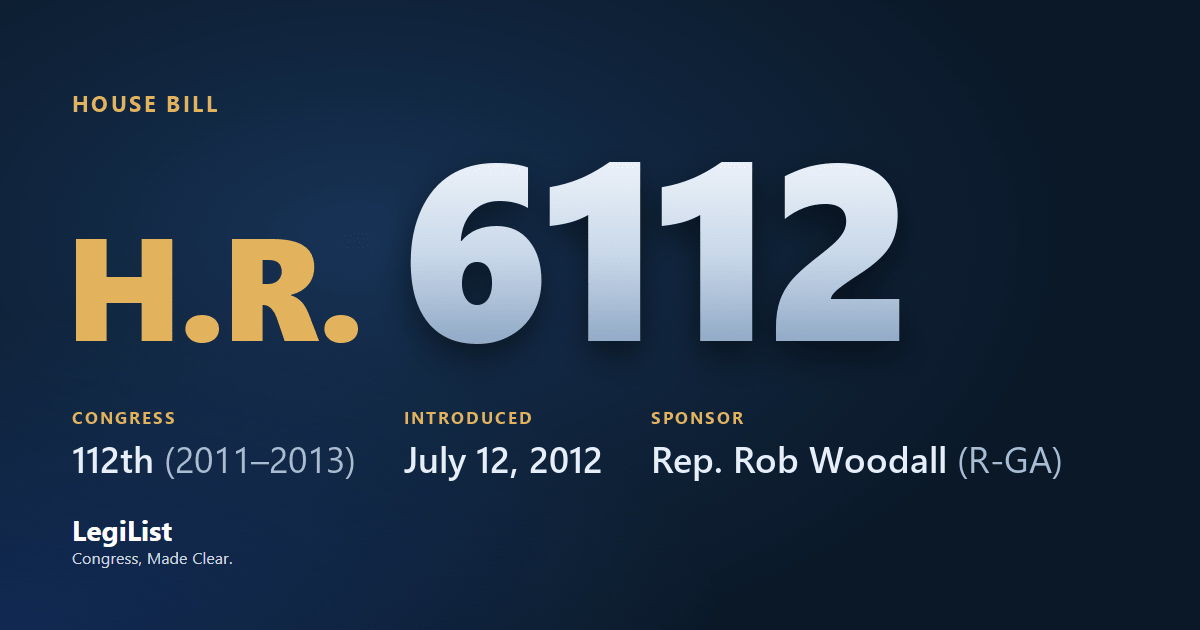
Employee Verification Act
Latest action · Jul 19, 2012 Referred to the Subcommittee on Immigration Policy and Enforcement.
Progress
Where this bill reached, and when. A stage with no date was not reached; one that failed a vote and later carried shows the date it carried.
- IntroducedJul 12, 2012
- Passed HouseNot reached
- Passed SenateNot reached
- To the PresidentNot reached
- Became lawNot reached
Summary
Employee Verification Act - Amends the the Illegal Immigration Reform and Immigrant Responsibility Act of 1996 to require federal contractors and subcontractors to participate in the E-Verify Program.
Exempts specified federal procurement contracts from E-Verify coverage.
Directs the Secretary of Homeland Security (DHS) to ensure that E-Verify is applied to: (1) all persons hired during the term of the grant, loan, loan guarantee, or cooperative agreement by the recipient of the federal benefit to perform employment duties within the United States; and (2) all employees assigned by the recipient of the federal benefit to perform work within the United States under the project or activity funded by the grant, loan, loan guarantee, or cooperative agreement.
Makes E-Verify permanent.
Cosponsors 17
Members who signed on, in the order they did. Signatures ran from Jul 12, 2012 to Aug 1, 2012; 12 are original cosponsors, there from the day it was introduced.
| Seat | Cosponsor | Signed on | |
|---|---|---|---|
| R-GA | Austin Scott | Original | Jul 12, 2012 |
| R-MO | Billy Long | Original | Jul 12, 2012 |
| R-SC | Joe Wilson | Original | Jul 12, 2012 |
| R-CA | John Campbell | Original | Jul 12, 2012 |
| R-GA | Lynn A. Westmoreland | Original | Jul 12, 2012 |
| R-PA | Michael G. Fitzpatrick | Original | Jul 12, 2012 |
| R-TX | Pete Olson | Original | Jul 12, 2012 |
| R-IA | Steve King | Original | Jul 12, 2012 |
| R-SC | Tim Scott | Original | Jul 12, 2012 |
| R-CA | Tom McClintock | Original | Jul 12, 2012 |
| R-AZ | Trent Franks | Original | Jul 12, 2012 |
| R-NC | Walter B. Jones | Original | Jul 12, 2012 |
| R-FL | Richard B. Nugent | Jul 18, 2012 | |
| R-OK | James Lankford | Jul 23, 2012 | |
| R-GA | Tom Graves | Jul 24, 2012 | |
| R-TN | John J. Duncan, Jr. | Jul 25, 2012 | |
| R-IN | Dan Burton | Aug 1, 2012 |
Committees 2
Where it was sent and what each committee and subcommittee did with it, in order.
| Chamber | Committee | What it did |
|---|---|---|
| House | Judiciary Committee | Referred Jul 12, 2012 |
| Immigration Integrity, Security, and Enforcement Subcommittee | Referred Jul 19, 2012 | |
| House | Education and Workforce Committee | Referred Jul 12, 2012 |
Actions 3
Everything that happened, newest first.
- Jul 19, 2012Referred to the Subcommittee on Immigration Policy and Enforcement.
- Jul 12, 2012Introduced in House
- Jul 12, 2012Referred to the Committee on the Judiciary, and in addition to the Committee on Education and the Workforce, for a period to be subsequently determined by the Speaker, in each case for consideration of such provisions as fall within the jurisdiction of the committee concerned.
Research
What has been written about this bill: committee reports, cost estimates, the sponsor’s authority statement, printed hearings and the Congressional Research Service’s work.
Constitutional authority
The sponsor’s statement, as printed in the page H4863.
Titles 2
Every title it has carried, official and short, at each stage.
- Official Title as Introduced
- To require Federal contractors and other recipients of Federal funds to participate in the E-Verify Program for employment eligibility verification, to permanently reauthorize the E-Verify Program, and for other purposes.
- Short Titles as Introduced
- Employee Verification Act
Subjects
Assigned by the Library of Congress. Policy area: Immigration.
Text 1
Each version as it was printed, newest first.
- Jul 12, 2012Introduced in House
Support LegiList
This page is free, carries no paywall, and is built and maintained by one person. If the record here is useful to you, a few dollars keeps it going.
Everything here is as published by Congress: the summary is the Congressional Research Service's, the action wording is the clerks', and the subjects are the Library of Congress's. How far it got is read from the actions themselves, taking the most recent one of each kind, so a bill that failed a vote and later passed is shown as having passed. Records come from this bill on Congress.gov and govinfo.gov; cost estimates are the Congressional Budget Office's, and the hearings are the printed hearings GovInfo publishes, which can appear months after the hearing.