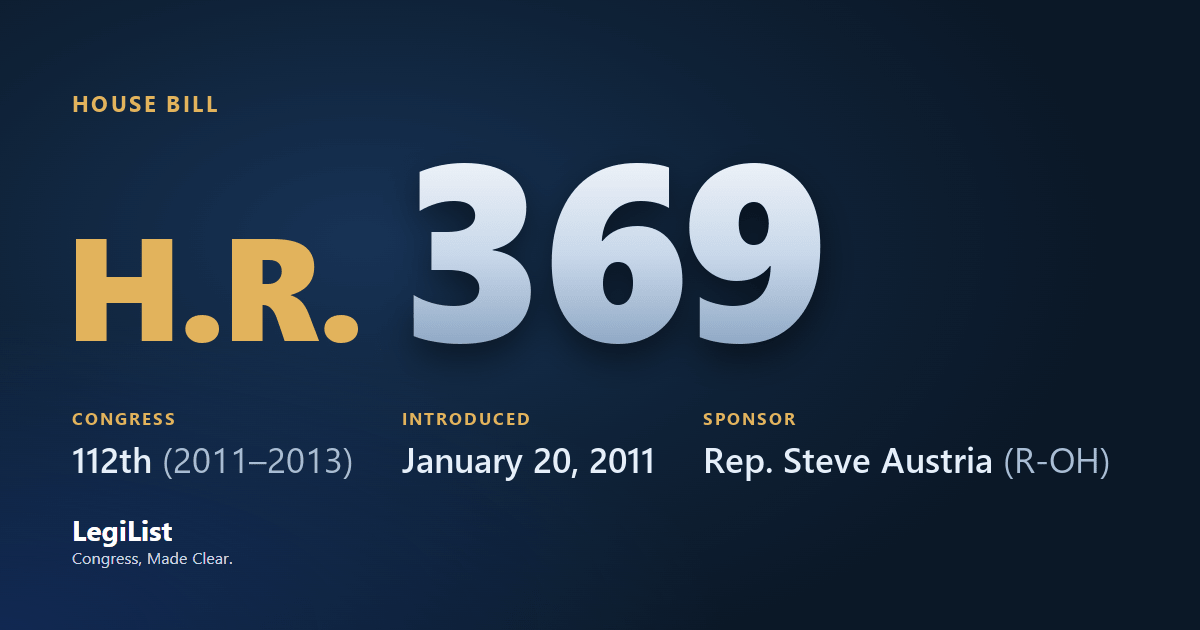
Health Savings and Affordability Act of 2011
Latest action · Jan 20, 2011 Referred to the House Committee on Ways and Means.
Progress
Where this bill reached, and when. A stage with no date was not reached; one that failed a vote and later carried shows the date it carried.
- IntroducedJan 20, 2011
- Passed HouseNot reached
- Passed SenateNot reached
- To the PresidentNot reached
- Became lawNot reached
Summary
Health Savings and Affordability Act of 2011- Amends the Internal Revenue Code to: (1) allow a tax deduction from gross income for the cost of health insurance coverage for individual taxpayers, their spouses, and dependents; (2) permit holders of health savings accounts (HSAs) and their spouses who are age 55 or older to make additional (catch-up) contributions to a joint HSA; (3) increase the allowable amount of the tax deduction for contributions to HSAs; (4) combine individual and family deductibles under high deductible health insurance plans; (5) allow for increased rollovers from flexible spending arrangements (FSAs) or health reimbursement arrangements (HRAs) into HSAs; (6) allow the payment of premiums from HSAs for high deductible health plans; and (7) treat as medical care for purposes of the tax deduction for medical expenses certain exercise equipment and fees for physical fitness programs.
Cosponsors 20
Members who signed on, in the order they did. Signatures ran from Jan 20, 2011 to Sep 14, 2011; 13 are original cosponsors, there from the day it was introduced.
| Seat | Cosponsor | Signed on | |
|---|---|---|---|
| R-LA | Bill Cassidy | Original | Jan 20, 2011 |
| R-MO | Billy Long | Original | Jan 20, 2011 |
| R-IN | Dan Burton | Original | Jan 20, 2011 |
| R-FL | Dennis A. Ross | Original | Jan 20, 2011 |
| R-PA | Glenn Thompson | Original | Jan 20, 2011 |
| R-GA | Lynn A. Westmoreland | Original | Jan 20, 2011 |
| R-MN | Michele Bachmann | Original | Jan 20, 2011 |
| R-CO | Mike Coffman | Original | Jan 20, 2011 |
| R-IN | Mike Pence | Original | Jan 20, 2011 |
| R-OH | Patrick J. Tiberi | Original | Jan 20, 2011 |
| R-TX | Pete Sessions | Original | Jan 20, 2011 |
| R-TX | Ron Paul | Original | Jan 20, 2011 |
| R-MO | W. Todd Akin | Original | Jan 20, 2011 |
| R-FL | Bill Posey | Apr 4, 2011 | |
| R-VA | Bob Goodlatte | Apr 4, 2011 |
Committees 1
Where it was sent and what each committee and subcommittee did with it, in order.
| Chamber | Committee | What it did |
|---|---|---|
| House | Ways and Means Committee | Referred Jan 20, 2011 |
Actions 2
Everything that happened, newest first.
- Jan 20, 2011Introduced in House
- Jan 20, 2011Referred to the House Committee on Ways and Means.
Research
What has been written about this bill: committee reports, cost estimates, the sponsor’s authority statement, printed hearings and the Congressional Research Service’s work.
Constitutional authority
The sponsor’s statement, as printed in the page H396.
Titles 2
Every title it has carried, official and short, at each stage.
- Official Title as Introduced
- To amend the Internal Revenue Code of 1986 to improve access to health care by allowing a deduction for the health insurance costs of individuals, expanding health savings accounts, and for other purposes.
- Short Titles as Introduced
- Health Savings and Affordability Act of 2011
Subjects
Assigned by the Library of Congress. Policy area: Taxation.
Text 1
Each version as it was printed, newest first.
- Jan 20, 2011Introduced in House
Everything here is as published by Congress: the summary is the Congressional Research Service's, the action wording is the clerks', and the subjects are the Library of Congress's. How far it got is read from the actions themselves, taking the most recent one of each kind, so a bill that failed a vote and later passed is shown as having passed. Records come from this bill on Congress.gov and govinfo.gov; cost estimates are the Congressional Budget Office's, and the hearings are the printed hearings GovInfo publishes, which can appear months after the hearing.