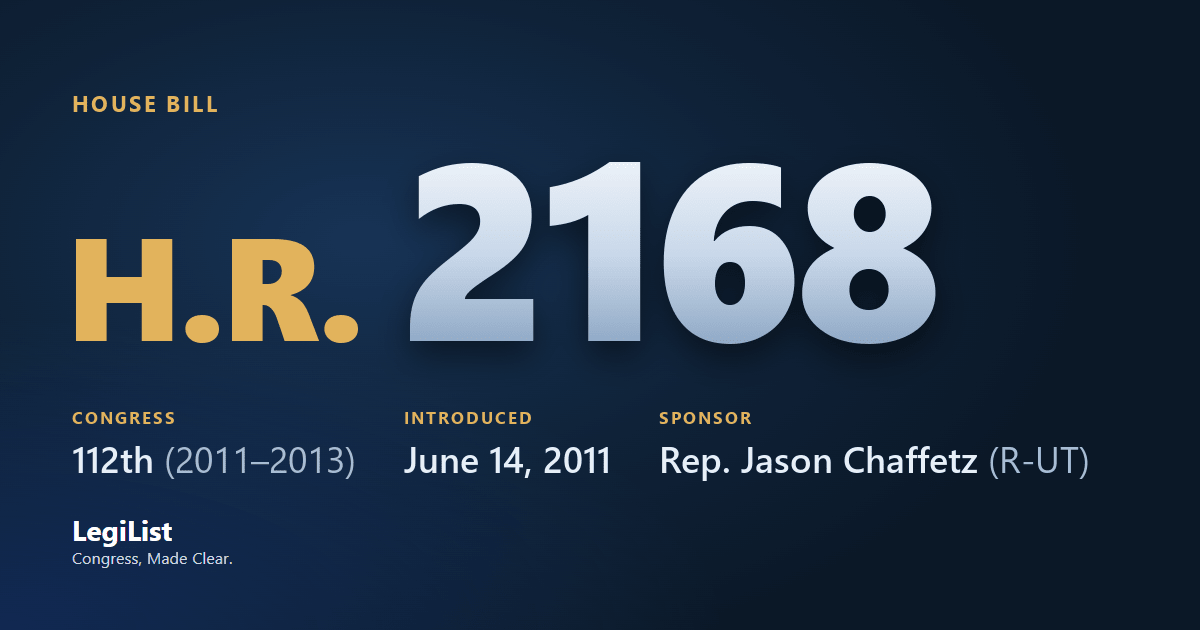
GPS Act
Latest action · May 17, 2012 Subcommittee Hearings Held.
Progress
Where this bill reached, and when. A stage with no date was not reached; one that failed a vote and later carried shows the date it carried.
- IntroducedJun 14, 2011
- Passed HouseNot reached
- Passed SenateNot reached
- To the PresidentNot reached
- Became lawNot reached
Summary
Geolocational Privacy and Surveillance Act or the GPS Act - Amends the federal criminal code to prohibit intentionally: (1) intercepting geolocation information pertaining to another person; (2) disclosing to any other person such information pertaining to another, knowing that the information was obtained in violation of this Act; (3) using geolocation information, knowing that the information was obtained in violation of this Act; or (4) disclosing to any other person the geolocation information pertaining to another person intercepted by means authorized under this Act, knowing that the information was obtained in connection with a criminal investigation, having obtained or received information in connection with a criminal investigation, with intent to improperly obstruct, impede, or interfere with a duly authorized criminal investigation. Sets penalties for violations.
Makes specified exceptions for interceptions involving: (1) information acquired by a provider of covered services (electronic communication service, remote computing service, or geolocation information service) in the normal course of business; (2) federal officers, employees, or agents conducting foreign intelligence surveillance; (3) persons having given prior consent; (4) public information; (5) emergency information; (6) theft; and (7) a warrant.
Prohibits: (1) a person providing covered services from intentionally divulging geolocation information pertaining to another person, with exceptions; and (2) the use of such information, and evidence derived from it, as evidence. Authorizes: (1) the use of geolocation information by investigative or law enforcement officers, or by a state's principal prosecuting attorney, to intercept such information under specified emergency circumstances; and (2) the recovery of civil damages by any person whose geolocation information is intercepted, disclosed, or intentionally used in violation of this Act.
Modifies the Federal Rules of Criminal Procedure to require a search warrant to acquire geolocation information.
Amends the federal criminal code to include any geolocation information service within the definition of a "covered entity" for purposes of provisions prohibiting obtaining confidential phone records information from such an entity by fraud or related activity.
Directs the United States Sentencing Commission to review the federal sentencing guidelines and policy statements applicable to persons convicted of fraud and related activity in connection with obtaining certain confidential phone records information.
Prohibits acquiring geolocation information of a person for protective activities or law enforcement or intelligence purposes except pursuant to a warrant issued under the Federal Rules of Criminal Procedure or the Foreign Intelligence Surveillance Act.
Cosponsors 27
Members who signed on, in the order they did. Signatures ran from Jun 14, 2011 to Nov 28, 2012; 1 is an original cosponsor, there from the day it was introduced.
| Seat | Cosponsor | Signed on | |
|---|---|---|---|
| R-VA | Bob Goodlatte | Original | Jun 14, 2011 |
| D-VT | Peter Welch | Jun 16, 2011 | |
| R-NC | Howard Coble | Jul 21, 2011 | |
| D-OR | Peter A. DeFazio | Sep 9, 2011 | |
| D-IL | Janice D. Schakowsky | Sep 20, 2011 | |
| D-CA | Zoe Lofgren | Sep 20, 2011 | |
| D-CA | Sam Farr | Oct 25, 2011 | |
| D-OR | Earl Blumenauer | Oct 26, 2011 | |
| D-HI | Mazie K. Hirono | Jan 17, 2012 | |
| D-CA | Bob Filner | Jan 27, 2012 | |
| D-CA | Barbara Lee | Feb 1, 2012 | |
| R-WI | F. James Sensenbrenner, Jr. | Feb 2, 2012 | |
| R-CA | Dana Rohrabacher | Feb 8, 2012 | |
| D-ME | Chellie Pingree | Feb 15, 2012 | |
| D-MI | Hansen Clarke | Feb 27, 2012 |
Committees 2
Where it was sent and what each committee and subcommittee did with it, in order.
| Chamber | Committee | What it did |
|---|---|---|
| House | Judiciary Committee | Referred Jun 14, 2011 |
| Crime and Federal Government Surveillance Subcommittee | Referred Jul 11, 2011Hearings May 17, 2012 | |
| House | Intelligence (Permanent Select) Committee | Referred Jun 14, 2011 |
Actions 4
Everything that happened, newest first.
- May 17, 2012Subcommittee Hearings Held.
- Jul 11, 2011Referred to the Subcommittee on Crime, Terrorism, and Homeland Security.
- Jun 14, 2011Introduced in House
- Jun 14, 2011Referred to the Committee on the Judiciary, and in addition to the Committee on Intelligence (Permanent Select), for a period to be subsequently determined by the Speaker, in each case for consideration of such provisions as fall within the jurisdiction of the committee concerned.
Research
What has been written about this bill: committee reports, cost estimates, the sponsor’s authority statement, printed hearings and the Congressional Research Service’s work.
Constitutional authority
The sponsor’s statement, as printed in the page H4186.
Printed hearings 1
Hearings whose printed record names this bill, newest first: hearings on it, and wider hearings where it came up.
| Number | Hearing | Committee | Held |
|---|---|---|---|
| Serial No. 112-125 | GEOLOCATIONAL PRIVACY AND SURVEILLANCE (GPS) ACT208 pages | Judiciary Committee | May 17, 2012 |
Related bills 2
Companion bills and other measures the record links to this one.
| Bill | Title | Relationship | Latest action |
|---|---|---|---|
| S 1212 | GPS Act | Related bill | Jun 15, 2011 |
| HR 6529 | ECPA 2.0 Act of 2012 | Related bill | Oct 3, 2012 |
Titles 3
Every title it has carried, official and short, at each stage.
- Official Title as Introduced
- To amend title 18, United States Code, to specify the circumstances in which a person may acquire geolocation information and for other purposes.
- Short Titles as Introduced
- GPS Act
- Geolocational Privacy and Surveillance Act
Subjects
Assigned by the Library of Congress. Policy area: Crime and Law Enforcement.
- Civil actions and liability
- Computers and information technology
- Crime and Law Enforcement
- Criminal investigation, prosecution, interrogation
- Criminal justice information and records
- Criminal procedure and sentencing
- Evidence and witnesses
- Fraud offenses and financial crimes
- Right of privacy
- Telephone and wireless communication
Text 1
Each version as it was printed, newest first.
- Jun 14, 2011Introduced in House
Support LegiList
This page is free, carries no paywall, and is built and maintained by one person. If the record here is useful to you, a few dollars keeps it going.
Everything here is as published by Congress: the summary is the Congressional Research Service's, the action wording is the clerks', and the subjects are the Library of Congress's. How far it got is read from the actions themselves, taking the most recent one of each kind, so a bill that failed a vote and later passed is shown as having passed. Records come from this bill on Congress.gov and govinfo.gov; cost estimates are the Congressional Budget Office's, and the hearings are the printed hearings GovInfo publishes, which can appear months after the hearing.