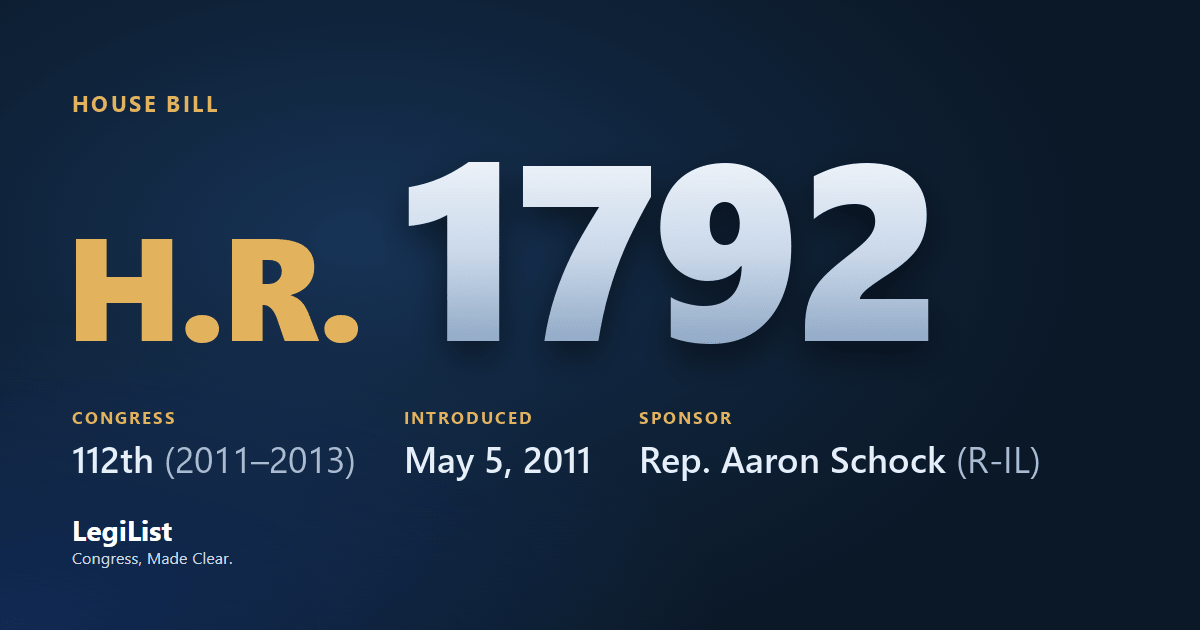
Fire Sprinkler Incentive Act
Latest action · May 5, 2011 Referred to the House Committee on Ways and Means.
Progress
Where this bill reached, and when. A stage with no date was not reached; one that failed a vote and later carried shows the date it carried.
- IntroducedMay 5, 2011
- Passed HouseNot reached
- Passed SenateNot reached
- To the PresidentNot reached
- Became lawNot reached
Summary
Fire Sprinkler Incentive Act - Amends the Internal Revenue Code to allow: (1) 100% expensing in a current taxable year of the cost of an automated fire sprinkler system, as defined by this Act; and (2) accelerated depreciation (i.e., a 15-year recovery period) of such an automated fire sprinkler system that is installed in a building where the floor of any occupiable story is greater than 75 feet above the lowest level of fire department vehicle access.
Cosponsors 51
Members who signed on, in the order they did. Signatures ran from May 5, 2011 to Sep 28, 2012; 1 is an original cosponsor, there from the day it was introduced.
| Seat | Cosponsor | Signed on | |
|---|---|---|---|
| D-RI | James R. Langevin | Original | May 5, 2011 |
| D-NJ | Bill Pascrell, Jr. | Jun 13, 2011 | |
| D-IL | Jesse L. Jackson, Jr. | Jun 13, 2011 | |
| D-NY | Nita M. Lowey | Jun 13, 2011 | |
| R-VA | Frank R. Wolf | Jun 16, 2011 | |
| D-TN | Jim Cooper | Jun 16, 2011 | |
| D-MA | John W. Olver | Jun 16, 2011 | |
| D-AZ | Raúl M. Grijalva | Jun 16, 2011 | |
| D-PA | Tim Holden | Jun 16, 2011 | |
| D-NY | Timothy H. Bishop | Jun 16, 2011 | |
| D-IL | Jerry F. Costello | Jun 22, 2011 | |
| D-ME | Michael H. Michaud | Jun 22, 2011 | |
| R-TX | Ron Paul | Jun 22, 2011 | |
| D-MA | James P. McGovern | Jun 24, 2011 | |
| D-NC | Mike McIntyre | Jul 8, 2011 |
Committees 1
Where it was sent and what each committee and subcommittee did with it, in order.
| Chamber | Committee | What it did |
|---|---|---|
| House | Ways and Means Committee | Referred May 5, 2011 |
Actions 2
Everything that happened, newest first.
- May 5, 2011Introduced in House
- May 5, 2011Referred to the House Committee on Ways and Means.
Research
What has been written about this bill: committee reports, cost estimates, the sponsor’s authority statement, printed hearings and the Congressional Research Service’s work.
Constitutional authority
The sponsor’s statement, as printed in the page H3111.
Printed hearings 1
Hearings whose printed record names this bill, newest first: hearings on it, and wider hearings where it came up.
| Number | Hearing | Committee | Held |
|---|---|---|---|
| Serial No. 112-54 | REASSESSING AMERICAN GRAND STRATEGY IN SOUTH ASIA67 pages | Foreign Affairs Committee | Jul 26, 2011 |
Related bills 1
Companion bills and other measures the record links to this one.
| Bill | Title | Relationship | Latest action |
|---|---|---|---|
| S 1035 | Fire Sprinkler Incentive Act of 2011 | Related bill | May 19, 2011 |
Titles 2
Every title it has carried, official and short, at each stage.
- Official Title as Introduced
- To amend the Internal Revenue Code of 1986 to include automated fire sprinkler systems as section 179 property and classify certain automated fire sprinkler systems as 15-year property for purposes of depreciation.
- Short Titles as Introduced
- Fire Sprinkler Incentive Act
Subjects
Assigned by the Library of Congress. Policy area: Taxation.
Text 1
Each version as it was printed, newest first.
- May 5, 2011Introduced in House
Everything here is as published by Congress: the summary is the Congressional Research Service's, the action wording is the clerks', and the subjects are the Library of Congress's. How far it got is read from the actions themselves, taking the most recent one of each kind, so a bill that failed a vote and later passed is shown as having passed. Records come from this bill on Congress.gov and govinfo.gov; cost estimates are the Congressional Budget Office's, and the hearings are the printed hearings GovInfo publishes, which can appear months after the hearing.