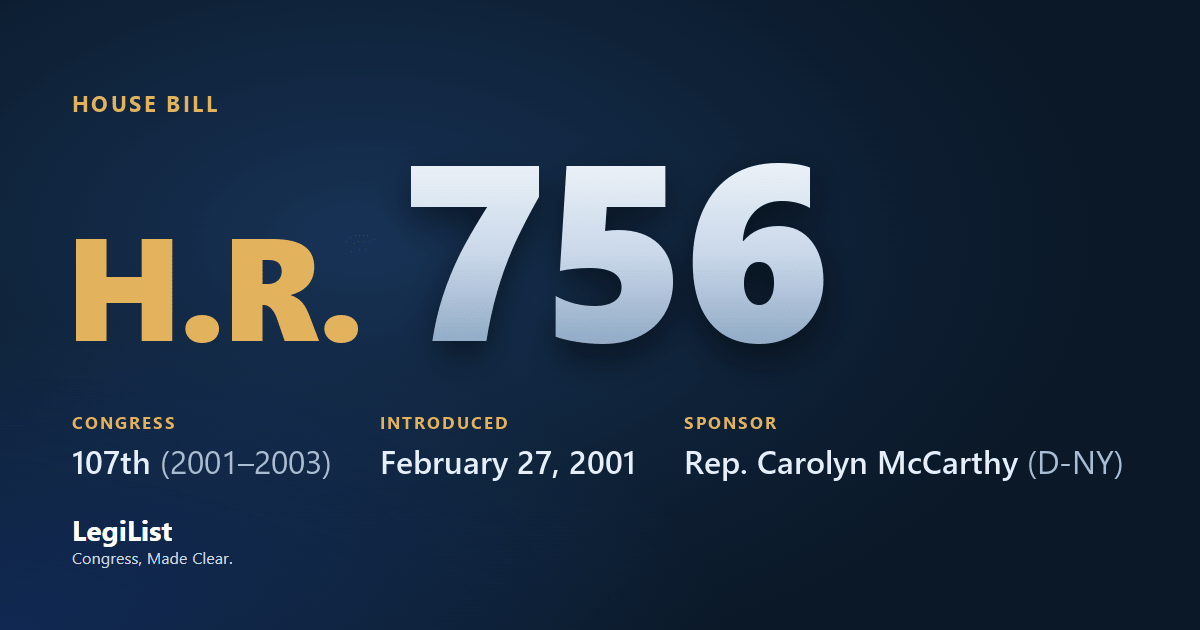
Quality After-School Expansion Act of 2001
Latest action · Apr 20, 2001 Referred to the Subcommittee on Education Reform.
Progress
Where this bill reached, and when. A stage with no date was not reached; one that failed a vote and later carried shows the date it carried.
- IntroducedFeb 27, 2001
- Passed HouseNot reached
- Passed SenateNot reached
- To the PresidentNot reached
- Became lawNot reached
Summary
Makes small cities and disadvantaged suburban communities (as well as inner cities and rural communities) eligible if they have a substantial need for expanded learning opportunities because they: (1) lack resources to establish or expand such centers; or (2) have other related needs.
Provides for allocation of grant funds to State educational agencies (SEAs) (current law provides for direct grants to public elementary or secondary schools or consortia). Reserves funds for continuation grants to existing grantees, specified territories, programs for Indian children, and evaluation and national activities. Requires SEAs to award competitive grants to eligible local entities acting on behalf of public elementary or secondary schools. Allows a portion of funds to be used for State-level activities and evaluation.
Requires SEAs to establish performance indicators and acceptable goals of progress to evaluate the effectiveness of programs under this Act.
Requires each local grantee to use: (1) at least a portion of its grant to implement or expand before- and after-school learning opportunities; and (2) the remainder to carry out not less than three among a list of specified activities. (Current law requires centers to include at least four of specified activities.)
Cosponsors 21
Members who signed on, in the order they did. Signatures ran from Feb 27, 2001 to Jun 25, 2001; 15 are original cosponsors, there from the day it was introduced.
| Seat | Cosponsor | Signed on | |
|---|---|---|---|
| D-NJ | Bill Pascrell, Jr. | Original | Feb 27, 2001 |
| D-NC | Bob Etheridge | Original | Feb 27, 2001 |
| D-FL | Carrie P. Meek | Original | Feb 27, 2001 |
| R-MD | Constance A. Morella | Original | Feb 27, 2001 |
| D-MI | Dale E. Kildee | Original | Feb 27, 2001 |
| D-OR | David Wu | Original | Feb 27, 2001 |
| D-NJ | Donald M. Payne | Original | Feb 27, 2001 |
| D-CA | George Miller | Original | Feb 27, 2001 |
| D-IL | Janice D. Schakowsky | Original | Feb 27, 2001 |
| D-MA | John F. Tierney | Original | Feb 27, 2001 |
| D-CA | Lynn C. Woolsey | Original | Feb 27, 2001 |
| D-NY | Maurice D. Hinchey | Original | Feb 27, 2001 |
| D-VA | Robert C. "Bobby" Scott | Original | Feb 27, 2001 |
| D-NJ | Robert E. Andrews | Original | Feb 27, 2001 |
| D-TX | Ruben Hinojosa | Original | Feb 27, 2001 |
| D-IL | Danny K. Davis | Mar 6, 2001 | |
| D-MO | Karen McCarthy | Mar 6, 2001 | |
| D-TX | Martin Frost | Mar 6, 2001 | |
| D-CA | Juanita Millender-McDonald | Mar 14, 2001 | |
| D-CA | Susan A. Davis | Mar 14, 2001 | |
| D-TN | Bob Clement | Jun 25, 2001 |
Committees 1
Where it was sent and what each committee and subcommittee did with it, in order.
| Chamber | Committee | What it did |
|---|---|---|
| House | Education and Workforce Committee | Referred Feb 27, 2001 |
| Early Childhood, Elementary, and Secondary Education Subcommittee | Referred Apr 20, 2001 |
Actions 3
Everything that happened, newest first.
- Apr 20, 2001Referred to the Subcommittee on Education Reform.
- Feb 27, 2001Introduced in House
- Feb 27, 2001Referred to the House Committee on Education and the Workforce.
Titles 2
Every title it has carried, official and short, at each stage.
- Official Title as Introduced
- To amend the Elementary and Secondary Education Act of 1965 to provide grants to provide programs that benefit the educational, health, social service, cultural, and recreational needs of inner and small cities and rural and disadvantaged suburban communities.
- Short Titles as Introduced
- Quality After-School Expansion Act of 2001
Subjects
Assigned by the Library of Congress. Policy area: Education.
- Academic performance
- Agriculture and Food
- Arts, Culture, Religion
- Authorization
- Child care workers
- Community and school
- Community centers
- Community schools
- Compensatory education
- Computer literacy
- Computer-assisted instruction
- Computers in education
- Continuing education
- Curricula
- Day care
- Department of Education
- Disabled
- Dropout prevention
- Economics and Public Finance
- Education
- Education of disadvantaged children
- Educational accountability
- Elementary and secondary education
- Elementary education
- Elementary schools
- Families
- Federal aid to adult education
- Federal aid to disability services
- Federal aid to education
- Federal aid to Indians
- Federal aid to territories
- Federal aid to the aged
- Government Operations and Politics
- Government paperwork
- Government publicity
- Health
- Health education
- High schools
- Higher education
- Housing and Community Development
- Indian education
- Infrastructure
- Interactive media
- Job hunting
- Labor and Employment
- Literacy programs
- Mentoring
- Minorities
- Nutrition
- Older workers
- Parent and child
- Parent-school relationships
- Problem children
- Public schools
- Recreation
- Rural education
- School libraries
- School-age child care
- Science, Technology, Communications
- Secondary education
- Senior centers
- Social Welfare
- Sports and Recreation
- Teacher education
- Technical education
- Urban affairs
- Urban education
- Vocational guidance
- Volunteer workers in education
Text 1
Each version as it was printed, newest first.
- Feb 27, 2001Introduced in House
Support LegiList
This page is free, carries no paywall, and is built and maintained by one person. If the record here is useful to you, a few dollars keeps it going.
Everything here is as published by Congress: the summary is the Congressional Research Service's, the action wording is the clerks', and the subjects are the Library of Congress's. How far it got is read from the actions themselves, taking the most recent one of each kind, so a bill that failed a vote and later passed is shown as having passed. Records come from this bill on Congress.gov and govinfo.gov; cost estimates are the Congressional Budget Office's, and the hearings are the printed hearings GovInfo publishes, which can appear months after the hearing.