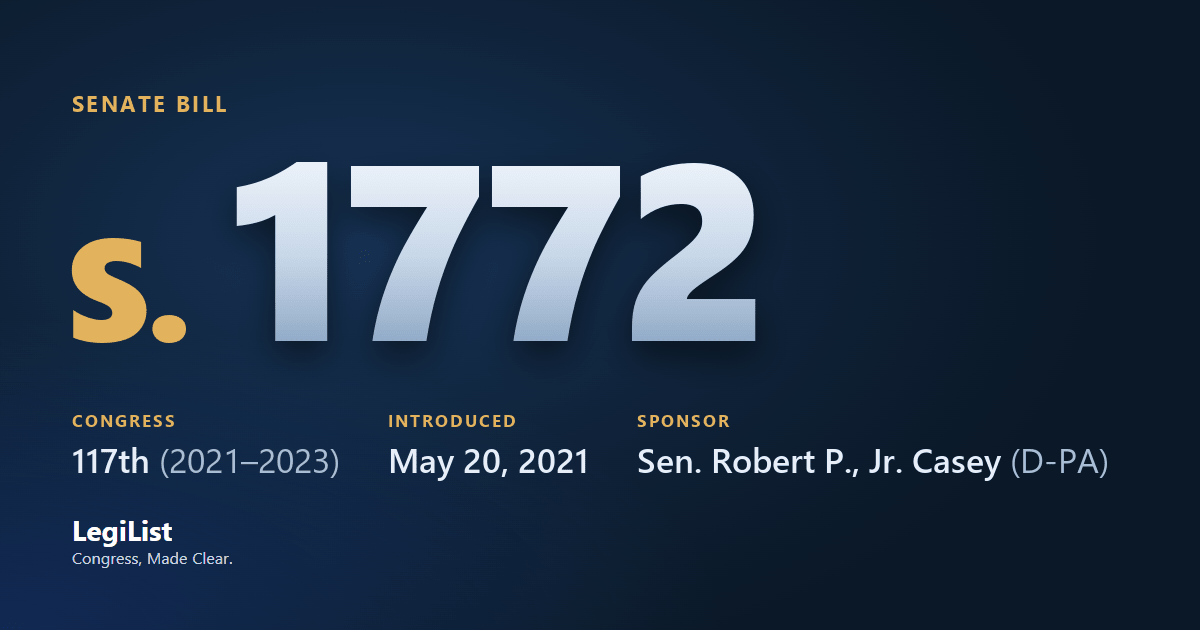
SWIFT Act
Latest action · May 20, 2021 Read twice and referred to the Committee on Finance.
Progress
Where this bill reached, and when. A stage with no date was not reached; one that failed a vote and later carried shows the date it carried.
- IntroducedMay 20, 2021
- Passed SenateNot reached
- Passed HouseNot reached
- To the PresidentNot reached
- Became lawNot reached
Summary
Surviving Widow(er) Income Fair Treatment Act of 2021 or the SWIFT Act
This bill modifies eligibility requirements and increases Social Security survivor benefits for widows, widowers, and surviving divorced spouses of a deceased worker.
Specifically, the bill makes widow and widower's benefits available to disabled individuals at any age, whereas currently the benefits are limited to such individuals between ages 50 to 60. In addition, provisions reducing benefits in various instances, such as when a beneficiary is entitled to multiple types of benefits, shall not apply to widow and widower's benefits for individuals with disabilities.
Additionally, the bill raises the upper age limit for determining whether a beneficiary has a child in his or her care from 16 to 18 years (or 19, if the child is a full-time elementary or secondary school student). An individual with a child in care may receive increased benefits in specified instances.
The bill also increases various limits on widow and widower's benefits in certain instances and modifies the calculation for increased benefits for individuals who choose to delay receiving such benefits.
For current beneficiaries, increases in Social Security benefits under this bill shall not affect the beneficiary's eligibility or benefit amount for any federal assistance program.
Cosponsors 5
Members who signed on, in the order they did. Signatures ran from May 20, 2021 to Sep 15, 2021; 4 are original cosponsors, there from the day it was introduced.
| Seat | Cosponsor | Signed on | |
|---|---|---|---|
| D-MN | Amy Klobuchar | Original | May 20, 2021 |
| D-NY | Kirsten E. Gillibrand | Original | May 20, 2021 |
| D-WA | Patty Murray | Original | May 20, 2021 |
| D-CT | Richard Blumenthal | Original | May 20, 2021 |
| D-MI | Debbie Stabenow | Sep 15, 2021 |
Committees 1
Where it was sent and what each committee and subcommittee did with it, in order.
| Chamber | Committee | What it did |
|---|---|---|
| Senate | Finance Committee | Referred May 20, 2021 |
Actions 2
Everything that happened, newest first.
- May 20, 2021Introduced in Senate
- May 20, 2021Read twice and referred to the Committee on Finance.
Research
What has been written about this bill: committee reports, cost estimates, the sponsor’s authority statement, printed hearings and the Congressional Research Service’s work.
Printed hearings 1
Hearings whose printed record names this bill, newest first: hearings on it, and wider hearings where it came up.
| Number | Hearing | Committee | Held |
|---|---|---|---|
| S. Hrg. 117-132 | A FINANCIALLY SECURE FUTURE: BUILDING A STRONGER RETIREMENT SYSTEM FOR ALL AMERICANS132 pages | Aging (Special) Committee | Oct 28, 2021 |
CRS reports 1
Congressional Research Service work that CRS links to this bill or the law it became, newest first.
Cite it 1
Products on other subjects that cite it, usually among other measures.
| Product | Title | Kind | Published |
|---|---|---|---|
| R45791 | Poverty Among the Population Aged 65 and Older | Report | Dec 6, 2022 |
Related bills 2
Companion bills and other measures the record links to this one.
Titles 3
Every title it has carried, official and short, at each stage.
- Official Title as Introduced
- A bill to amend title II of the Social Security Act to increase survivors benefits for disabled widows, widowers, and surviving divorced spouses, and for other purposes.
- Short Title(s) as Introduced
- SWIFT Act
- Surviving Widow(er) Income Fair Treatment Act of 2021
Subjects
Assigned by the Library of Congress. Policy area: Social Welfare.
Text 1
Each version as it was printed, newest first.
- May 20, 2021Introduced in Senate
Support LegiList
This page is free, carries no paywall, and is built and maintained by one person. If the record here is useful to you, a few dollars keeps it going.
Everything here is as published by Congress: the summary is the Congressional Research Service's, the action wording is the clerks', and the subjects are the Library of Congress's. How far it got is read from the actions themselves, taking the most recent one of each kind, so a bill that failed a vote and later passed is shown as having passed. Records come from this bill on Congress.gov and govinfo.gov; cost estimates are the Congressional Budget Office's, and the hearings are the printed hearings GovInfo publishes, which can appear months after the hearing.