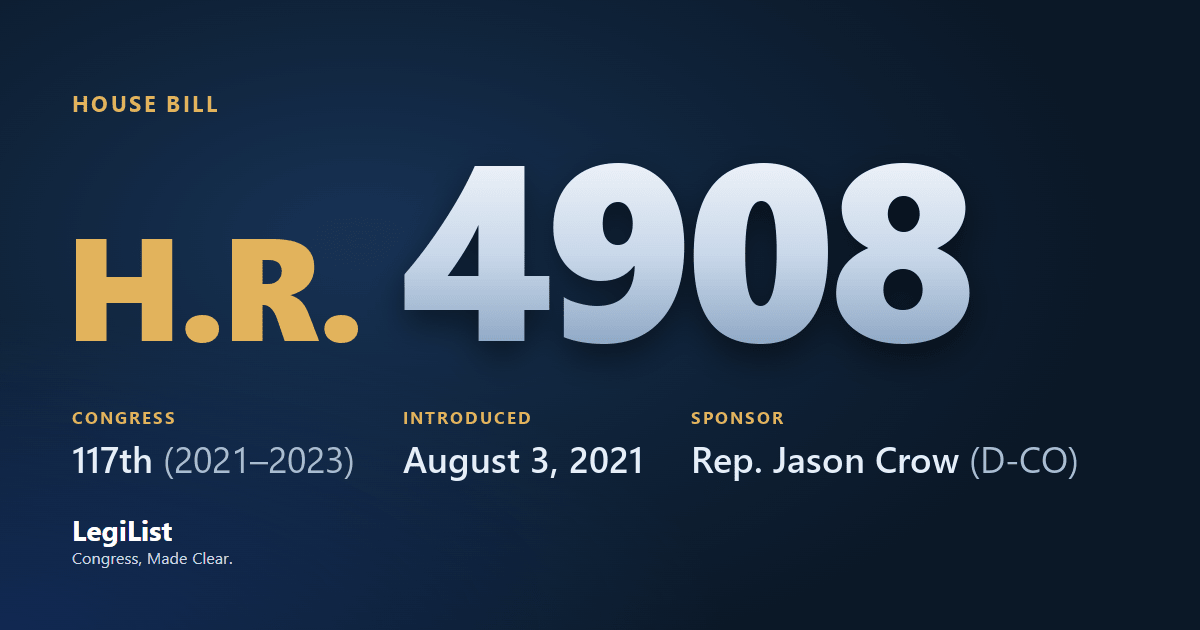
Community Vehicle Charging Act of 2021
Latest action · Aug 4, 2021 Referred to the Subcommittee on Energy.
Progress
Where this bill reached, and when. A stage with no date was not reached; one that failed a vote and later carried shows the date it carried.
- IntroducedAug 3, 2021
- Passed HouseNot reached
- Passed SenateNot reached
- To the PresidentNot reached
- Became lawNot reached
Summary
Community Vehicle Charging Act of 2021
This bill establishes a grant program to expand access to electric vehicle infrastructure in communities that consist primarily of minority, low-income, or tribal populations that experience (or are at risk of experiencing) greater adverse human health or environmental effects than other populations.
The Department of Transportation must award the grants to
- community-based organizations;
- nonprofits;
- state, tribal, regional, or local governments;
- metropolitan planning organizations; or
- other entities responsible for local transportation planning and projects.
Grant funds may be used for projects that include (1) developing or implementing plans to install publicly available electric vehicle charging infrastructure, (2) supporting shared electric mobility and micro-mobility options (e.g., electric bicycles), and (3) providing electric vehicle chargers and funding for their installation to community residents.
Cosponsors 3
Members who signed on, in the order they did. All signed on Aug 3, 2021.
| Seat | Cosponsor | Signed on | |
|---|---|---|---|
| D-MI | Debbie Dingell | Original | Aug 3, 2021 |
| D-WI | Gwen Moore | Original | Aug 3, 2021 |
| D-NY | Ritchie Torres | Original | Aug 3, 2021 |
Committees 1
Where it was sent and what each committee and subcommittee did with it, in order.
| Chamber | Committee | What it did |
|---|---|---|
| House | Energy and Commerce Committee | Referred Aug 3, 2021 |
| Energy Subcommittee | Referred Aug 4, 2021 |
Actions 3
Everything that happened, newest first.
- Aug 4, 2021Referred to the Subcommittee on Energy.
- Aug 3, 2021Introduced in House
- Aug 3, 2021Referred to the House Committee on Energy and Commerce.
Research
What has been written about this bill: committee reports, cost estimates, the sponsor’s authority statement, printed hearings and the Congressional Research Service’s work.
Constitutional authority
The sponsor’s statement, as printed in the Congressional Record, vol. 167, no. 138, August 3, 2021, page H4312.
Related bills 1
Companion bills and other measures the record links to this one.
| Bill | Title | Relationship | Latest action |
|---|---|---|---|
| S 1866 | Community Vehicle Charging Act of 2021 | Identical bill | May 26, 2021 |
Titles 2
Every title it has carried, official and short, at each stage.
- Official Title as Introduced
- To require the Secretary of Transportation to establish a grant program to increase the availability of electric vehicle charging infrastructure in environmental justice communities, and for other purposes.
- Short Title(s) as Introduced
- Community Vehicle Charging Act of 2021
Subjects
Assigned by the Library of Congress. Policy area: Transportation and Public Works.
- Air quality
- Building construction
- Community life and organization
- Congressional oversight
- Electric power generation and transmission
- Employment and training programs
- Environmental education
- Environmental health
- Government information and archives
- Hybrid, electric, and advanced technology vehicles
- Infrastructure development
- Minority and disadvantaged businesses
- Pedestrians and bicycling
- Public utilities and utility rates
- Public-private cooperation
- Small business
- Teaching, teachers, curricula
- Transportation and Public Works
- Transportation programs funding
- Women in business
Text 1
Each version as it was printed, newest first.
- Aug 3, 2021Introduced in House
Support LegiList
This page is free, carries no paywall, and is built and maintained by one person. If the record here is useful to you, a few dollars keeps it going.
Everything here is as published by Congress: the summary is the Congressional Research Service's, the action wording is the clerks', and the subjects are the Library of Congress's. How far it got is read from the actions themselves, taking the most recent one of each kind, so a bill that failed a vote and later passed is shown as having passed. Records come from this bill on Congress.gov and govinfo.gov; cost estimates are the Congressional Budget Office's, and the hearings are the printed hearings GovInfo publishes, which can appear months after the hearing.