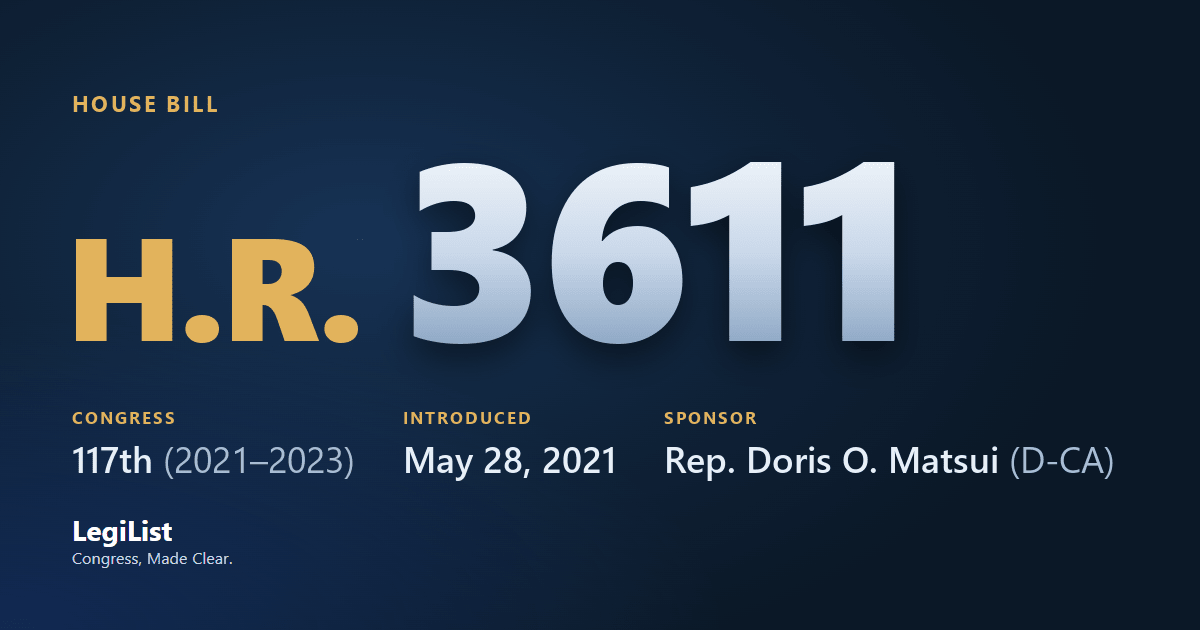
Algorithmic Justice and Online Platform Transparency Act
Latest action · May 31, 2021 Referred to the Subcommittee on Consumer Protection and Commerce.
Progress
Where this bill reached, and when. A stage with no date was not reached; one that failed a vote and later carried shows the date it carried.
- IntroducedMay 28, 2021
- Passed HouseNot reached
- Passed SenateNot reached
- To the PresidentNot reached
- Became lawNot reached
Summary
Algorithmic Justice and Online Platform Transparency Act
This bill establishes requirements for certain commercial online platforms (e.g., social media sites) that withhold or promote content through algorithms and related computational processes that use personal information.
The platforms must
- make disclosures about their collection and use of personal information and their content moderation practices;
- retain specified records that describe how the algorithms use personal information and assess whether the algorithms produce disparate outcomes based on race and other demographic factors in terms of access to housing, employment, financial services, and related matters;
- employ algorithms safely and effectively; and
- allow users to access and transfer their personal information.
If a platform uses algorithms to publish or sell advertising, it must maintain a library of the advertisements. The Federal Trade Commission must also adopt rules concerning deceptive advertising.
A platform's chief executive officer or other senior officer must certify compliance with disclosure requirements.
Additionally, platforms may not (1) employ algorithms or other design features that result in discrimination or similar harms based on demographic or biometric factors, or (2) process information such that it impairs voting rights. Further, users of a platform may not violate civil rights laws using the platform's algorithms.
The bill prohibits waivers or other methods that limit rights under the bill; provides whistleblower protections for individuals who report violations; and authorizes enforcement by specified federal agencies, states, and private individuals.
The bill also provides funding for an interagency task force to study the discriminatory use of personal information by platforms' algorithms.
Cosponsors 11
Members who signed on, in the order they did. Signatures ran from Oct 26, 2021 to Sep 13, 2022.
| Seat | Cosponsor | Signed on | |
|---|---|---|---|
| D-MI | Rashida Tlaib | Oct 26, 2021 | |
| D-FL | Theodore E. Deutch | Oct 26, 2021 | |
| D-MD | Kweisi Mfume | Oct 27, 2021 | |
| D-CA | Mark DeSaulnier | Nov 16, 2021 | |
| D-WA | Pramila Jayapal | May 12, 2022 | |
| D-PA | Mary Gay Scanlon | Jun 8, 2022 | |
| D-CA | Anna G. Eshoo | Aug 12, 2022 | |
| D-NY | Yvette D. Clarke | Aug 23, 2022 | |
| D-TN | Steve Cohen | Sep 2, 2022 | |
| D-NY | Carolyn B. Maloney | Sep 13, 2022 | |
| D-MD | Jamie Raskin | Sep 13, 2022 |
Committees 1
Where it was sent and what each committee and subcommittee did with it, in order.
| Chamber | Committee | What it did |
|---|---|---|
| House | Energy and Commerce Committee | Referred May 28, 2021 |
| Commerce, Manufacturing, and Trade Subcommittee | Referred May 31, 2021 |
Actions 3
Everything that happened, newest first.
- May 31, 2021Referred to the Subcommittee on Consumer Protection and Commerce.
- May 28, 2021Introduced in House
- May 28, 2021Referred to the House Committee on Energy and Commerce.
Research
What has been written about this bill: committee reports, cost estimates, the sponsor’s authority statement, printed hearings and the Congressional Research Service’s work.
Constitutional authority
The sponsor’s statement, as printed in the Congressional Record, vol. 167, no. 94, May 28, 2021, page H2679.
Printed hearings 1
Hearings whose printed record names this bill, newest first: hearings on it, and wider hearings where it came up.
| Number | Hearing | Committee | Held |
|---|---|---|---|
| Serial No. 117-61 | HOLDING BIG TECH ACCOUNTABLE: LEGISLATION TO BUILD A SAFER INTERNET175 pages | Energy and Commerce Committee | Dec 9, 2021 |
CRS reports 1
Congressional Research Service work that CRS links to this bill or the law it became, newest first.
Cite it 1
Products on other subjects that cite it, usually among other measures.
| Product | Title | Kind | Published |
|---|---|---|---|
| IN11986 | Campaign Finance Policy and Email Spam Filtering: The Google Advisory Opinion Request Archived | Insight | Aug 12, 2022 |
Related bills 2
Companion bills and other measures the record links to this one.
| Bill | Title | Relationship | Latest action |
|---|---|---|---|
| S 1896 | Algorithmic Justice and Online Platform Transparency Act | Identical bill | May 27, 2021 |
| HR 4624 | Algorithmic Justice and Online Platform Transparency Act | Reintroduced Bill | Jul 14, 2023 |
Titles 2
Every title it has carried, official and short, at each stage.
- Official Title as Introduced
- To prohibit the discriminatory use of personal information by online platforms in any algorithmic process, to require transparency in the use of algorithmic processes and content moderation, and for other purposes.
- Short Title(s) as Introduced
- Algorithmic Justice and Online Platform Transparency Act
Subjects
Assigned by the Library of Congress. Policy area: Science, Technology, Communications.
- Administrative law and regulatory procedures
- Appropriations
- Civil actions and liability
- Computers and information technology
- Congressional oversight
- Consumer affairs
- Consumer credit
- Criminal justice information and records
- Executive agency funding and structure
- Federal Trade Commission (FTC)
- Genetics
- Government studies and investigations
- Internet and video services
- Internet, web applications, social media
- Marketing and advertising
- Marriage and family status
- Racial and ethnic relations
- Right of privacy
- Science, Technology, Communications
- Sex, gender, sexual orientation discrimination
- State and local government operations
- Student records
- Voting rights
Text 1
Each version as it was printed, newest first.
- May 28, 2021Introduced in House
Support LegiList
This page is free, carries no paywall, and is built and maintained by one person. If the record here is useful to you, a few dollars keeps it going.
Everything here is as published by Congress: the summary is the Congressional Research Service's, the action wording is the clerks', and the subjects are the Library of Congress's. How far it got is read from the actions themselves, taking the most recent one of each kind, so a bill that failed a vote and later passed is shown as having passed. Records come from this bill on Congress.gov and govinfo.gov; cost estimates are the Congressional Budget Office's, and the hearings are the printed hearings GovInfo publishes, which can appear months after the hearing.