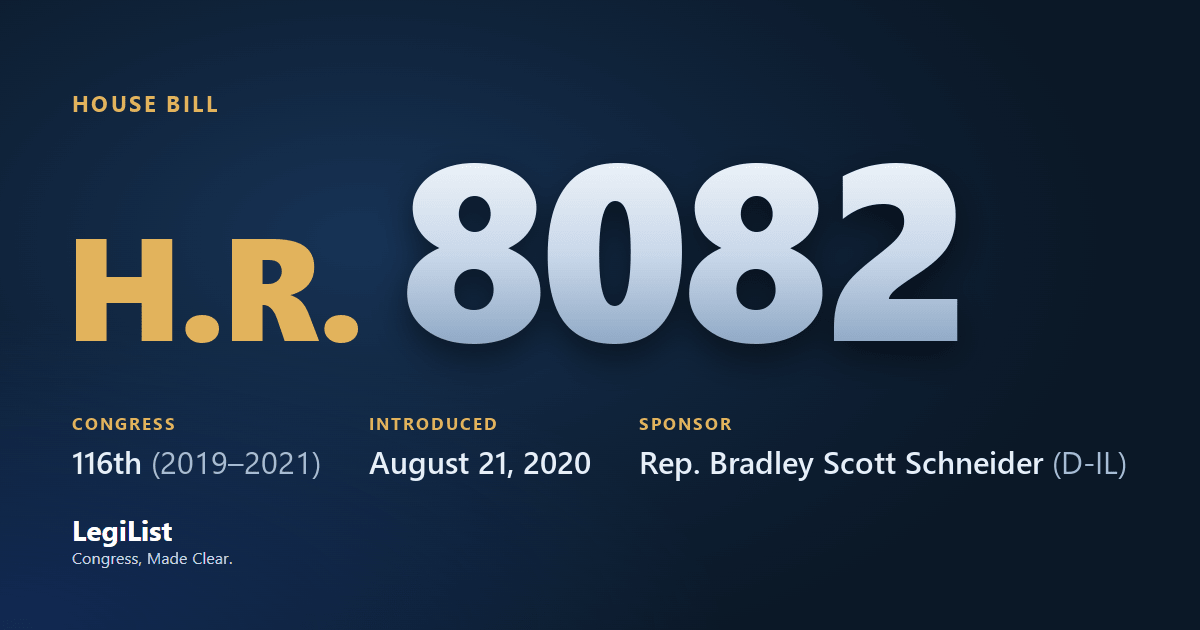
Freight RAILCAR Act of 2020
Latest action · Aug 21, 2020 Referred to the House Committee on Ways and Means.
Progress
Where this bill reached, and when. A stage with no date was not reached; one that failed a vote and later carried shows the date it carried.
- IntroducedAug 21, 2020
- Passed HouseNot reached
- Passed SenateNot reached
- To the PresidentNot reached
- Became lawNot reached
Summary
Freight Rail Assistance and Investment to Launch Coronavirus-era Activity and Recovery Act of 2020 or the Freight RAILCAR Act of 2020
This bill establishes a new tax credit for the replacement and modernization of qualified freight railcars. Specifically, it allows a credit for 50% of the sum of the qualifying replacement or modernization amount, the qualifying scrap amount, and the qualifying railcar facility and technology modernization amount.
The bill defines qualified freight railcar as a freight railcar that meets significant improvement requirements for capacity, fuel efficiency, or performance.
Cosponsors 31
Members who signed on, in the order they did. Signatures ran from Aug 21, 2020 to Dec 16, 2020; 5 are original cosponsors, there from the day it was introduced.
| Seat | Cosponsor | Signed on | |
|---|---|---|---|
| R-GA | A. Drew Ferguson IV | Original | Aug 21, 2020 |
| D-IL | Daniel Lipinski | Original | Aug 21, 2020 |
| R-IL | Darin LaHood | Original | Aug 21, 2020 |
| D-OR | Earl Blumenauer | Original | Aug 21, 2020 |
| R-AR | Eric A. "Rick" Crawford | Original | Aug 21, 2020 |
| D-MN | Dean Phillips | Sep 11, 2020 | |
| D-CA | Harley Rouda | Sep 11, 2020 | |
| D-GU | Michael F. Q. San Nicolas | Sep 11, 2020 | |
| R-TX | Roger Williams | Sep 11, 2020 | |
| D-GA | Sanford D. Bishop, Jr. | Sep 11, 2020 | |
| D-OR | Suzanne Bonamici | Sep 11, 2020 | |
| R-PA | Fred Keller | Sep 17, 2020 | |
| R-IN | James R. Baird | Sep 29, 2020 | |
| R-TX | Louie Gohmert | Sep 29, 2020 | |
| D-PA | Michael F. Doyle | Sep 29, 2020 | |
| R-NC | Richard Hudson | Sep 29, 2020 | |
| R-TX | Bill Flores | Oct 13, 2020 | |
| D-IA | David Loebsack | Oct 13, 2020 | |
| R-TX | Randy K. Weber, Sr. | Oct 13, 2020 | |
| D-AL | Terri A. Sewell | Oct 13, 2020 | |
| R-TX | Kay Granger | Oct 23, 2020 | |
| R-WV | David B. McKinley | Oct 30, 2020 | |
| R-IN | Jackie Walorski | Oct 30, 2020 | |
| R-NY | John Katko | Oct 30, 2020 | |
| D-CA | Linda T. Sánchez | Nov 17, 2020 | |
| D-MI | Daniel T. Kildee | Nov 18, 2020 | |
| D-NJ | Donald M. Payne, Jr. | Dec 8, 2020 | |
| R-IL | Rodney Davis | Dec 8, 2020 | |
| D-TX | Lizzie Fletcher | Dec 15, 2020 | |
| D-KS | Sharice Davids | Dec 15, 2020 | |
| R-WV | Carol D. Miller | Dec 16, 2020 |
Committees 1
Where it was sent and what each committee and subcommittee did with it, in order.
| Chamber | Committee | What it did |
|---|---|---|
| House | Ways and Means Committee | Referred Aug 21, 2020 |
Actions 2
Everything that happened, newest first.
- Aug 21, 2020Introduced in House
- Aug 21, 2020Referred to the House Committee on Ways and Means.
Research
What has been written about this bill: committee reports, cost estimates, the sponsor’s authority statement, printed hearings and the Congressional Research Service’s work.
Constitutional authority
The sponsor’s statement, as printed in the Congressional Record, vol. 166, no. 148, August 21, 2020, page H4251.
Titles 3
Every title it has carried, official and short, at each stage.
- Official Title as Introduced
- To amend the Internal Revenue Code of 1986 to provide a tax credit to encourage the replacement or modernization of inefficient, outdated freight railcars, and for other purposes.
- Short Title(s) as Introduced
- Freight RAILCAR Act of 2020
- Freight Rail Assistance and Investment to Launch Coronavirus-era Activity and Recovery Act of 2020
Subjects
Assigned by the Library of Congress. Policy area: Taxation.
Text 1
Each version as it was printed, newest first.
- Aug 21, 2020Introduced in House
Support LegiList
This page is free, carries no paywall, and is built and maintained by one person. If the record here is useful to you, a few dollars keeps it going.
Everything here is as published by Congress: the summary is the Congressional Research Service's, the action wording is the clerks', and the subjects are the Library of Congress's. How far it got is read from the actions themselves, taking the most recent one of each kind, so a bill that failed a vote and later passed is shown as having passed. Records come from this bill on Congress.gov and govinfo.gov; cost estimates are the Congressional Budget Office's, and the hearings are the printed hearings GovInfo publishes, which can appear months after the hearing.