WORKS Act
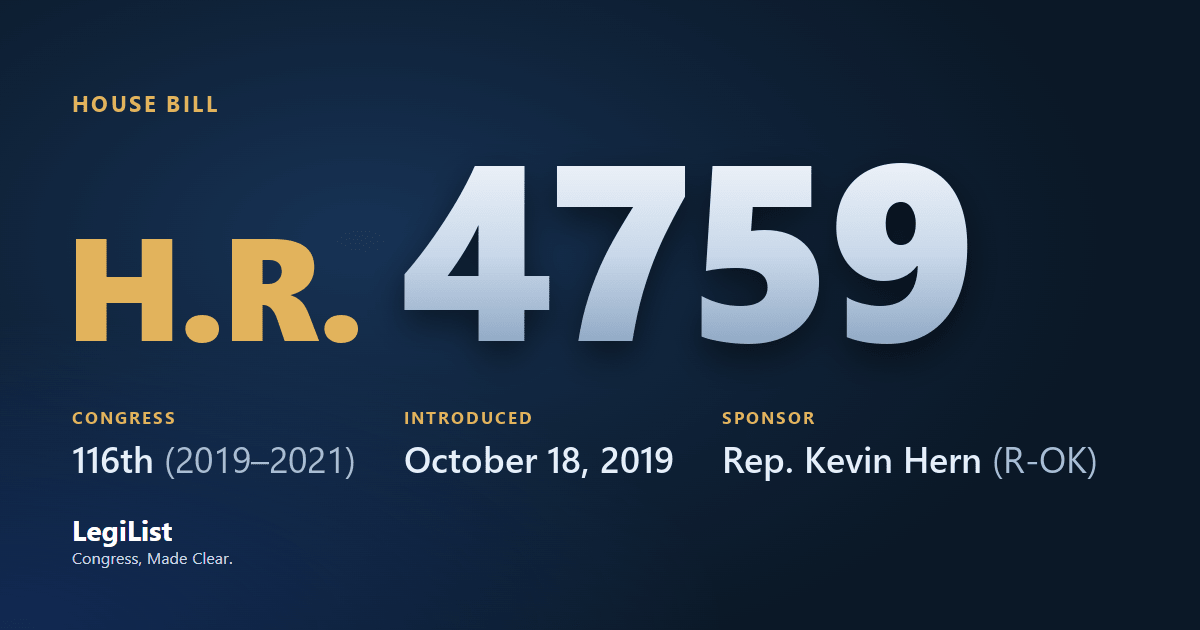
Latest action · Oct 18, 2019 Referred to the House Committee on Transportation and Infrastructure.
Progress
Where this bill reached, and when. A stage with no date was not reached; one that failed a vote and later carried shows the date it carried.
- IntroducedOct 18, 2019
- Passed HouseNot reached
- Passed SenateNot reached
- To the PresidentNot reached
- Became lawNot reached
Summary
Withdrawing from Overburdensome Reviews and Keeping us Safe Act or the WORKS Act
This bill addresses provisions related to federal-aid highways and bridges, emergency and disaster relief, firearms, and environmental reviews.
Among other things, the bill
- authorizes emergency relief funds to be used to pay for projects to improve the resiliency of federal-aid highways and bridges, including to improve drainage;
- provides grants for local communities to develop disaster preparedness and disaster response plans that include the use of bicycles;
- establishes a competitive grant program to provide assistance to local government entities for bollard installation projects designed to prevent pedestrian injuries and acts of terrorism in areas utilized by large numbers of pedestrians;
- requires the U.S. Army Corps of Engineers to allow an individual to possess a firearm in an area of a water resources development project if it is not prohibited by law; and
- directs the Department of Transportation to complete expedited environmental reviews of tribal transportation safety projects.
Cosponsors
Members who signed on, in the order they did.
Committees 1
Where it was sent and what each committee and subcommittee did with it, in order.
| Chamber | Committee | What it did |
|---|---|---|
| House | Transportation and Infrastructure Committee | Referred Oct 18, 2019 |
Actions 2
Everything that happened, newest first.
- Oct 18, 2019Introduced in House
- Oct 18, 2019Referred to the House Committee on Transportation and Infrastructure.
Research
What has been written about this bill: committee reports, cost estimates, the sponsor’s authority statement, printed hearings and the Congressional Research Service’s work.
Constitutional authority
The sponsor’s statement, as printed in the Congressional Record, vol. 165, no. 165, October 18, 2019, page H8260.
Related bills 5
Companion bills and other measures the record links to this one.
| Bill | Title | Relationship | Latest action |
|---|---|---|---|
| S 1909 | Resilient Highways Act of 2019 | Related bill | Jun 19, 2019 |
| S 1913 | STOP Act of 2019 | Related bill | Jun 19, 2019 |
| S 2013 | A bill to protect the right of individuals to bear arms at water resources development projects. | Related bill | Jun 27, 2019 |
| HR 2237 | STOP Act of 2019 | Related bill | Apr 11, 2019 |
| S 2302 | America's Transportation Infrastructure Act of 2019 | Related bill | Jan 8, 2020 |
Titles 3
Every title it has carried, official and short, at each stage.
- Official Title as Introduced
- To increase emergency and disaster relief response, build safer communities, strengthen Second Amendment rights, streamline administrative reviews, and for other purposes.
- Short Title(s) as Introduced
- WORKS Act
- Withdrawing from Overburdensome Reviews and Keeping us Safe Act
Subjects
Assigned by the Library of Congress. Policy area: Transportation and Public Works.
- Administrative law and regulatory procedures
- Army Corps of Engineers
- Atmospheric science and weather
- Child safety and welfare
- Computer security and identity theft
- Congressional oversight
- Crime prevention
- Department of Defense
- Department of Transportation
- Disaster relief and insurance
- Elementary and secondary education
- Emergency planning and evacuation
- Environmental assessment, monitoring, research
- Environmental regulatory procedures
- Federal-Indian relations
- Firearms and explosives
- Fires
- First responders and emergency personnel
- Floods and storm protection
- Government studies and investigations
- Indian social and development programs
- Infrastructure development
- Licensing and registrations
- Motor vehicles
- Natural disasters
- Parks, recreation areas, trails
- Pedestrians and bicycling
- Performance measurement
- Regional and metropolitan planning
- Roads and highways
- State and local finance
- State and local government operations
- Terrorism
- Transportation and Public Works
- Transportation costs
- Transportation programs funding
- Transportation safety and security
Text 1
Each version as it was printed, newest first.
- Oct 18, 2019Introduced in House
Support LegiList
This page is free, carries no paywall, and is built and maintained by one person. If the record here is useful to you, a few dollars keeps it going.
Everything here is as published by Congress: the summary is the Congressional Research Service's, the action wording is the clerks', and the subjects are the Library of Congress's. How far it got is read from the actions themselves, taking the most recent one of each kind, so a bill that failed a vote and later passed is shown as having passed. Records come from this bill on Congress.gov and govinfo.gov; cost estimates are the Congressional Budget Office's, and the hearings are the printed hearings GovInfo publishes, which can appear months after the hearing.