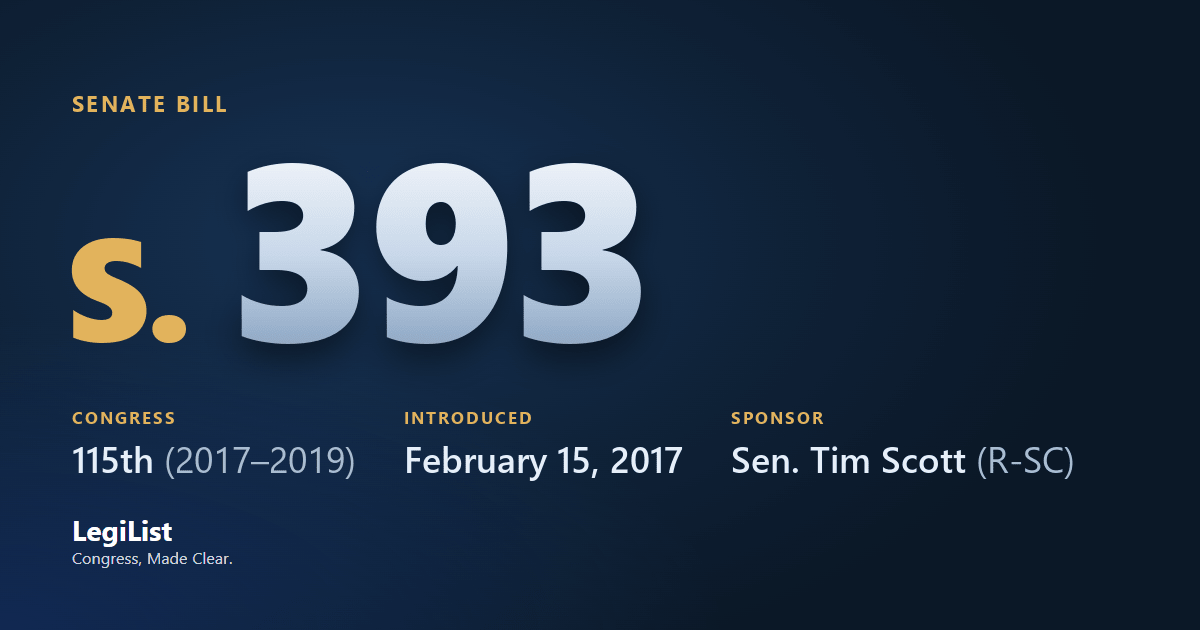
LEAP Act
Latest action · Feb 15, 2017 Read twice and referred to the Committee on Finance.
Progress
Where this bill reached, and when. A stage with no date was not reached; one that failed a vote and later carried shows the date it carried.
- IntroducedFeb 15, 2017
- Passed SenateNot reached
- Passed HouseNot reached
- To the PresidentNot reached
- Became lawNot reached
Summary
Leveraging and Energizing America's Apprenticeship Programs Act or the LEAP Act
This bill amends the Internal Revenue Code to allow employers a business-related tax credit of $1,500 for hiring an apprentice who has not attained age 25 at the close of the taxable year or $1,000 for an apprentice who has attained age 25. The bill allows such credit for no more than two taxable years with respect to any apprentice. An "apprentice" is an employee who is employed in an officially-recognized apprenticeable occupation pursuant to an apprentice agreement registered with the Office of Apprenticeship of the Employment and Training Administration of the Department of Labor or a recognized state apprenticeship agency.
The Office of Management and Budget must coordinate with federal and independent agencies to: (1) determine which government publications could be available on government websites and no longer printed, (2) devise a strategy to reduce overall government printing costs over the 10-year period beginning with FY2017, (3) establish government-wide guidelines on employee printing, and (4) issue guidelines for publicly disclosing information about the publication of government documents.
Cosponsors 7
Members who signed on, in the order they did. Signatures ran from Feb 15, 2017 to Aug 3, 2017; 1 is an original cosponsor, there from the day it was introduced.
| Seat | Cosponsor | Signed on | |
|---|---|---|---|
| D-NJ | Cory A. Booker | Original | Feb 15, 2017 |
| D-FL | Bill Nelson | Mar 14, 2017 | |
| R-NE | Deb Fischer | Apr 4, 2017 | |
| D-IN | Joe Donnelly | Apr 4, 2017 | |
| D-MN | Amy Klobuchar | Apr 6, 2017 | |
| D-NH | Margaret Wood Hassan | Apr 27, 2017 | |
| R-IA | Joni Ernst | Aug 3, 2017 |
Committees 1
Where it was sent and what each committee and subcommittee did with it, in order.
| Chamber | Committee | What it did |
|---|---|---|
| Senate | Finance Committee | Referred Feb 15, 2017 |
Actions 2
Everything that happened, newest first.
- Feb 15, 2017Introduced in Senate
- Feb 15, 2017Read twice and referred to the Committee on Finance.
Research
What has been written about this bill: committee reports, cost estimates, the sponsor’s authority statement, printed hearings and the Congressional Research Service’s work.
CRS reports 1
Congressional Research Service work that CRS links to this bill or the law it became, newest first.
Cite it 1
Products on other subjects that cite it, usually among other measures.
| Product | Title | Kind | Published |
|---|---|---|---|
| R46212 | Wage Inequality and the Stagnation of Earnings of Low-Wage Workers: Contributing Factors and Policy Options Archived | Report | Feb 5, 2020 |
Related bills 4
Companion bills and other measures the record links to this one.
Titles 3
Every title it has carried, official and short, at each stage.
- Official Title as Introduced
- A bill to amend the Internal Revenue Code of 1986 to allow employers a credit against income tax for employees who participate in qualified apprenticeship programs.
- Short Titles as Introduced
- LEAP Act
- Leveraging and Energizing America's Apprenticeship Programs Act
Subjects
Assigned by the Library of Congress. Policy area: Taxation.
Text 1
Each version as it was printed, newest first.
- Feb 15, 2017Introduced in Senate
Everything here is as published by Congress: the summary is the Congressional Research Service's, the action wording is the clerks', and the subjects are the Library of Congress's. How far it got is read from the actions themselves, taking the most recent one of each kind, so a bill that failed a vote and later passed is shown as having passed. Records come from this bill on Congress.gov and govinfo.gov; cost estimates are the Congressional Budget Office's, and the hearings are the printed hearings GovInfo publishes, which can appear months after the hearing.