TRACED Act
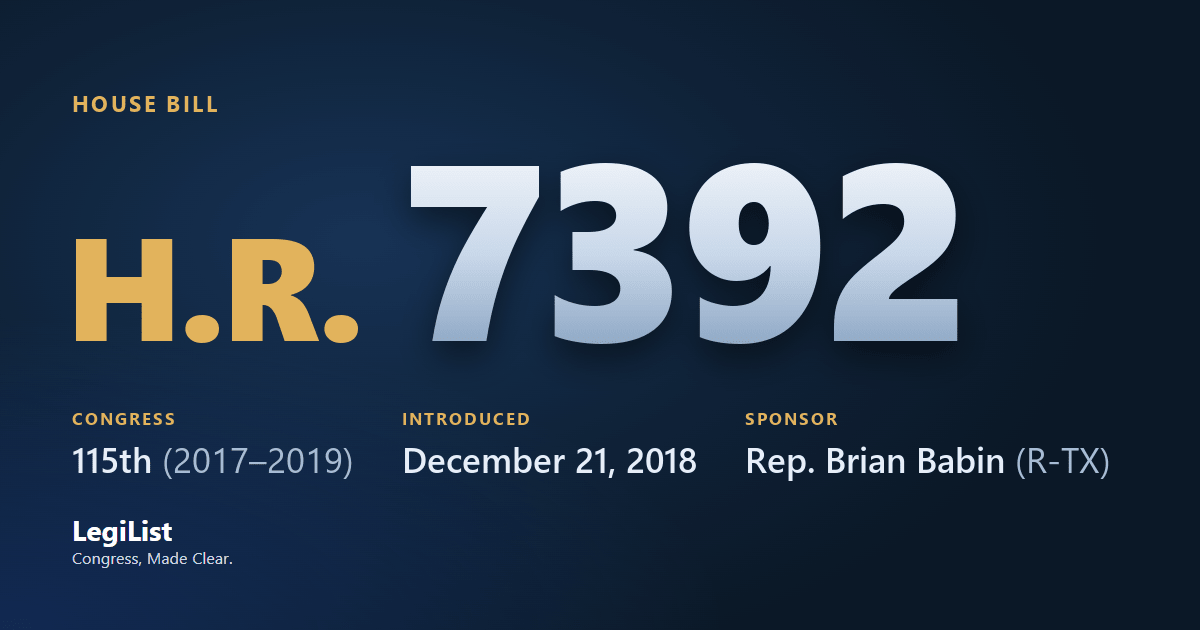
Latest action · Dec 21, 2018 Referred to the House Committee on Energy and Commerce.
Progress
Where this bill reached, and when. A stage with no date was not reached; one that failed a vote and later carried shows the date it carried.
- IntroducedDec 21, 2018
- Passed HouseNot reached
- Passed SenateNot reached
- To the PresidentNot reached
- Became lawNot reached
Summary
Telephone Robocall Abuse Criminal Enforcement and Deterrence Act or the TRACED Act
This bill implements a forfeiture penalty for intentional violations of the prohibition on certain robocalls. The bill also limits the scope of an annual reporting requirement for enforcement relating to unsolicited facsimile advertisements.
The bill requires voice service providers to develop call authentication technologies.
The Federal Communications Commission (FCC) shall promulgate rules establishing when a provider may block a voice call based on information provided by the call authentication framework, but also must establish a process to permit a calling party adversely affected by the framework to verify the authenticity of their calls. The FCC shall also initiate a rulemaking to help protect a subscriber from receiving unwanted calls or texts from a caller using an unauthenticated number.
This bill requires the Department of Justice to assemble an interagency working group to study and report to Congress on the enforcement of the prohibition of certain robocalls. Specifically, the working group will look into how to better enforce against robocalls by examining issues like the types of laws, policies, or constraints that could be inhibiting enforcement.
The bill requires the FCC to initiate a proceeding to determine whether its policies regarding access to number resources could be modified to help reduce access to numbers by potential robocall violators.
Cosponsors
Members who signed on, in the order they did.
Committees 1
Where it was sent and what each committee and subcommittee did with it, in order.
| Chamber | Committee | What it did |
|---|---|---|
| House | Energy and Commerce Committee | Referred Dec 21, 2018 |
Actions 2
Everything that happened, newest first.
- Dec 21, 2018Introduced in House
- Dec 21, 2018Referred to the House Committee on Energy and Commerce.
Research
What has been written about this bill: committee reports, cost estimates, the sponsor’s authority statement, printed hearings and the Congressional Research Service’s work.
Constitutional authority
The sponsor’s statement, as printed in the page H10587.
Related bills 1
Companion bills and other measures the record links to this one.
| Bill | Title | Relationship | Latest action |
|---|---|---|---|
| S 3655 | TRACED Act | Identical bill | Nov 15, 2018 |
Titles 3
Every title it has carried, official and short, at each stage.
- Official Title as Introduced
- To deter criminal robocall violations and improve enforcement of section 227(b) of the Communications Act of 1934, and for other purposes.
- Short Titles as Introduced
- TRACED Act
- Telephone Robocall Abuse Criminal Enforcement and Deterrence Act
Subjects
Assigned by the Library of Congress. Policy area: Science, Technology, Communications.
- Administrative law and regulatory procedures
- Advisory bodies
- Congressional oversight
- Consumer affairs
- Crime prevention
- Criminal procedure and sentencing
- Federal Communications Commission (FCC)
- Fraud offenses and financial crimes
- Government studies and investigations
- Right of privacy
- Science, Technology, Communications
- Telephone and wireless communication
Text 1
Each version as it was printed, newest first.
- Dec 21, 2018Introduced in House
Support LegiList
This page is free, carries no paywall, and is built and maintained by one person. If the record here is useful to you, a few dollars keeps it going.
Everything here is as published by Congress: the summary is the Congressional Research Service's, the action wording is the clerks', and the subjects are the Library of Congress's. How far it got is read from the actions themselves, taking the most recent one of each kind, so a bill that failed a vote and later passed is shown as having passed. Records come from this bill on Congress.gov and govinfo.gov; cost estimates are the Congressional Budget Office's, and the hearings are the printed hearings GovInfo publishes, which can appear months after the hearing.