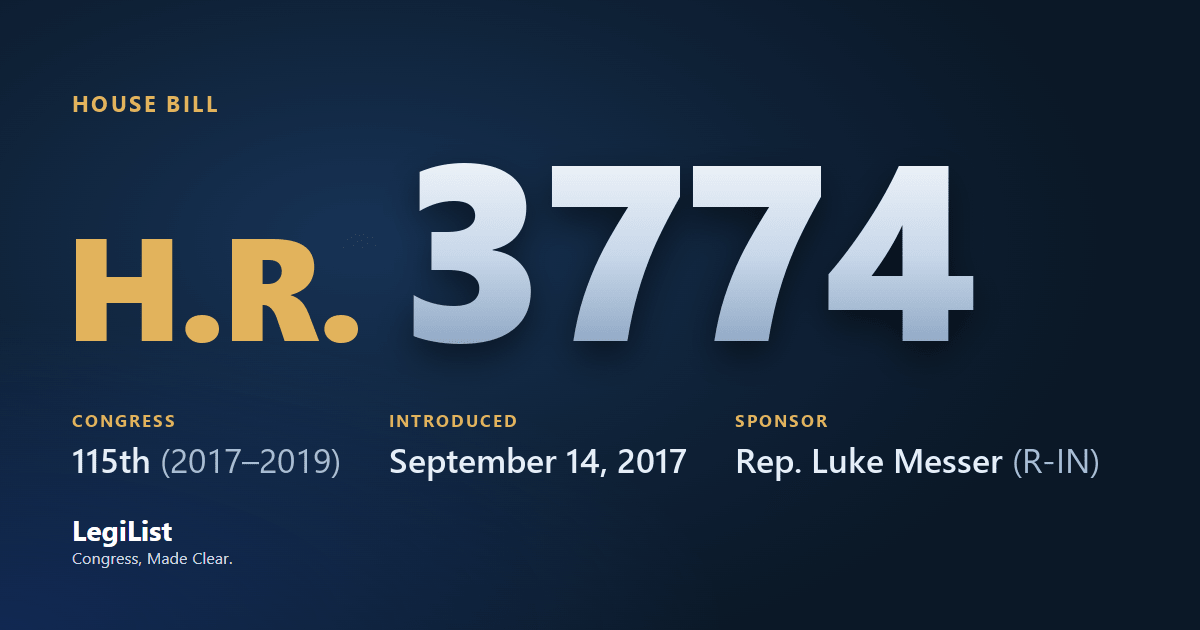
Reverse Transfer Efficiency Act of 2017
Latest action · Sep 14, 2017 Referred to the House Committee on Education and the Workforce.
Progress
Where this bill reached, and when. A stage with no date was not reached; one that failed a vote and later carried shows the date it carried.
- IntroducedSep 14, 2017
- Passed HouseNot reached
- Passed SenateNot reached
- To the PresidentNot reached
- Became lawNot reached
Summary
Reverse Transfer Efficiency Act of 2017
This bill amends the General Education Provisions Act to allow the release of a transfer student's educational records from an institution of postsecondary education where a student earned credit for coursework to an institution of postsecondary education where the student was previously enrolled in order to apply the student's coursework and credits toward completion of a recognized postsecondary credential, such as an associate's degree. (In the case of a student who does not complete a bachelor's degree after transferring to a four-year institution from a two-year institution, the credits earned at the four-year institution may be applied towards a recognized postsecondary credential at the two-year institution.) Specifically, the bill allows the Department of Education to provide funding to an institution of postsecondary education that releases a student's records of postsecondary coursework and credits without the consent of the student or the student's parents if the student provides written consent prior to receiving the credential.
Cosponsors 8
Members who signed on, in the order they did. Signatures ran from Sep 14, 2017 to May 3, 2018; 4 are original cosponsors, there from the day it was introduced.
| Seat | Cosponsor | Signed on | |
|---|---|---|---|
| R-GA | A. Drew Ferguson IV | Original | Sep 14, 2017 |
| D-CO | Ed Perlmutter | Original | Sep 14, 2017 |
| D-CO | Jared Polis | Original | Sep 14, 2017 |
| R-VA | Thomas A. Garrett, Jr. | Original | Sep 14, 2017 |
| I-MI | Paul Mitchell | Sep 26, 2017 | |
| R-NY | Elise M. Stefanik | Oct 3, 2017 | |
| R-IN | Larry Bucshon | Oct 12, 2017 | |
| R-UT | Mia B. Love | May 3, 2018 |
Committees 1
Where it was sent and what each committee and subcommittee did with it, in order.
| Chamber | Committee | What it did |
|---|---|---|
| House | Education and Workforce Committee | Referred Sep 14, 2017 |
Actions 2
Everything that happened, newest first.
- Sep 14, 2017Introduced in House
- Sep 14, 2017Referred to the House Committee on Education and the Workforce.
Research
What has been written about this bill: committee reports, cost estimates, the sponsor’s authority statement, printed hearings and the Congressional Research Service’s work.
Constitutional authority
The sponsor’s statement, as printed in the Congressional Record, vol. 163, no. 149, September 14, 2017, page H7423.
Related bills 4
Companion bills and other measures the record links to this one.
| Bill | Title | Relationship | Latest action |
|---|---|---|---|
| S 2986 | CREATE Graduates Act | Related bill | Jun 4, 2018 |
| S 3066 | Reverse Transfer Efficiency Act of 2018 | Related bill | Jun 14, 2018 |
| HR 4508 | PROSPER Act | Related bill | Feb 8, 2018 |
| HR 6543 | Aim Higher Act | Related bill | Jul 26, 2018 |
Titles 2
Every title it has carried, official and short, at each stage.
- Official Title as Introduced
- To amend the General Education Provisions Act to allow the release of education records to facilitate the award of a recognized postsecondary credential.
- Short Titles as Introduced
- Reverse Transfer Efficiency Act of 2017
Subjects
Assigned by the Library of Congress. Policy area: Education.
Text 1
Each version as it was printed, newest first.
- Sep 14, 2017Introduced in House
Everything here is as published by Congress: the summary is the Congressional Research Service's, the action wording is the clerks', and the subjects are the Library of Congress's. How far it got is read from the actions themselves, taking the most recent one of each kind, so a bill that failed a vote and later passed is shown as having passed. Records come from this bill on Congress.gov and govinfo.gov; cost estimates are the Congressional Budget Office's, and the hearings are the printed hearings GovInfo publishes, which can appear months after the hearing.