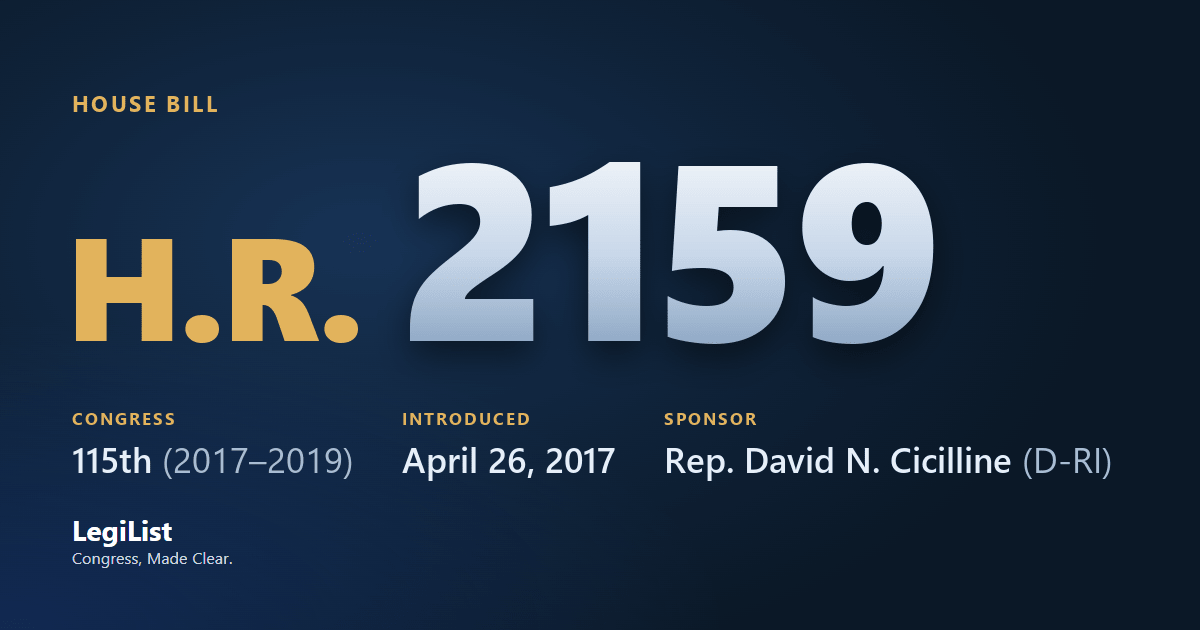
Paying a Fair Share Act of 2017
Latest action · Apr 26, 2017 Referred to the House Committee on Ways and Means.
Progress
Where this bill reached, and when. A stage with no date was not reached; one that failed a vote and later carried shows the date it carried.
- IntroducedApr 26, 2017
- Passed HouseNot reached
- Passed SenateNot reached
- To the PresidentNot reached
- Became lawNot reached
Summary
Paying a Fair Share Act of 2017
This bill amends the Internal Revenue Code to require an individual taxpayer whose adjusted gross income exceeds $1 million (high-income taxpayer) to pay a minimum tax rate of 30% of the excess of the taxpayer's adjusted gross income over the taxpayer's modified charitable contribution deduction for the taxable year (tentative fair share tax). The amount of the tax is the excess (if any) of the tentative fair share tax over the excess of: (1) the sum of the taxpayer's regular tax liability, the alternative minimum tax (AMT) amount, and the payroll tax for the taxable year; over (2) certain tax credits.
The bill provides for a phase-in of such tax and requires an inflation adjustment to the $1 million income threshold for taxable years beginning after 2018.
The bill also expresses the sense of the House of Representatives that Congress should enact tax reform that repeals unfair and unnecessary tax loopholes and expenditures, simplifies the tax system, and makes sure that the wealthiest taxpayers pay a fair share of taxes.
Cosponsors 10
Members who signed on, in the order they did. Signatures ran from Apr 26, 2017 to Apr 13, 2018; 7 are original cosponsors, there from the day it was introduced.
| Seat | Cosponsor | Signed on | |
|---|---|---|---|
| D-CA | Barbara Lee | Original | Apr 26, 2017 |
| D-RI | James R. Langevin | Original | Apr 26, 2017 |
| D-IL | Janice D. Schakowsky | Original | Apr 26, 2017 |
| D-MD | John K. Delaney | Original | Apr 26, 2017 |
| D-MA | Katherine M. Clark | Original | Apr 26, 2017 |
| D-NY | Louise McIntosh Slaughter | Original | Apr 26, 2017 |
| D-WI | Mark Pocan | Original | Apr 26, 2017 |
| D-DC | Eleanor Holmes Norton | Jul 11, 2017 | |
| D-MI | John Conyers, Jr. | Jul 11, 2017 | |
| D-CA | Ro Khanna | Apr 13, 2018 |
Committees 1
Where it was sent and what each committee and subcommittee did with it, in order.
| Chamber | Committee | What it did |
|---|---|---|
| House | Ways and Means Committee | Referred Apr 26, 2017 |
Actions 2
Everything that happened, newest first.
- Apr 26, 2017Introduced in House
- Apr 26, 2017Referred to the House Committee on Ways and Means.
Research
What has been written about this bill: committee reports, cost estimates, the sponsor’s authority statement, printed hearings and the Congressional Research Service’s work.
Constitutional authority
The sponsor’s statement, as printed in the Congressional Record, vol. 163, no. 71, April 26, 2017, page H2897.
Related bills 5
Companion bills and other measures the record links to this one.
| Bill | Title | Relationship | Latest action |
|---|---|---|---|
| HR 362 | Paying a Fair Share Act of 2015 | Reintroduction of | Jan 14, 2015 |
| S 955 | Paying a Fair Share Act of 2017 | Related bill | Apr 27, 2017 |
| S 1162 | Bank on Students Emergency Loan Refinancing Act | Related bill | May 17, 2017 |
| HR 2477 | Bank on Students Emergency Loan Refinancing Act | Related bill | May 17, 2017 |
| HR 7863 | Paying a Fair Share Act of 2019 | Reintroduced Bill | Jul 30, 2020 |
Titles 2
Every title it has carried, official and short, at each stage.
- Official Title as Introduced
- To reduce the deficit by imposing a minimum effective tax rate for high-income taxpayers.
- Short Titles as Introduced
- Paying a Fair Share Act of 2017
Subjects
Assigned by the Library of Congress. Policy area: Taxation.
Text 1
Each version as it was printed, newest first.
- Apr 26, 2017Introduced in House
Support LegiList
This page is free, carries no paywall, and is built and maintained by one person. If the record here is useful to you, a few dollars keeps it going.
Everything here is as published by Congress: the summary is the Congressional Research Service's, the action wording is the clerks', and the subjects are the Library of Congress's. How far it got is read from the actions themselves, taking the most recent one of each kind, so a bill that failed a vote and later passed is shown as having passed. Records come from this bill on Congress.gov and govinfo.gov; cost estimates are the Congressional Budget Office's, and the hearings are the printed hearings GovInfo publishes, which can appear months after the hearing.