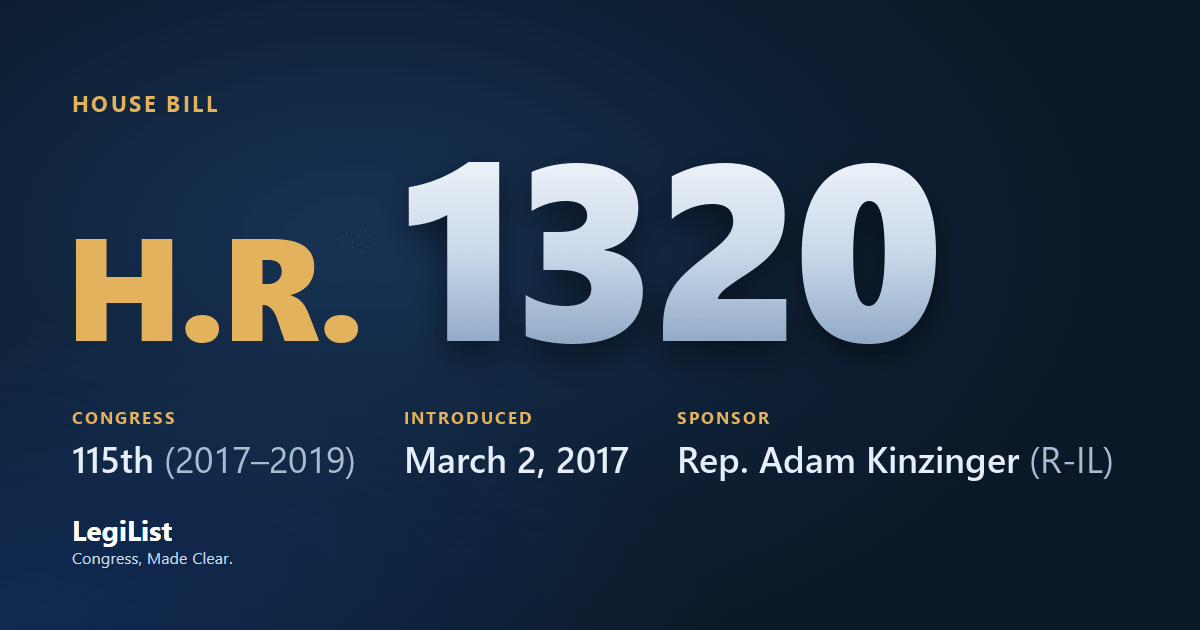
Nuclear Utilization of Keynote Energy Act
Latest action · Sep 26, 2018 Received in the Senate and Read twice and referred to the Committee on Environment and Public Works.
Progress
Where this bill reached, and when. A stage with no date was not reached; one that failed a vote and later carried shows the date it carried.
- IntroducedMar 2, 2017
- Passed HouseSep 25, 2018
- Passed SenateNot reached
- To the PresidentNot reached
- Became lawNot reached
Summary
Nuclear Utilization of Keynote Energy Act
This bill revises the functions of the Nuclear Regulatory Commission (NRC) by establishing new transparency and accountability measures on the commission's budget and fee structure and developing the regulatory framework necessary to enable the licensing of advanced nuclear reactors.
The bill amends the Omnibus Budget Reconciliation Act of 1990 to remove amounts appropriated for the Advanced Reactor Program from the NRC's fee recovery requirement. The NRC must ensure that the collection of fees is equal to its budget authority. The NRC may collect fees through: (1) fees for services that specifically benefit a particular person or entity, and (2) annual fees to fund regulatory costs. The bill places a cap on the amount of the annual fee that may be charged to an operating reactor, which the NRC may waive if the cap compromises its safety and security mission.
The Government Accountability Office must study and report on: (1) the feasibility and implications of repealing restrictions on issuing licenses for certain nuclear facilities to an alien or foreign entity, and (2) the impact of the elimination of mandatory hearings for uncontested licensing and construction permit applications under the Atomic Energy Act of 1954.
The NRC must: (1) follow specified procedures when reviewing an application for an early site permit, construction permit, operating license, or combined construction permit and operating license for a nuclear production or utilization facility; and (2) initiate a rulemaking proceeding to address the regulatory framework for decommissioning nuclear reactors.
Cosponsors 3
Members who signed on, in the order they did. Signatures ran from Mar 2, 2017 to May 22, 2018; 1 is an original cosponsor, there from the day it was introduced.
| Seat | Cosponsor | Signed on | |
|---|---|---|---|
| D-PA | Michael F. Doyle | Original | Mar 2, 2017 |
| R-OH | Robert E. Latta | Mar 9, 2017 | |
| D-TX | Gene Green | May 22, 2018 |
Committees 2
Where it was sent and what each committee and subcommittee did with it, in order.
| Chamber | Committee | What it did |
|---|---|---|
| House | Energy and Commerce Committee | Referred Mar 2, 2017Markup Jul 12, 2018Reported Sep 7, 2018 |
| Energy Subcommittee | Referred Mar 17, 2017Markup Jun 21, 2018Reported Jun 21, 2018 | |
| Senate | Environment and Public Works Committee | Referred Sep 26, 2018 |
Actions 15
Everything that happened, newest first.
- Sep 26, 2018Received in the Senate and Read twice and referred to the Committee on Environment and Public Works.
- Sep 25, 2018Mr. Olson moved to suspend the rules and pass the bill, as amended.
- Sep 25, 2018Considered under suspension of the rules. (consideration: CR H8789-8792)
- Sep 25, 2018DEBATE - The House proceeded with forty minutes of debate on H.R. 1320.
- Sep 25, 2018Passed/agreed to in House: On motion to suspend the rules and pass the bill, as amended Agreed to by voice vote. (text: CR H8789-8791)
In the Congressional Record 1
Days the Record’s own index lists this bill, newest first, with the pages and the members it names. Pages starting H are the House, S the Senate, E Extensions of Remarks.
| Where | In the Record | Members | Date |
|---|---|---|---|
| House | Debate and remarks H8789–H8792Text printed H8789–H8791 | Adam Kinzinger R-IL, Frank Pallone, Jr. D-NJ, Greg Walden R-OR, Michael F. Doyle D-PA, Pete Olson R-TX | Sep 25, 2018 |
Research
What has been written about this bill: committee reports, cost estimates, the sponsor’s authority statement, printed hearings and the Congressional Research Service’s work.
Committee report
Congressional Budget Office cost estimate
- Aug 31, 2018H.R. 1320, Nuclear Utilization of Keynote Energy ActAs ordered reported by the House Committee on Energy and Commerce on July 12, 2018
Constitutional authority
The sponsor’s statement, as printed in the Congressional Record, vol. 163, no. 37, March 2, 2017, page H1531.
Printed hearings 4
Hearings whose printed record names this bill, newest first: hearings on it, and wider hearings where it came up.
| Number | Hearing | Committee | Held |
|---|---|---|---|
| Serial No. 115-132 | DOE MODERNIZATION: LEGISLATION ADDRESSING DEVELOPMENT, REGULATION, AND COMPETITIVENESS OF ADVANCED NUCLEAR ENERGY TECHNOLOGIES214 pages | Energy and Commerce Committee | May 22, 2018 |
| Serial No. 115-117 | THE FISCAL YEAR 2019 DEPARTMENT OF ENERGY BUDGET136 pages | Energy and Commerce Committee | Apr 12, 2018 |
| Serial No. 115-111 | FISCAL YEAR 2019 NUCLEAR REGULATORY COMMISSION BUDGET122 pages | Energy and Commerce Committee | Mar 20, 2018 |
| Serial No. 115-97 | DOE MODERNIZATION: ADVANCING THE ECONOMIC AND NATIONAL SECURITY BENEFITS OF AMERICA'S NUCLEAR INFRASTRUCTURE215 pages | Energy and Commerce Committee | Feb 6, 2018 |
Titles 4
Every title it has carried, official and short, at each stage.
- Official Title as Introduced
- To amend the Omnibus Budget Reconciliation Act of 1990 related to Nuclear Regulatory Commission user fees and annual charges, and for other purposes.
- Short Titles as Introduced
- Nuclear Utilization of Keynote Energy Act
- Short Titles as Reported to House
- Nuclear Utilization of Keynote Energy Act
- Short Titles as Passed House
- Nuclear Utilization of Keynote Energy Act
Subjects
Assigned by the Library of Congress. Policy area: Energy.
- Administrative remedies
- Advanced technology and technological innovations
- Arms control and nonproliferation
- Congressional oversight
- Electric power generation and transmission
- Energy
- Energy efficiency and conservation
- Energy prices
- Energy research
- Executive agency funding and structure
- Foreign and international corporations
- Government studies and investigations
- Licensing and registrations
- Nuclear power
- Nuclear Regulatory Commission (NRC)
- Public participation and lobbying
- Radioactive wastes and releases
- User charges and fees
Text 4
Each version as it was printed, newest first.
- Sep 26, 2018Referred in Senate
- Sep 25, 2018Engrossed in House
- Sep 7, 2018Reported in House
- Mar 2, 2017Introduced in House
Support LegiList
This page is free, carries no paywall, and is built and maintained by one person. If the record here is useful to you, a few dollars keeps it going.
Everything here is as published by Congress: the summary is the Congressional Research Service's, the action wording is the clerks', and the subjects are the Library of Congress's. How far it got is read from the actions themselves, taking the most recent one of each kind, so a bill that failed a vote and later passed is shown as having passed. Records come from this bill on Congress.gov and govinfo.gov; cost estimates are the Congressional Budget Office's, and the hearings are the printed hearings GovInfo publishes, which can appear months after the hearing.