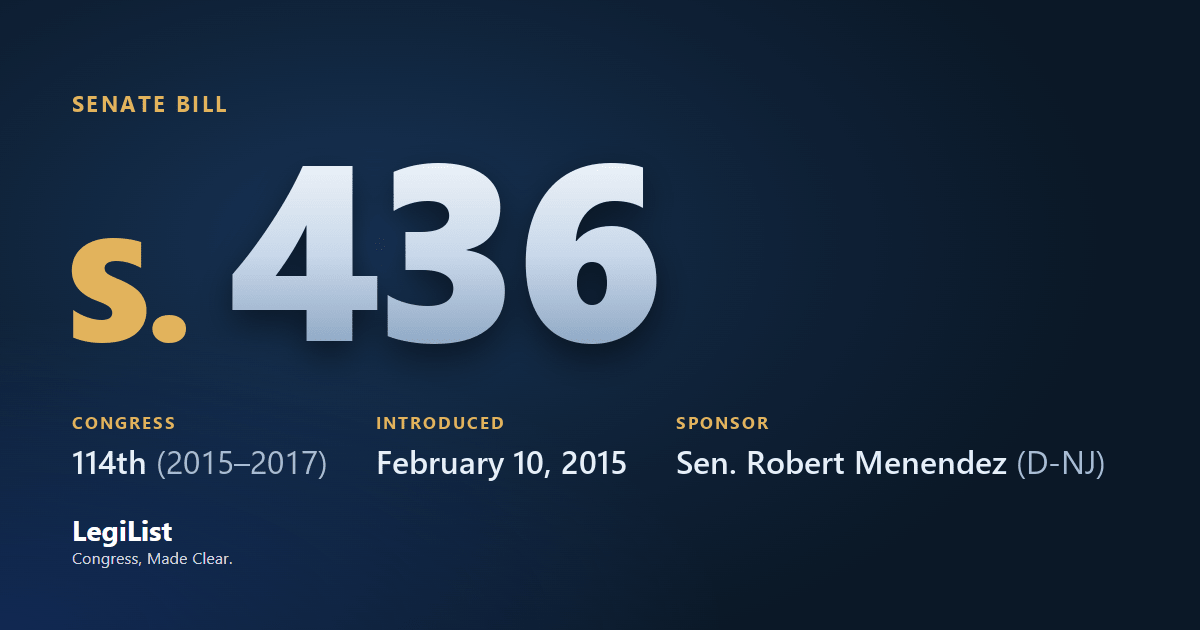
SAFE PLAY Act
Latest action · Feb 10, 2015 Read twice and referred to the Committee on Health, Education, Labor, and Pensions.
Progress
Where this bill reached, and when. A stage with no date was not reached; one that failed a vote and later carried shows the date it carried.
- IntroducedFeb 10, 2015
- Passed SenateNot reached
- Passed HouseNot reached
- To the PresidentNot reached
- Became lawNot reached
Summary
Supporting Athletes, Families and Educators to Protect the Lives of Athletic Youth Act or the SAFE PLAY Act
Amends the Public Health Service Act to require the Centers for Disease Control and Prevention (CDC) to develop public education and awareness materials and resources concerning cardiac health, including:
- information to increase education and awareness of high risk cardiac conditions and genetic heart rhythm abnormalities that may cause sudden cardiac arrest in children, adolescents, and young adults;
- sudden cardiac arrest and cardiomyopathy risk assessment worksheets to increase awareness of warning signs of, and increase the likelihood of early detection and treatment of, life-threatening cardiac conditions;
- training materials for emergency interventions and use of life-saving emergency equipment; and
- recommendations for how schools, childcare centers, and local youth athletic organizations can develop and implement cardiac emergency response plans.
Requires the CDC to: (1) provide for dissemination of such information to school personnel, coaches, and families; and (2) develop data collection methods to determine the degree to which such persons have an understanding of cardiac issues.
Directs the Department of Health and Human Services to award grants to enable eligible local educational agencies (LEAs) and schools served by such LEAs to purchase AEDs and implement nationally recognized CPR and AED training courses.
Amends the Elementary and Secondary Education Act of 1965 to require a state, as a condition of receiving funds under such Act, to certify that it requires: (1) LEAs to implement a standard plan for concussion safety and management for public schools; (2) public schools to post information on the symptoms of, the risks posed by, and the actions a student should take in response to, a concussion; (3) public school personnel who suspect a student has sustained a concussion in a school-sponsored activity to notify the parents and prohibit the student from participating in such activity until they receive a written release from a health care professional; and (4) a public school's concussion management team to ensure that a student who has sustained a concussion is receiving appropriate academic supports.
Directs the National Oceanic and Atmospheric Administration to develop public education and awareness materials and resources to be disseminated to schools regarding risks from exposure to excessive heat and humidity and recommendations for how to avoid heat-related illness. Requires public schools to develop excessive heat action plans for school-sponsored athletic activities.
Requires the CDC to develop guidelines for the development of emergency action plans for youth athletics.
Authorizes the Food and Drug Administration to develop information about the ingredients used in energy drinks and their potential side effects, and recommend guidelines for the safe use of such drinks by youth, for dissemination to public schools.
Requires the CDC to: (1) expand, intensify, and coordinate its activities regarding cardiac conditions, concussions, and heat-related illnesses among youth athletes; and (2) report on fatalities and catastrophic injuries among youths participating in athletic activities.
Cosponsors 1
Members who signed on, in the order they did. All signed on Jul 8, 2015.
| Seat | Cosponsor | Signed on | |
|---|---|---|---|
| D-CT | Christopher Murphy | Jul 8, 2015 |
Committees 1
Where it was sent and what each committee and subcommittee did with it, in order.
| Chamber | Committee | What it did |
|---|---|---|
| Senate | Health, Education, Labor, and Pensions Committee | Referred Feb 10, 2015 |
Actions 2
Everything that happened, newest first.
- Feb 10, 2015Introduced in Senate
- Feb 10, 2015Read twice and referred to the Committee on Health, Education, Labor, and Pensions.
Related bills 3
Companion bills and other measures the record links to this one.
| Bill | Title | Relationship | Latest action |
|---|---|---|---|
| HR 829 | SAFE PLAY Act | Related bill | Apr 29, 2015 |
| S 988 | Protecting Student Athletes from Concussions Act of 2015 | Related bill | Apr 16, 2015 |
| HR 2062 | Protecting Student Athletes From Concussions Act of 2015 | Related bill | Nov 16, 2015 |
Titles 3
Every title it has carried, official and short, at each stage.
- Official Title as Introduced
- A bill to promote youth athletic safety and for other purposes.
- Short Titles as Introduced
- SAFE PLAY Act
- Supporting Athletes, Families and Educators to Protect the Lives of Athletic Youth Act
Subjects
Assigned by the Library of Congress. Policy area: Health.
- Administrative law and regulatory procedures
- Atmospheric science and weather
- Cardiovascular and respiratory health
- Child health
- Child safety and welfare
- Congressional oversight
- Department of Health and Human Services
- Education programs funding
- Elementary and secondary education
- Emergency communications systems
- Emergency medical services and trauma care
- First responders and emergency personnel
- Food supply, safety, and labeling
- Government information and archives
- Health
- Health information and medical records
- Health programs administration and funding
- Health promotion and preventive care
- Health technology, devices, supplies
- Medical research
- Neurological disorders
- Nutrition and diet
- Research administration and funding
- School administration
- School athletics
- Special education
- Teaching, teachers, curricula
Text 1
Each version as it was printed, newest first.
- Feb 10, 2015Introduced in Senate
Everything here is as published by Congress: the summary is the Congressional Research Service's, the action wording is the clerks', and the subjects are the Library of Congress's. How far it got is read from the actions themselves, taking the most recent one of each kind, so a bill that failed a vote and later passed is shown as having passed. Records come from this bill on Congress.gov and govinfo.gov; cost estimates are the Congressional Budget Office's, and the hearings are the printed hearings GovInfo publishes, which can appear months after the hearing.