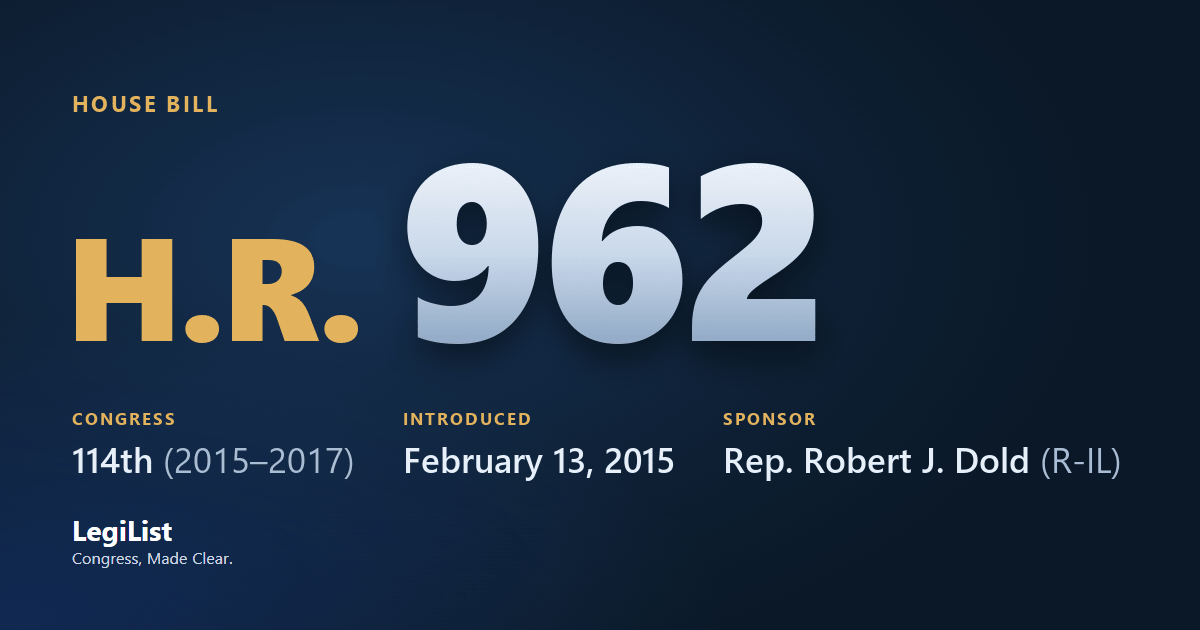
Startup Act
Latest action · Mar 10, 2015 Referred to the Subcommittee on Research and Technology.
Progress
Where this bill reached, and when. A stage with no date was not reached; one that failed a vote and later carried shows the date it carried.
- IntroducedFeb 13, 2015
- Passed HouseNot reached
- Passed SenateNot reached
- To the PresidentNot reached
- Became lawNot reached
Summary
Startup Act
Amends the Immigration and Nationality Act to authorize the Secretary of Homeland Security to adjust to conditional permanent resident status up to 50,000 aliens who have earned a master's or doctorate degree in a science, technology, engineering, or mathematics field (STEM field) and permit such an alien to remain in the United States: (1) for up to one year after the expiration of the alien's student visa, if the alien is searching for STEM field employment; and (2) indefinitely if the alien remains actively engaged in a STEM field.
Removes a STEM alien's conditional status after five years of maintaining eligibility during the entire five-year period.
Authorizes the Secretary to issue conditional immigrant visas to up to 75,000 qualified alien entrepreneurs. Removes such conditional basis after four years of maintaining qualified entrepreneur status.
Eliminates the per-country numerical limitation for employment-based visas.
Increases the per country numerical limitation for family based immigrants from 7% to 15% of the total number of family-sponsored visas.
Amends the Chinese Student Protection Act of 1992 to eliminate the provision requiring the reduction of annual People's Republic of China immigrant visas to offset status adjustments under such Act.
Amends the Internal Revenue Code to: (1) provide a permanent full tax exclusion on gain from the sale or exchange of qualified small business stock held for more than five years, (2) repeal the minimum tax preference and the 28% capital gains rate on such stock, and (3) provide a limited tax credit for certain startup small businesses.
Directs the Secretary of Commerce to use certain federal agency extramural budget funds to award grants to institutions of higher education for initiatives to improve commercialization and transfer of technology.
Requires the head of any federal or independent regulatory agency, before issuing a notice of rule making in connection with the issuance of a proposed major rule, to complete a review that, among other things, analyzes the problem that the rule intends to address, and identifies and analyzes the rule's expected impact on state, local, and tribal governments, as well as on the ability of new businesses to form and expand. Requires a cost-benefit analysis before rule issuance.
Directs the Secretary of Commerce to regularly compile: (1) information from each of the states and the District of Columbia on laws that affect the formation and growth of new businesses, and (2) quantitative and qualitative information on U.S. businesses that are not more than one year old.
Cosponsors 11
Members who signed on, in the order they did. Signatures ran from Feb 13, 2015 to Sep 18, 2015; 10 are original cosponsors, there from the day it was introduced.
| Seat | Cosponsor | Signed on | |
|---|---|---|---|
| R-CA | David G. Valadao | Original | Feb 13, 2015 |
| R-CA | Devin Nunes | Original | Feb 13, 2015 |
| D-VA | Donald S. Beyer, Jr. | Original | Feb 13, 2015 |
| R-NH | Frank C. Guinta | Original | Feb 13, 2015 |
| D-VA | Gerald E. Connolly | Original | Feb 13, 2015 |
| D-CO | Jared Polis | Original | Feb 13, 2015 |
| R-KS | Kevin Yoder | Original | Feb 13, 2015 |
| D-CA | Loretta Sanchez | Original | Feb 13, 2015 |
| D-FL | Patrick Murphy | Original | Feb 13, 2015 |
| R-OH | Steve Chabot | Original | Feb 13, 2015 |
| R-UT | Mia B. Love | Sep 18, 2015 |
Committees 5
Where it was sent and what each committee and subcommittee did with it, in order.
| Chamber | Committee | What it did |
|---|---|---|
| House | Judiciary Committee | Referred Feb 13, 2015 |
| House | Ways and Means Committee | Referred Feb 13, 2015 |
| House | Science, Space, and Technology Committee | Referred Feb 13, 2015 |
| Research and Technology Subcommittee | Referred Mar 10, 2015 | |
| House | Appropriations Committee | Referred Feb 13, 2015 |
| House | Energy and Commerce Committee | Referred Feb 13, 2015 |
| Health Subcommittee | Referred Feb 20, 2015 |
Actions 4
Everything that happened, newest first.
- Mar 10, 2015Referred to the Subcommittee on Research and Technology.
- Feb 20, 2015Referred to the Subcommittee on Health.
- Feb 13, 2015Introduced in House
- Feb 13, 2015Referred to the Committee on the Judiciary, and in addition to the Committees on Ways and Means, Science, Space, and Technology, Appropriations, and Energy and Commerce, for a period to be subsequently determined by the Speaker, in each case for consideration of such provisions as fall within the jurisdiction of the committee concerned.
In the Congressional Record 1
Days the Record’s own index lists this bill, newest first, with the pages and the members it names. Pages starting H are the House, S the Senate, E Extensions of Remarks.
| Where | In the Record | Members | Date |
|---|---|---|---|
| House | Lists H1070H.R. 962–1011 | — | Feb 13, 2015 |
Research
What has been written about this bill: committee reports, cost estimates, the sponsor’s authority statement, printed hearings and the Congressional Research Service’s work.
Constitutional authority
The sponsor’s statement, as printed in the Congressional Record, vol. 161, no. 25, February 13, 2015, page H1070.
Related bills 1
Companion bills and other measures the record links to this one.
| Bill | Title | Relationship | Latest action |
|---|---|---|---|
| S 181 | Startup Act | Identical bill | Jan 16, 2015 |
Titles 2
Every title it has carried, official and short, at each stage.
- Official Title as Introduced
- To jump-start economic recovery through the formation and growth of new businesses, and for other purposes.
- Short Titles as Introduced
- Startup Act
Subjects
Assigned by the Library of Congress. Policy area: Economics and Public Finance.
- Administrative law and regulatory procedures
- Business investment and capital
- Capital gains tax
- Census and government statistics
- Congressional oversight
- Economic development
- Economic performance and conditions
- Economics and Public Finance
- Education programs funding
- Employment taxes
- Executive agency funding and structure
- Foreign labor
- Government information and archives
- Government trust funds
- Higher education
- Immigration status and procedures
- Income tax credits
- Income tax exclusion
- Income tax rates
- Research administration and funding
- Research and development
- Science and engineering education
- Securities
- Small business
- Social security and elderly assistance
- Teaching, teachers, curricula
- Technology transfer and commercialization
- Urban and suburban affairs and development
- Visas and passports
Text 1
Each version as it was printed, newest first.
- Feb 13, 2015Introduced in House
Everything here is as published by Congress: the summary is the Congressional Research Service's, the action wording is the clerks', and the subjects are the Library of Congress's. How far it got is read from the actions themselves, taking the most recent one of each kind, so a bill that failed a vote and later passed is shown as having passed. Records come from this bill on Congress.gov and govinfo.gov; cost estimates are the Congressional Budget Office's, and the hearings are the printed hearings GovInfo publishes, which can appear months after the hearing.