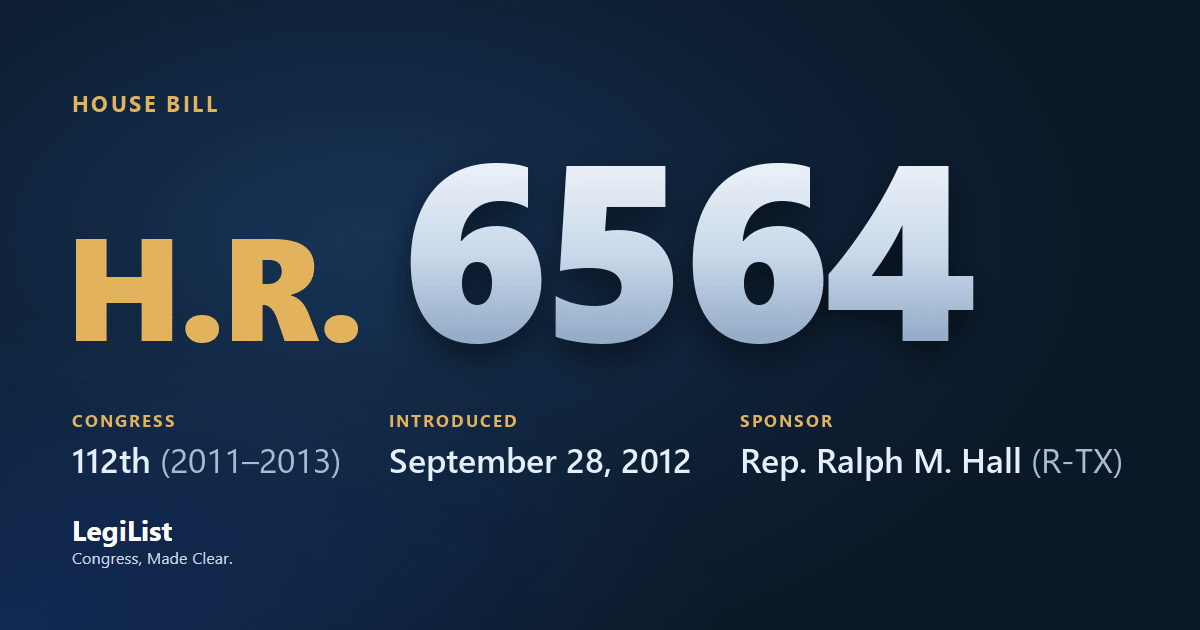
EPA Science Advisory Board Reform Act of 2012
Latest action · Oct 10, 2012 Referred to the Subcommittee on Energy and Environment.
Progress
Where this bill reached, and when. A stage with no date was not reached; one that failed a vote and later carried shows the date it carried.
- IntroducedSep 28, 2012
- Passed HouseNot reached
- Passed SenateNot reached
- To the PresidentNot reached
- Became lawNot reached
Summary
EPA Science Advisory Board Reform Act of 2012 - Amends the Environmental Research, Development, and Demonstration Authorization Act of 1978 to revise the process of selecting members of the Science Advisory Board, guidelines for participation in Board advisory activities, and terms of office. (The Board provides scientific advice to the Administrator of the Environmental Protection Agency [EPA].)
Revises the procedures for providing advice and comments to the Administrator by: (1) including risk or hazard assessments in the regulatory proposals and documents made available to the Board, and (2) requiring advice and comments to be included in the record regarding any such proposal and published in the Federal Register.
Revises the operation of Board member committees and investigative panels to: (1) require that they operate in accordance with the membership, participation, and policy requirements (including new requirements for public participation in advisory activities of the Board) contained in this Act; (2) deny them authority to make decisions on behalf of the Board; and (3) prohibit direct reporting to EPA.
Adds guidelines for the conduct of Board advisory activities, including concerning: (1) avoidance of making policy determinations or recommendations, (2) communication of uncertainties, (3) dissenting members' views, and (4) periodic reviews to ensure that such activities address the most important scientific issues affecting EPA.
Cosponsors 4
Members who signed on, in the order they did. Signatures ran from Sep 28, 2012 to Oct 19, 2012; 3 are original cosponsors, there from the day it was introduced.
| Seat | Cosponsor | Signed on | |
|---|---|---|---|
| R-MD | Andy Harris | Original | Sep 28, 2012 |
| R-MI | Dan Benishek | Original | Sep 28, 2012 |
| R-CA | Dana Rohrabacher | Original | Sep 28, 2012 |
| R-TX | Lamar Smith | Oct 19, 2012 |
Committees 1
Where it was sent and what each committee and subcommittee did with it, in order.
| Chamber | Committee | What it did |
|---|---|---|
| House | Science, Space, and Technology Committee | Referred Sep 28, 2012 |
| Energy Subcommittee | Referred Oct 10, 2012 |
Actions 3
Everything that happened, newest first.
- Oct 10, 2012Referred to the Subcommittee on Energy and Environment.
- Sep 28, 2012Introduced in House
- Sep 28, 2012Referred to the House Committee on Science, Space, and Technology.
In the Congressional Record 1
Days the Record’s own index lists this bill, newest first, with the pages and the members it names. Pages starting H are the House, S the Senate, E Extensions of Remarks.
| Where | In the Record | Members | Date |
|---|---|---|---|
| House | Lists H6297H.R. 6564–6566 | — | Sep 28, 2012 |
Research
What has been written about this bill: committee reports, cost estimates, the sponsor’s authority statement, printed hearings and the Congressional Research Service’s work.
Constitutional authority
The sponsor’s statement, as printed in the page H6297.
Titles 2
Every title it has carried, official and short, at each stage.
- Official Title as Introduced
- To amend the Environmental Research, Development, and Demonstration Authorization Act of 1978 to provide for Scientific Advisory Board member qualifications, public participation, and for other purposes.
- Short Titles as Introduced
- EPA Science Advisory Board Reform Act of 2012
Subjects
Assigned by the Library of Congress. Policy area: Environmental Protection.
Text 1
Each version as it was printed, newest first.
- Sep 28, 2012Introduced in House
Everything here is as published by Congress: the summary is the Congressional Research Service's, the action wording is the clerks', and the subjects are the Library of Congress's. How far it got is read from the actions themselves, taking the most recent one of each kind, so a bill that failed a vote and later passed is shown as having passed. Records come from this bill on Congress.gov and govinfo.gov; cost estimates are the Congressional Budget Office's, and the hearings are the printed hearings GovInfo publishes, which can appear months after the hearing.