Integrated Public Alert and Warning System Modernization Act of 2012
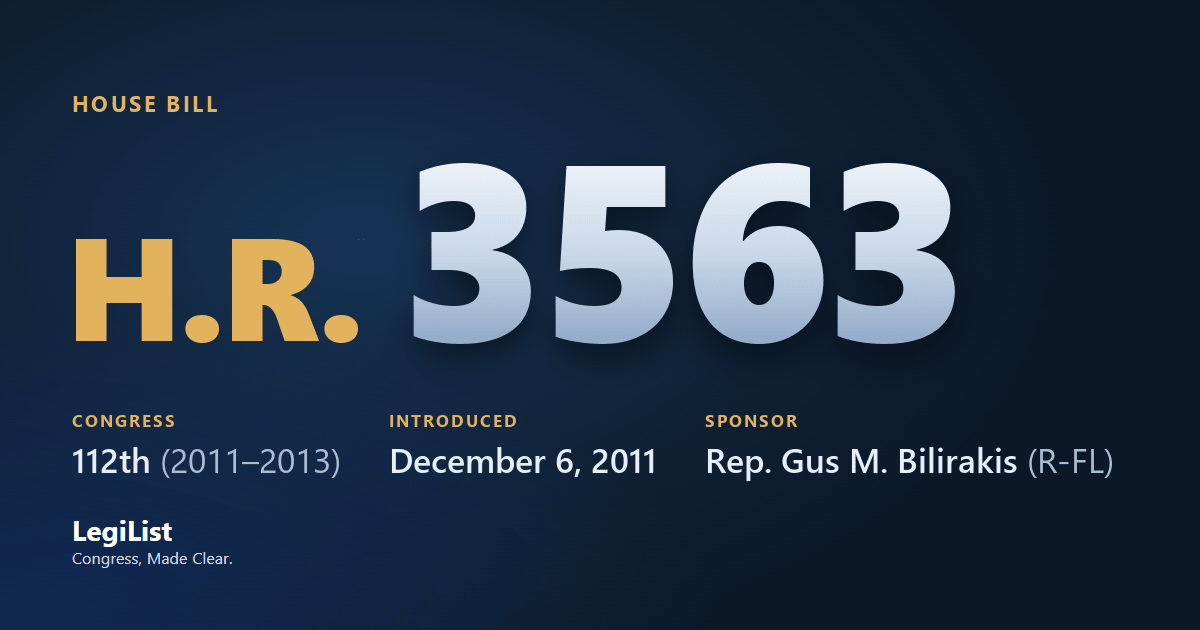
Latest action · Sep 20, 2012 Placed on the Union Calendar, Calendar No. 496.
Progress
Where this bill reached, and when. A stage with no date was not reached; one that failed a vote and later carried shows the date it carried.
- IntroducedDec 6, 2011
- Passed HouseNot reached
- Passed SenateNot reached
- To the PresidentNot reached
- Became lawNot reached
Summary
Integrated Public Alert and Warning System Modernization Act of 2012 - Amends the Homeland Security Act of 2002 (HSA) to direct the Secretary of Homeland Security to modernize and implement the national integrated public alert and warning system, including by: (1) establishing or adapting common alerting and warning protocols, standards, terminology, and operating procedures; (2) including the capability to adapt the dissemination of information and the content of communications on the basis of geographic location, risks, or personal user preferences and the capability to alert, warn, and provide the equivalent amount of information to individuals with disabilities and access and functional needs; (3) ensuring the conduct of training, tests, and exercises for the system that are incorporated into other training and exercise programs of the Department of Homeland Security (DHS); (4) ensuring that ongoing training, integrated into the National Incident Management System, for receiving and disseminating public alert and warning system messages utilizing advanced technologies is provided to state, local, tribal, and other homeland security stakeholders; (5) ensuring that the system uses the National Terrorism Advisory System; (6) conducting periodic nationwide tests of the system at least once every three years; and (7) consulting, coordinating, and cooperating with other federal agencies and with state, local, and tribal governments, the private sector, and other key stakeholders to leverage existing alert and warning capabilities.
Requires the Secretary to ensure that the system: (1) incorporates redundant and diverse modes to disseminate warning messages to reach the greatest number of individuals; (2) can be adapted to incorporate future technologies; (3) is resilient, secure, and can withstand acts of terrorism and other external attacks; (4) promotes state, local, tribal, and regional partnerships to enhance coordination; (5) is designed to provide alerts that are accessible to the largest portion of the affected population feasible and to improve the ability of remote areas and areas with underdeveloped telecommunications infrastructure to receive alerts; and (6) includes mechanisms to ensure the protection of individual privacy.
Directs the Secretary to establish the Integrated Public Alert and Warning System Advisory Committee, which shall develop and submit in annual reports recommendations for the continuation and improvement of an integrated public alert and warning system, including: (1) recommendations for common alerting and warning protocols, standards, terminology, and operating procedures for the system; (2) an assessment of system accomplishments and deficiencies, as well as the impact on current alert and warning systems; and (3) recommendations for increasing participation in the system, particularly among elementary, secondary, and higher education institutions. Requires the recommendations to include recommendations to provide a system that: (1) has the capability to adapt the distribution and content of communications on the basis of geographic location, risks, multiple communication systems and technologies or personal user preferences and to alert and warn individuals with disabilities, access and functional needs, and limited English proficiency; (2) incorporates multiple communications technologies; (3) is designed to adapt to and incorporate future technologies for communicating directly with the public, to provide alerts to the largest portion of the affected population feasible, and to improve the ability of remote areas to receive alerts; (4) encourages proper use by state and local governments through training programs and other means; (5) promotes local and regional partnerships to enhance community preparedness and response; (6) promotes the participation of representatives from under served and under represented communities to ensure that alerts and warnings reach such populations; and (7) provides redundant alert mechanisms to reach the greatest number of people regardless of whether they have access to, or utilize, any specific medium of communication or any particular device.
Requires the Secretary, one year after the system is fully functional and every six months thereafter, to report to specified congressional committees on the functionality and performance of the system.
Authorizes appropriations for FY2013-FY2017.
Directs the Administrator of the Federal Emergency Management Agency (FEMA) to permit the use of homeland security grant funds to improve public alert and warning capabilities.
Cosponsors 2
Members who signed on, in the order they did. Signatures ran from Dec 6, 2011 to Jun 19, 2012; 1 is an original cosponsor, there from the day it was introduced.
| Seat | Cosponsor | Signed on | |
|---|---|---|---|
| D-CA | Laura Richardson | Original | Dec 6, 2011 |
| R-LA | Bill Cassidy | Jun 19, 2012 |
Committees 2
Where it was sent and what each committee and subcommittee did with it, in order.
| Chamber | Committee | What it did |
|---|---|---|
| House | Homeland Security Committee | Referred Dec 6, 2011Markup Mar 28, 2012Reported Sep 20, 2012 |
| Emergency Management and Technology Subcommittee | Referred Dec 7, 2011Markup Dec 8, 2011Reported Dec 8, 2011 | |
| House | Transportation and Infrastructure Committee | Referred Dec 6, 2011Discharged Sep 20, 2012 |
| Economic Development, Public Buildings, and Emergency Management Subcommittee | Referred Dec 7, 2011 |
Actions 11
Everything that happened, newest first.
- Sep 20, 2012Reported (Amended) by the Committee on Homeland Security. H. Rept. 112-685, Part I.
- Sep 20, 2012Committee on Transportation discharged.
- Sep 20, 2012Placed on the Union Calendar, Calendar No. 496.
- Mar 28, 2012Committee Consideration and Mark-up Session Held.
- Mar 28, 2012Ordered to be Reported (Amended) by Voice Vote.
- Dec 8, 2011Subcommittee Consideration and Mark-up Session Held.
- Dec 8, 2011Forwarded by Subcommittee to Full Committee (Amended) by Voice Vote .
- Dec 7, 2011Referred to the Subcommittee on Economic Development, Public Buildings and Emergency Management.
- Dec 7, 2011Referred to the Subcommittee on Emergency Preparedness, Response and Communications.
- Dec 6, 2011Introduced in House
- Dec 6, 2011Referred to the Committee on Homeland Security, and in addition to the Committee on Transportation and Infrastructure, for a period to be subsequently determined by the Speaker, in each case for consideration of such provisions as fall within the jurisdiction of the committee concerned.
In the Congressional Record 1
Days the Record’s own index lists this bill, newest first, with the pages and the members it names. Pages starting H are the House, S the Senate, E Extensions of Remarks.
| Where | In the Record | Members | Date |
|---|---|---|---|
| House | Lists H8187H.R. 3563-3574 | — | Dec 6, 2011 |
Research
What has been written about this bill: committee reports, cost estimates, the sponsor’s authority statement, printed hearings and the Congressional Research Service’s work.
Committee report
Congressional Budget Office cost estimate
- Apr 17, 2012H.R. 3563, Integrated Public Alert and Warning System Modernization Act of 2012As ordered reported by the House Committee on Homeland Security on March 28, 2012
Constitutional authority
The sponsor’s statement, as printed in the page H8187.
Printed hearings 1
Hearings whose printed record names this bill, newest first: hearings on it, and wider hearings where it came up.
| Number | Hearing | Committee | Held |
|---|---|---|---|
| Serial No. 112-81 | THE FISCAL YEAR 2013 BUDGET REQUEST FOR THE DEPARTMENT OF HOMELAND SECURITY'S OFFICE OF HEALTH AFFAIRS27 pages | Homeland Security Committee | Mar 29, 2012 |
Related bills 1
Companion bills and other measures the record links to this one.
| Bill | Title | Relationship | Latest action |
|---|---|---|---|
| HR 2904 | Integrated Public Alert and Warning System Modernization Act of 2011 | Related bill | Sep 14, 2011 |
Titles 3
Every title it has carried, official and short, at each stage.
- Official Title as Introduced
- To amend the Homeland Security Act of 2002 to direct the Secretary of Homeland Security to modernize and implement the national integrated public alert and warning system to disseminate homeland security information and other information, and for other purposes.
- Short Titles as Introduced
- Integrated Public Alert Warning System Modernization Act of 2011
- Short Titles as Reported to House
- Integrated Public Alert and Warning System Modernization Act of 2012
Subjects
Assigned by the Library of Congress. Policy area: Emergency Management.
- Advanced technology and technological innovations
- Advisory bodies
- Broadcasting, cable, digital technologies
- Computers and information technology
- Congressional oversight
- Emergency communications systems
- Emergency Management
- Government information and archives
- Homeland security
- Intergovernmental relations
- Performance measurement
- Public-private cooperation
- Right of privacy
- State and local government operations
Text 2
Each version as it was printed, newest first.
- Sep 20, 2012Reported in House
- Dec 6, 2011Introduced in House
Everything here is as published by Congress: the summary is the Congressional Research Service's, the action wording is the clerks', and the subjects are the Library of Congress's. How far it got is read from the actions themselves, taking the most recent one of each kind, so a bill that failed a vote and later passed is shown as having passed. Records come from this bill on Congress.gov and govinfo.gov; cost estimates are the Congressional Budget Office's, and the hearings are the printed hearings GovInfo publishes, which can appear months after the hearing.