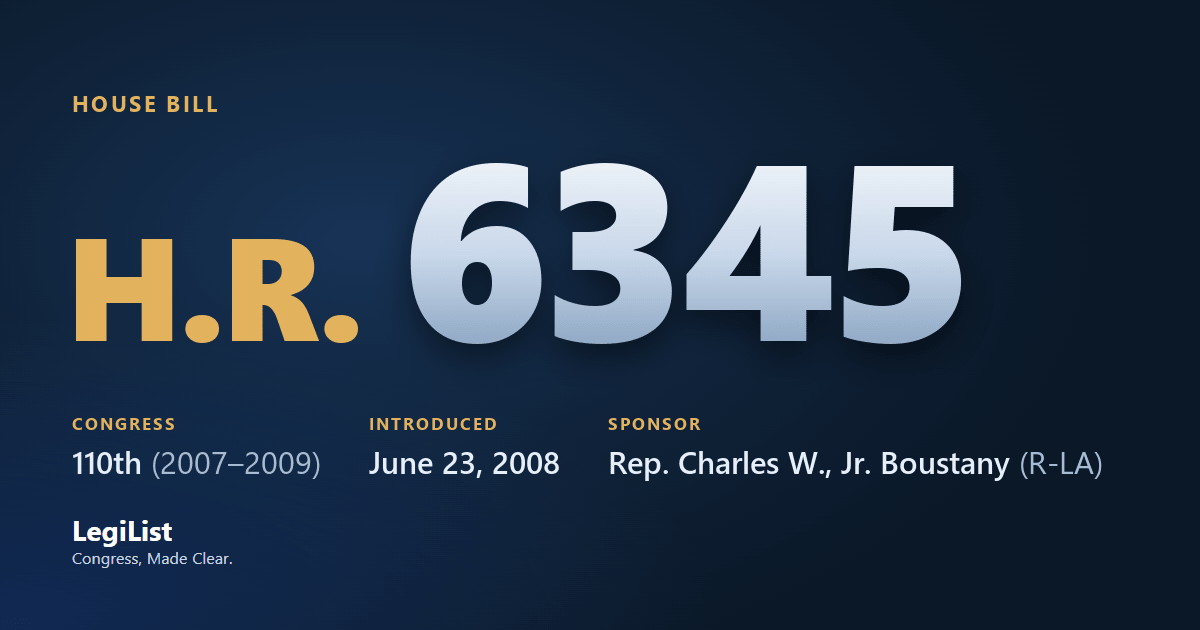
Patient-Controlled Health IT Act
Latest action · Jun 30, 2008 Referred to the Subcommittee on Health.
Progress
Where this bill reached, and when. A stage with no date was not reached; one that failed a vote and later carried shows the date it carried.
- IntroducedJun 23, 2008
- Passed HouseNot reached
- Passed SenateNot reached
- To the PresidentNot reached
- Became lawNot reached
Summary
Patient-Controlled Health IT Act - Requires the Secretary of Health and Human Services to establish a demonstration program to provide financial incentives to providers and health information exchange networks for the use of qualifying personal health records (QPHRs).
Requires the Secretary to provide for activities to educate qualifying providers about the patient, provider, and overall health care benefits of using QPHRs and participating in electronic health information exchange networks.
Requires access to the record to be controlled solely by the patient. Authorizes the patient to add personal health information to the record, but not alter information entered by any qualifying provider.
Limits access to the record to only: (1) a health care provider who is authorized by the patient to access the record; and (2) the minimum data set specified by the patient.
Deems the patient to have provided authorization for health care providers to access a limited information set concerning the patient for emergency response purposes, unless the patient specifies that such information may not be so accessed.
Provides for: (1) the use of de-identified data for public health analysis, postmarket safety surveillance of prescription drugs, and research purposes; and (2) a messaging system to send messages to patients, including education messages, reminders, and messages concerning health care or benefits from federal agencies.
Sets forth security and privacy standards, policies, and practices for the demonstration program.
Requires the Secretary to establish a PHR Incentive Fund to receive contributions from Fund partners, such as health care payers, drug and device manufacturers, and government agencies, including the Medicare program.
Cosponsors
Members who signed on, in the order they did.
Committees 2
Where it was sent and what each committee and subcommittee did with it, in order.
| Chamber | Committee | What it did |
|---|---|---|
| House | Energy and Commerce Committee | Referred Jun 23, 2008 |
| House | Ways and Means Committee | Referred Jun 23, 2008 |
| Health Subcommittee | Referred Jun 30, 2008 |
Actions 3
Everything that happened, newest first.
- Jun 30, 2008Referred to the Subcommittee on Health.
- Jun 23, 2008Introduced in House
- Jun 23, 2008Referred to the Committee on Energy and Commerce, and in addition to the Committee on Ways and Means, for a period to be subsequently determined by the Speaker, in each case for consideration of such provisions as fall within the jurisdiction of the committee concerned.
Titles 2
Every title it has carried, official and short, at each stage.
- Official Title as Introduced
- To establish a demonstration program to provide financial incentives to encourage the adoption and use of interactive personal health records and to encourage health information exchange networks to link clinical data to such personal health records.
- Short Titles as Introduced
- Patient-Controlled Health IT Act
Subjects
Assigned by the Library of Congress. Policy area: Health.
- Civil Rights and Liberties, Minority Issues
- Drugs
- Economics and Public Finance
- Electronic data interchange
- Federal aid to health facilities
- Government Operations and Politics
- Government publicity
- Government trust funds
- Health
- Health education
- Health information systems
- Health surveys
- Medical personnel
- Medical records
- Medical research
- Medicare
- Right of privacy
- Science, Technology, Communications
- Security measures
- Social Welfare
Text 1
Each version as it was printed, newest first.
- Jun 23, 2008Introduced in House
Support LegiList
This page is free, carries no paywall, and is built and maintained by one person. If the record here is useful to you, a few dollars keeps it going.
Everything here is as published by Congress: the summary is the Congressional Research Service's, the action wording is the clerks', and the subjects are the Library of Congress's. How far it got is read from the actions themselves, taking the most recent one of each kind, so a bill that failed a vote and later passed is shown as having passed. Records come from this bill on Congress.gov and govinfo.gov; cost estimates are the Congressional Budget Office's, and the hearings are the printed hearings GovInfo publishes, which can appear months after the hearing.