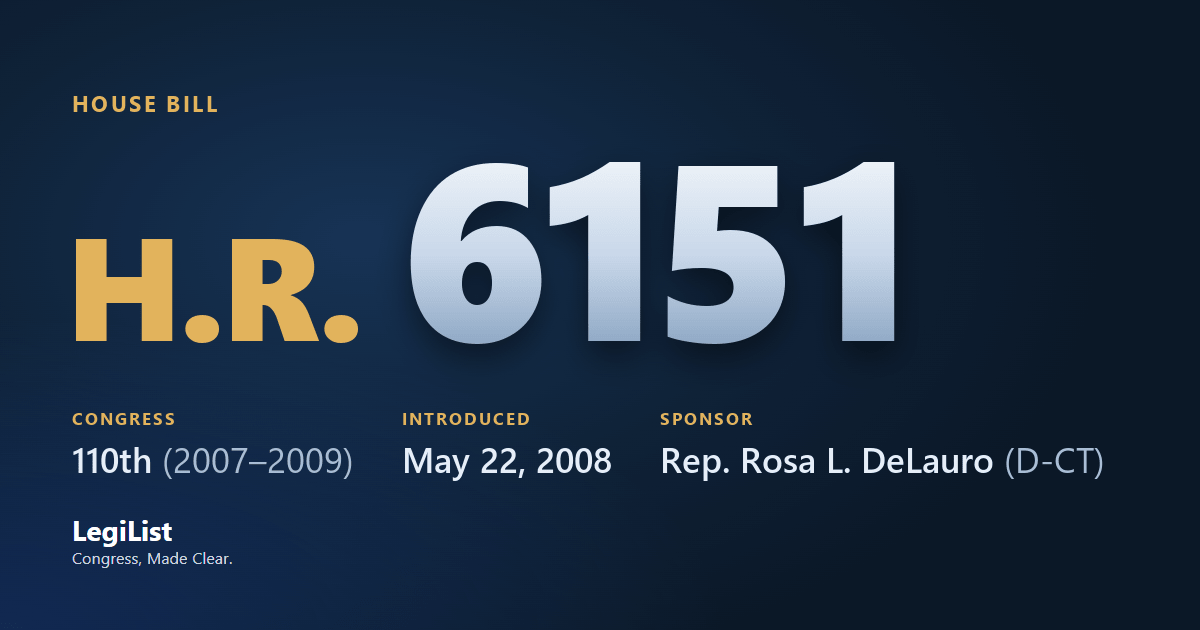
Responsibility in Drug and Device Advertising Act of 2008
Latest action · May 22, 2008 Referred to the House Committee on Energy and Commerce.
Progress
Where this bill reached, and when. A stage with no date was not reached; one that failed a vote and later carried shows the date it carried.
- IntroducedMay 22, 2008
- Passed HouseNot reached
- Passed SenateNot reached
- To the PresidentNot reached
- Became lawNot reached
Summary
Responsibility in Drug and Device Advertising Act of 2008 - Amends the Federal Food, Drug, and Cosmetic Act to prohibit direct-to-consumer advertising in the first three years after approval of a new drug or device. Authorizes the Secretary of Health and Human Services to: (1) waive such prohibition if such advertising would have an affirmative value to public health; and (2) continue such prohibition in subsequent years if the drug or device has significant adverse health effects.
Requires any direct-to-consumer advertisement to include a fair balance of the benefits and risks associated with the drug or device.
Deems a drug to be misbranded if a direct-to-consumer television advertisement for such drug does not prominently display a statement encouraging individuals to report negative side effects of prescription drugs to the Food and Drug Administration (FDA). Requires the Secretary to discontinue the study designed to determine if such a statement is appropriate for television advertisements.
Deems a device to be misbranded if a direct-to-consumer television advertisement for such device does not include a statement encouraging individuals to report negative side effects of medical devices to the FDA.
Sets forth civil monetary penalties for violations relating to the advertising and promotion of a drug or device. Allows the Secretary to order the distribution of materials to notify the public and the medical community of such a violation and to provide corrective information.
Requires the Secretary to conduct an education campaign to increase public awareness of risks that, for some patients, may outweigh the benefits of using a particular drug or device.
Authorizes additional appropriations to regulate direct-to-consumer drug and device advertisements.
Cosponsors 8
Members who signed on, in the order they did. Signatures ran from May 22, 2008 to Nov 19, 2008; 1 is an original cosponsor, there from the day it was introduced.
| Seat | Cosponsor | Signed on | |
|---|---|---|---|
| R-MO | Jo Ann Emerson | Original | May 22, 2008 |
| D-OR | Peter A. DeFazio | Jun 19, 2008 | |
| D-TX | Lloyd Doggett | Jun 23, 2008 | |
| D-CA | Bob Filner | Jul 23, 2008 | |
| D-CA | Barbara Lee | Jul 30, 2008 | |
| D-MN | Betty McCollum | Sep 10, 2008 | |
| D-IL | Daniel Lipinski | Sep 10, 2008 | |
| D-VI | Donna M. Christensen | Nov 19, 2008 |
Committees 1
Where it was sent and what each committee and subcommittee did with it, in order.
| Chamber | Committee | What it did |
|---|---|---|
| House | Energy and Commerce Committee | Referred May 22, 2008 |
Actions 2
Everything that happened, newest first.
- May 22, 2008Introduced in House
- May 22, 2008Referred to the House Committee on Energy and Commerce.
Titles 2
Every title it has carried, official and short, at each stage.
- Official Title as Introduced
- To amend the Federal Food, Drug, and Cosmetic Act with respect to drug and device advertising, and for other purposes.
- Short Titles as Introduced
- Responsibility in Drug and Device Advertising Act of 2008
Subjects
Assigned by the Library of Congress. Policy area: Health.
- Commerce
- Consumer education
- Deceptive advertising
- Drug advertising
- Drug approvals
- Drug industry
- Drugs
- Fines (Penalties)
- Government Operations and Politics
- Government paperwork
- Governmental investigations
- Health
- Health education
- Law
- Public service advertising
- Sales promotion
- Science, Technology, Communications
- Television advertising
Text 1
Each version as it was printed, newest first.
- May 22, 2008Introduced in House
Support LegiList
This page is free, carries no paywall, and is built and maintained by one person. If the record here is useful to you, a few dollars keeps it going.
Everything here is as published by Congress: the summary is the Congressional Research Service's, the action wording is the clerks', and the subjects are the Library of Congress's. How far it got is read from the actions themselves, taking the most recent one of each kind, so a bill that failed a vote and later passed is shown as having passed. Records come from this bill on Congress.gov and govinfo.gov; cost estimates are the Congressional Budget Office's, and the hearings are the printed hearings GovInfo publishes, which can appear months after the hearing.