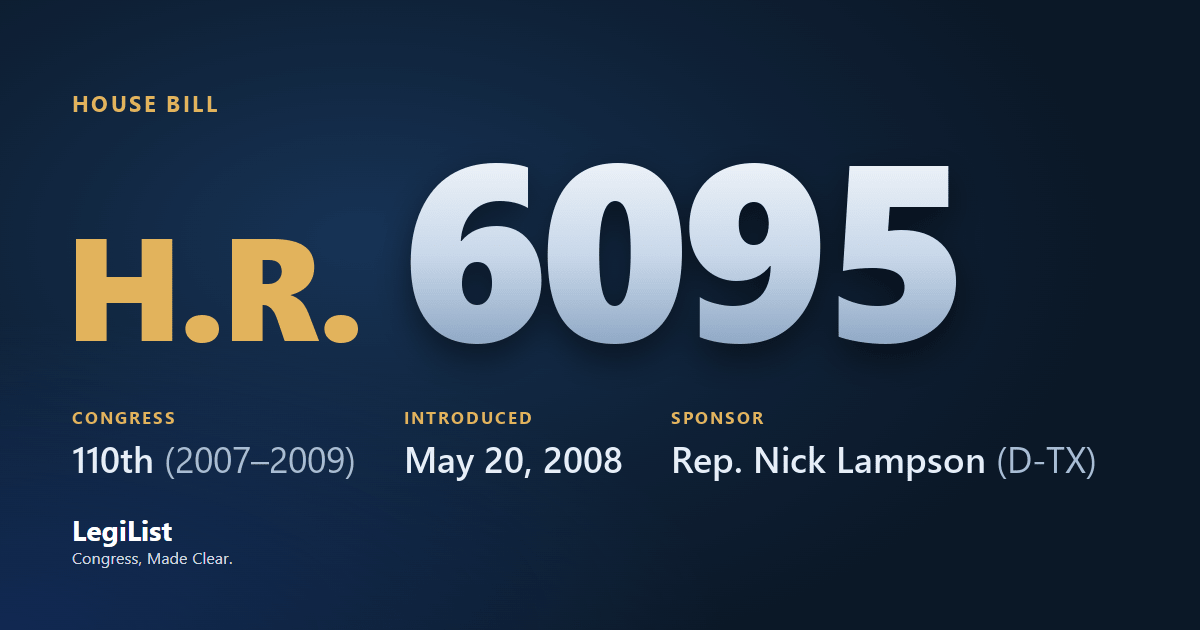
International and Parental Child Abduction Remedies Assistance Act
Latest action · Jul 28, 2008 Referred to the Subcommittee on Courts, the Internet, and Intellectual Property.
Progress
Where this bill reached, and when. A stage with no date was not reached; one that failed a vote and later carried shows the date it carried.
- IntroducedMay 20, 2008
- Passed HouseNot reached
- Passed SenateNot reached
- To the PresidentNot reached
- Became lawNot reached
Summary
International and Parental Child Abduction Remedies Assistance Act - Directs the Attorney General to provide state and local law enforcement agencies information on instituting or assisting investigative searches for alien children believed to be in the United States who are the subject of an application under the Hague Convention on the Civil Aspects of International Parental Child Abduction (Convention) or an Interpol yellow notice.
Amends the Crime Control Act of 1990 to require missing child reports to include a statement specifying whether a missing child is believed to have been taken outside of the United States.
Amends the International Child Abduction Remedies Act to: (1) provide funding, technical assistance, and training to legal providers to assist victims of parental kidnappings; and (2) allow payment of costs incurred in civil actions to return abducted children.
Authorizes the Legal Services Corporation to use its funding to represent aliens in child abduction proceedings brought in the United States under the Convention.
Amends the federal judicial code to require the Federal Judicial Center to provide training programs for newly appointed judges on laws pertaining to parental kidnapping.
Authorizes additional funding for the investigation and prosecution of international parental kidnapping crimes.
Directs the Director of the Department of Justice Office of Victims of Crime to award grants to reimburse parents, guardians, law enforcement, and other appropriate individuals for travel costs related to the safe return of U.S. children who have been abducted and taken to foreign countries.
Cosponsors 7
Members who signed on, in the order they did. All signed on May 20, 2008.
| Seat | Cosponsor | Signed on | |
|---|---|---|---|
| D-TX | Al Green | Original | May 20, 2008 |
| D-TX | Gene Green | Original | May 20, 2008 |
| R-IL | John Shimkus | Original | May 20, 2008 |
| D-CO | Mark Udall | Original | May 20, 2008 |
| R-OH | Steve Chabot | Original | May 20, 2008 |
| D-WI | Steve Kagen | Original | May 20, 2008 |
| R-TX | Ted Poe | Original | May 20, 2008 |
Committees 1
Where it was sent and what each committee and subcommittee did with it, in order.
| Chamber | Committee | What it did |
|---|---|---|
| House | Judiciary Committee | Referred May 20, 2008 |
| Crime and Federal Government Surveillance Subcommittee | Referred Jul 28, 2008 | |
| Courts, Intellectual Property, Artificial Intelligence, and the Internet Subcommittee | Referred Jul 28, 2008 |
Actions 4
Everything that happened, newest first.
- Jul 28, 2008Referred to the Subcommittee on Crime, Terrorism, and Homeland Security.
- Jul 28, 2008Referred to the Subcommittee on Courts, the Internet, and Intellectual Property.
- May 20, 2008Introduced in House
- May 20, 2008Referred to the House Committee on the Judiciary.
Related bills 1
Companion bills and other measures the record links to this one.
| Bill | Title | Relationship | Latest action |
|---|---|---|---|
| HR 2518 | Bring Our Children Home Act | Related bill | Jul 24, 2007 |
Titles 2
Every title it has carried, official and short, at each stage.
- Official Title as Introduced
- To implement certain measures to increase the effectiveness of international child abduction remedies, and for other purposes.
- Short Titles as Introduced
- International and Parental Child Abduction Remedies Assistance Act
Subjects
Assigned by the Library of Congress. Policy area: Crime and Law Enforcement.
- Aliens
- Americans in foreign countries
- Crime and Law Enforcement
- Criminal investigation
- Criminal justice information
- Custody of children
- Economics and Public Finance
- Education
- Families
- Federal aid to law enforcement
- Federal-local relations
- Federal-state relations
- Government Operations and Politics
- Government paperwork
- Higher education
- Immigration
- International Affairs
- International cooperation
- Judges
- Kidnapping
- Law
- Legal aid
- Legal education
- Legal fees
- Missing children
- Parents
- Prosecution
- Repatriation
- Transportation and Public Works
- Travel costs
- Treaties
- Victims of crimes
Text 1
Each version as it was printed, newest first.
- May 20, 2008Introduced in House
Support LegiList
This page is free, carries no paywall, and is built and maintained by one person. If the record here is useful to you, a few dollars keeps it going.
Everything here is as published by Congress: the summary is the Congressional Research Service's, the action wording is the clerks', and the subjects are the Library of Congress's. How far it got is read from the actions themselves, taking the most recent one of each kind, so a bill that failed a vote and later passed is shown as having passed. Records come from this bill on Congress.gov and govinfo.gov; cost estimates are the Congressional Budget Office's, and the hearings are the printed hearings GovInfo publishes, which can appear months after the hearing.