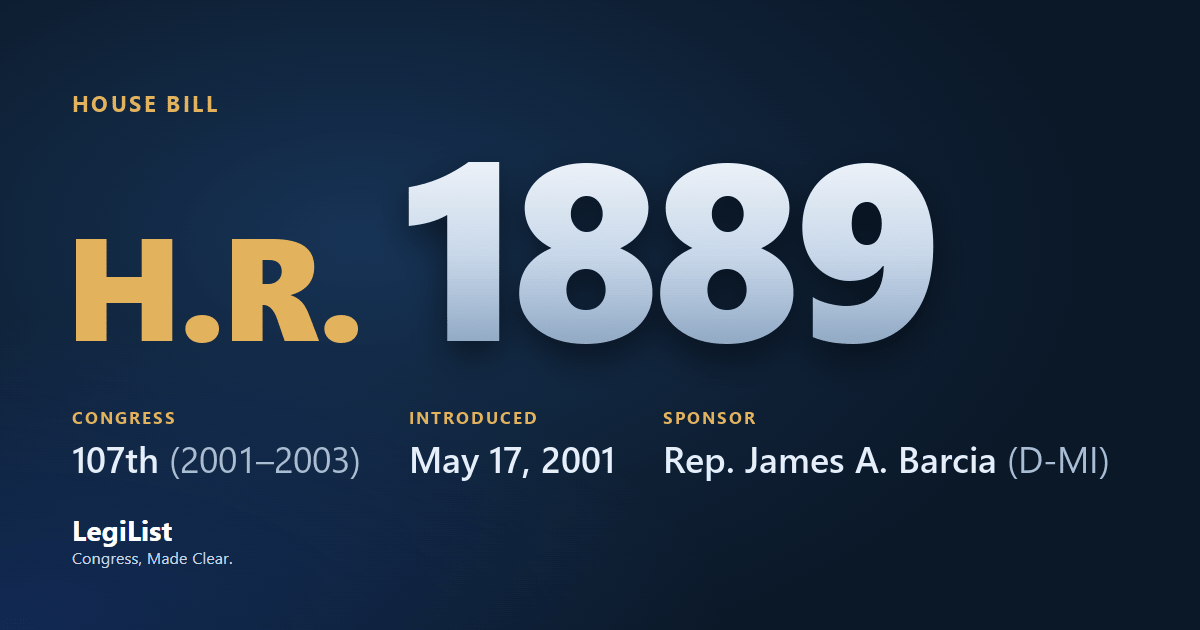
To improve the utilization of educational technologies in elementary and secondary education by creating an educational technology extension service.
Latest action · Jul 20, 2001 Referred to the Subcommittee on 21st Century Competitiveness.
Progress
Where this bill reached, and when. A stage with no date was not reached; one that failed a vote and later carried shows the date it carried.
- IntroducedMay 17, 2001
- Passed HouseNot reached
- Passed SenateNot reached
- To the PresidentNot reached
- Became lawNot reached
Summary
Requires ETU Centers to enhance the use of educational technologies in elementary and secondary education through: (1) advice to school administrators, school boards, and teachers on adopting and using new educational technologies and the usefulness of local schools' existing educational technology assets and infrastructure; (2) participation of individuals from the private sector, universities, State and local governments, and other Federal agencies; (3) active dissemination of technical and management information about the use of educational technologies; and (4) appropriate use of the expertise and capabilities that exist in Federal laboratories and Federal agencies.
Requires ETU Centers' activities to include: (1) active transfer and dissemination of research findings and ETU Center expertise to local school authorities; (2) training of teachers in integrating schools' existing educational technology infrastructure into their instructional design; (3) training and advising of teachers, administrators, and school board members in acquiring, using, and supporting educational technologies; (4) support services to teachers, administrators, and school board members; and (5) advising of teachers, administrators, and school board members on current skill set standards employed by private industry.
Cosponsors 2
Members who signed on, in the order they did. Signatures ran from May 17, 2001 to Jun 12, 2001; 1 is an original cosponsor, there from the day it was introduced.
| Seat | Cosponsor | Signed on | |
|---|---|---|---|
| D-OR | David Wu | Original | May 17, 2001 |
| D-CO | Mark Udall | Jun 12, 2001 |
Committees 2
Where it was sent and what each committee and subcommittee did with it, in order.
| Chamber | Committee | What it did |
|---|---|---|
| House | Science, Space, and Technology Committee | Referred May 17, 2001 |
| Technology Subcommittee | Referred May 24, 2001 | |
| Research Subcommittee | Referred May 24, 2001 | |
| House | Education and Workforce Committee | Referred May 17, 2001 |
| Higher Education and Workforce Development Subcommittee | Referred Jul 20, 2001 |
Actions 5
Everything that happened, newest first.
- Jul 20, 2001Referred to the Subcommittee on 21st Century Competitiveness.
- May 24, 2001Referred to the Subcommittee on Environment, Technology, and Standards.
- May 24, 2001Referred to the Subcommittee on Research.
- May 17, 2001Introduced in House
- May 17, 2001Referred to the Committee on Science, and in addition to the Committee on Education and the Workforce, for a period to be subsequently determined by the Speaker, in each case for consideration of such provisions as fall within the jurisdiction of the committee concerned.
Titles 1
Every title it has carried, official and short, at each stage.
- Official Title as Introduced
- To improve the utilization of educational technologies in elementary and secondary education by creating an educational technology extension service.
Subjects
Assigned by the Library of Congress. Policy area: Education.
- Administrative procedure
- Colleges
- Computer-assisted instruction
- Computers in education
- Economics and Public Finance
- Education
- Educational accountability
- Educational facilities
- Educational innovations
- Educational research
- Educational technology
- Elementary and secondary education
- Elementary education
- Federal aid to education
- Government Operations and Politics
- Higher education
- Housing and Community Development
- Information services
- Labor and Employment
- Law
- National Science Foundation
- Nonprofit organizations
- Rural education
- School administrators
- School boards
- Science, Technology, Communications
- Secondary education
- Social Welfare
- Teacher education
- Technical education
- Technological innovations
Text 1
Each version as it was printed, newest first.
- May 17, 2001Introduced in House
Everything here is as published by Congress: the summary is the Congressional Research Service's, the action wording is the clerks', and the subjects are the Library of Congress's. How far it got is read from the actions themselves, taking the most recent one of each kind, so a bill that failed a vote and later passed is shown as having passed. Records come from this bill on Congress.gov and govinfo.gov; cost estimates are the Congressional Budget Office's, and the hearings are the printed hearings GovInfo publishes, which can appear months after the hearing.