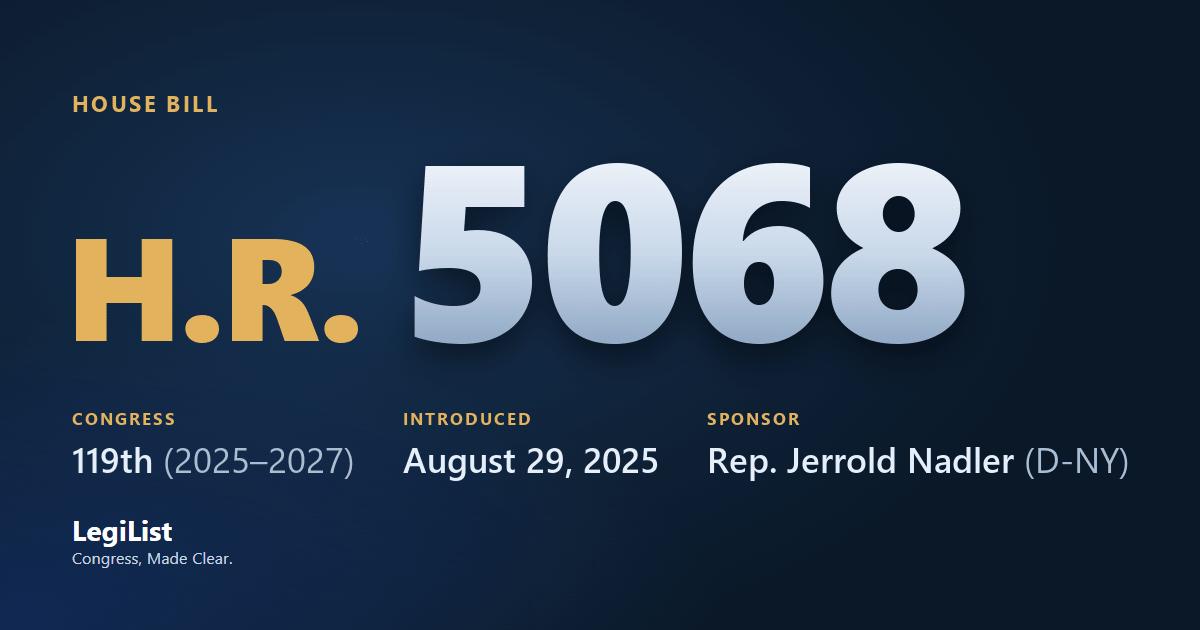
MORE Act
Latest action · Jan 13, 2026 Referred to the Subcommittee on Conservation, Research, and Biotechnology.
Progress
Where this bill reached, and when. A stage with no date was not reached; one that failed a vote and later carried shows the date it carried.
- IntroducedAug 29, 2025
- Passed HouseNot reached
- Passed SenateNot reached
- To the PresidentNot reached
- Became lawNot reached
Summary
Marijuana Opportunity Reinvestment and Expungement Act or the MORE Act
This bill decriminalizes marijuana.
Specifically, it removes marijuana from the list of scheduled substances under the Controlled Substances Act and eliminates criminal penalties for an individual who manufactures, distributes, or possesses marijuana.
The bill replaces statutory references to marijuana and marihuana with cannabis.
The bill also makes changes related to the economic impact of decriminalization, including the following:
- requires the Bureau of Labor Statistics to regularly publish demographic data on cannabis business owners and employees,
- establishes a trust fund to support various programs and services for individuals and businesses in communities impacted by the war on drugs,
- imposes an excise tax on cannabis products produced in or imported into the United States and an occupational tax on cannabis production facilities and export warehouses, and
- makes Small Business Administration loans and services available to entities that are cannabis-related legitimate businesses or service providers.
The bill also makes changes to other federal programs and legal processes to account for decriminalization, including the following:
- prohibits the denial of federal public benefits to a person on the basis of certain cannabis-related conduct or convictions,
- prohibits the denial of benefits and protections under immigration laws on the basis of an event (e.g., conduct or conviction) relating to possession or use of cannabis that is no longer prohibited under the bill, and
- establishes a process to expunge convictions and conduct sentencing review hearings related to federal cannabis offenses.
Cosponsors 75
Members who signed on, in the order they did. Signatures ran from Aug 29, 2025 to Nov 10, 2026; 40 are original cosponsors, there from the day it was introduced.
| Seat | Cosponsor | Signed on | |
|---|---|---|---|
| D-WA | Adam Smith | Original | Aug 29, 2025 |
| D-NY | Adriano Espaillat | Original | Aug 29, 2025 |
| D-VT | Becca Balint | Original | Aug 29, 2025 |
| D-NJ | Bonnie Watson Coleman | Original | Aug 29, 2025 |
| D-CA | Brad Sherman | Original | Aug 29, 2025 |
| D-ME | Chellie Pingree | Original | Aug 29, 2025 |
| D-GA | David Scott | Original | Aug 29, 2025 |
| D-CO | Diana DeGette | Original | Aug 29, 2025 |
| D-NV | Dina Titus | Original | Aug 29, 2025 |
| D-DC | Eleanor Holmes Norton | Original | Aug 29, 2025 |
| D-MO | Emanuel Cleaver | Original | Aug 29, 2025 |
| D-IN | Frank J. Mrvan | Original | Aug 29, 2025 |
| D-FL | Frederica S. Wilson | Original | Aug 29, 2025 |
| D-TX | Greg Casar | Original | Aug 29, 2025 |
| D-GA | Henry C. "Hank" Johnson, Jr. | Original | Aug 29, 2025 |
Committees 9
Where it was sent and what each committee and subcommittee did with it, in order.
| Chamber | Committee | What it did |
|---|---|---|
| House | Judiciary Committee | Referred Aug 29, 2025 |
| House | Energy and Commerce Committee | Referred Aug 29, 2025 |
| House | Agriculture Committee | Referred Aug 29, 2025 |
| Conservation, Research, and Biotechnology Subcommittee | Referred Jan 13, 2026 | |
| Forestry and Horticulture Subcommittee | Referred Jan 13, 2026 | |
| House | Education and Workforce Committee | Referred Aug 29, 2025 |
| House | Ways and Means Committee | Referred Aug 29, 2025 |
| House | Small Business Committee | Referred Aug 29, 2025 |
| House | Natural Resources Committee | Referred Aug 29, 2025 |
| House | Oversight and Government Reform Committee | Referred Aug 29, 2025 |
| House | Transportation and Infrastructure Committee | Referred Aug 29, 2025 |
Actions 4
Everything that happened, newest first.
- Jan 13, 2026Referred to the Subcommittee on Forestry and Horticulture.
- Jan 13, 2026Referred to the Subcommittee on Conservation, Research, and Biotechnology.
- Aug 29, 2025Introduced in House
- Aug 29, 2025Referred to the Committee on the Judiciary, and in addition to the Committees on Energy and Commerce, Agriculture, Education and Workforce, Ways and Means, Small Business, Natural Resources, Oversight and Government Reform, and Transportation and Infrastructure, for a period to be subsequently determined by the Speaker, in each case for consideration of such provisions as fall within the jurisdiction of the committee concerned.
Research
What has been written about this bill: committee reports, cost estimates, the sponsor’s authority statement, printed hearings and the Congressional Research Service’s work.
Constitutional authority
The sponsor’s statement, as printed in the Congressional Record, vol. 171, no. 142, August 29, 2025, page H3717.
Related bills 2
Companion bills and other measures the record links to this one.
Titles 3
Every title it has carried, official and short, at each stage.
- Official Title as Introduced
- To decriminalize and deschedule cannabis, to provide for reinvestment in certain persons adversely impacted by the War on Drugs, to provide for expungement of certain cannabis offenses, and for other purposes.
- Short Title(s) as Introduced
- MORE Act
- Marijuana Opportunity Reinvestment and Expungement Act
Subjects
Assigned by the Library of Congress. Policy area: Crime and Law Enforcement.
Text 1
Each version as it was printed, newest first.
- Aug 29, 2025Introduced in House
Support LegiList
This page is free, carries no paywall, and is built and maintained by one person. If the record here is useful to you, a few dollars keeps it going.
Everything here is as published by Congress: the summary is the Congressional Research Service's, the action wording is the clerks', and the subjects are the Library of Congress's. How far it got is read from the actions themselves, taking the most recent one of each kind, so a bill that failed a vote and later passed is shown as having passed. Records come from this bill on Congress.gov and govinfo.gov; cost estimates are the Congressional Budget Office's, and the hearings are the printed hearings GovInfo publishes, which can appear months after the hearing.