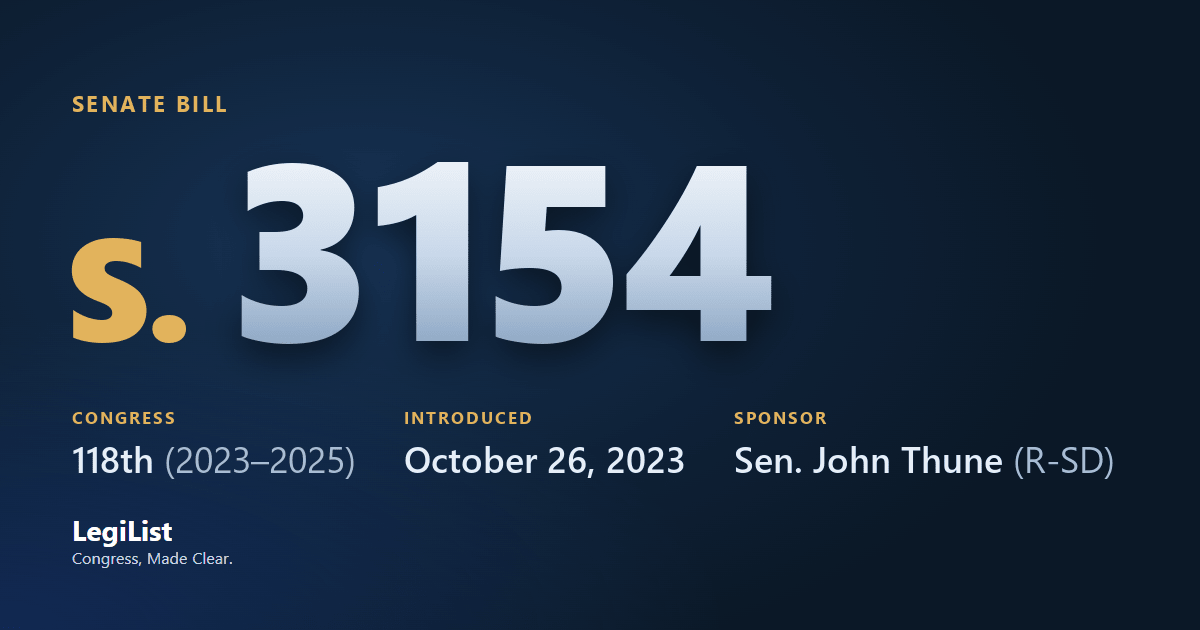
Tribal Child Support Enforcement Act
Latest action · Oct 26, 2023 Read twice and referred to the Committee on Finance. (text: CR S5215-5216)
Progress
Where this bill reached, and when. A stage with no date was not reached; one that failed a vote and later carried shows the date it carried.
- IntroducedOct 26, 2023
- Passed SenateNot reached
- Passed HouseNot reached
- To the PresidentNot reached
- Became lawNot reached
Summary
Tribal Child Support Enforcement Act
This bill permits tribal child support enforcement agencies to access the Federal Tax Refund Offset Program to collect past-due child support payments from the federal tax refunds of noncustodial parents.
Additionally, the bill authorizes the Internal Revenue Service and the Social Security Administration to disclose certain tax return information to tribal child support enforcement agencies. Such information may be disclosed to establish and collect child support obligations from, and to locate, those individuals owing such obligations.
It also permits the Department of Health and Human Services to reimburse tribal agencies for certain reporting costs related to the Federal Parent Locator Service.
Cosponsors 3
Members who signed on, in the order they did. Signatures ran from Oct 26, 2023 to Sep 24, 2024; 1 is an original cosponsor, there from the day it was introduced.
| Seat | Cosponsor | Signed on | |
|---|---|---|---|
| D-OR | Ron Wyden | Original | Oct 26, 2023 |
| R-OK | James Lankford | May 15, 2024 | |
| D-WI | Tammy Baldwin | Sep 24, 2024 |
Committees 1
Where it was sent and what each committee and subcommittee did with it, in order.
| Chamber | Committee | What it did |
|---|---|---|
| Senate | Finance Committee | Referred Oct 26, 2023 |
Actions 2
Everything that happened, newest first.
- Oct 26, 2023Introduced in Senate
- Oct 26, 2023Read twice and referred to the Committee on Finance. (text: CR S5215-5216)
In the Congressional Record 1
Days the Record’s own index lists this bill, newest first, with the pages and the members it names. Pages starting H are the House, S the Senate, E Extensions of Remarks.
| Where | In the Record | Members | Date |
|---|---|---|---|
| Senate | Text printed S5215 | John Thune R-SD (text) | Oct 26, 2023 |
Research
What has been written about this bill: committee reports, cost estimates, the sponsor’s authority statement, printed hearings and the Congressional Research Service’s work.
CRS reports 2
Congressional Research Service work that CRS links to this bill or the law it became, newest first.
Cite it 2
Products on other subjects that cite it, usually among other measures.
| Product | Title | Kind | Published |
|---|---|---|---|
| R48503 | Child Welfare and Child Support: The Supporting America’s Children and Families Act (P.L. 118-258) | Report | Apr 7, 2025 |
| IN11748 | Overview of Child Support Enforcement (CSE) Access to Taxpayer Data and Recent Law (Title II of P.L. 118-258) | Insight | Jan 17, 2025 |
Titles 2
Every title it has carried, official and short, at each stage.
- Official Title as Introduced
- A bill to improve the effectiveness of tribal child support enforcement agencies, and for other purposes.
- Short Title(s) as Introduced
- Tribal Child Support Enforcement Act
Subjects
Assigned by the Library of Congress. Policy area: Native Americans.
Text 1
Each version as it was printed, newest first.
- Oct 26, 2023Introduced in Senate
Support LegiList
This page is free, carries no paywall, and is built and maintained by one person. If the record here is useful to you, a few dollars keeps it going.
Everything here is as published by Congress: the summary is the Congressional Research Service's, the action wording is the clerks', and the subjects are the Library of Congress's. How far it got is read from the actions themselves, taking the most recent one of each kind, so a bill that failed a vote and later passed is shown as having passed. Records come from this bill on Congress.gov and govinfo.gov; cost estimates are the Congressional Budget Office's, and the hearings are the printed hearings GovInfo publishes, which can appear months after the hearing.