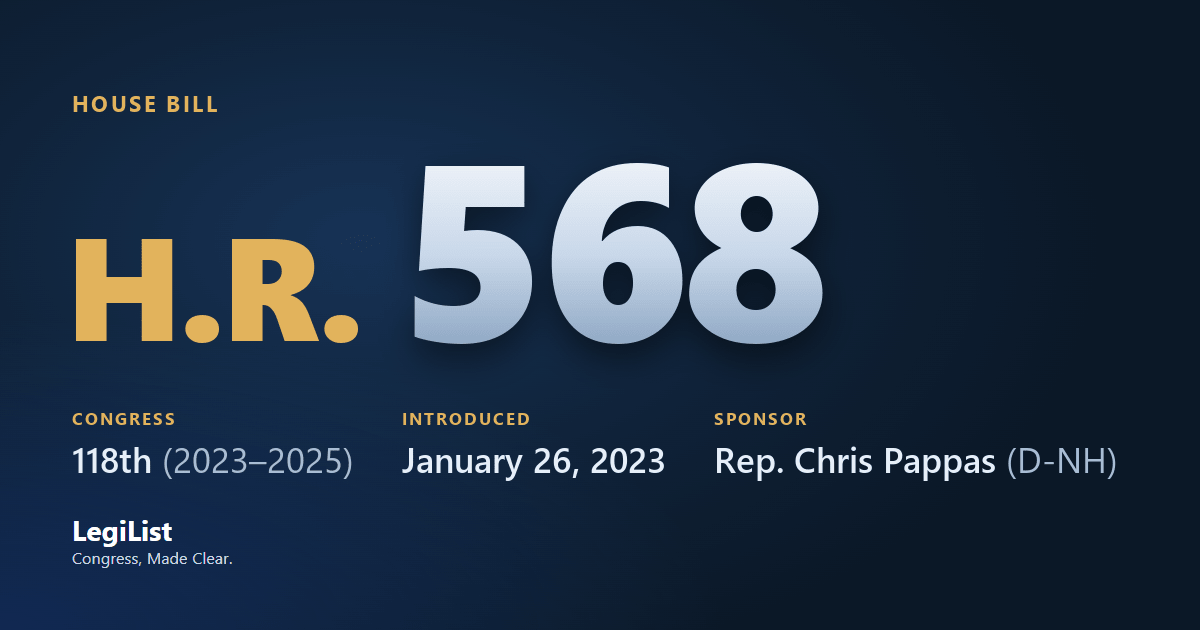
SAFE Act
Latest action · Feb 3, 2023 Referred to the Subcommittee on Health.
Progress
Where this bill reached, and when. A stage with no date was not reached; one that failed a vote and later carried shows the date it carried.
- IntroducedJan 26, 2023
- Passed HouseNot reached
- Passed SenateNot reached
- To the PresidentNot reached
- Became lawNot reached
Summary
Save Americans from the Fentanyl Emergency Act or the SAFE Act
This bill permanently places fentanyl-related substances as a class into schedule I of the Controlled Substances Act. A schedule I controlled substance is a drug, substance, or chemical that has a high potential for abuse; has no currently accepted medical value; and is subject to regulatory controls and administrative, civil, and criminal penalties under the Controlled Substances Act. The temporary scheduling order issued by the Drug Enforcement Administration to place fentanyl-related substances into schedule I of the Controlled Substances Act expires on December 31, 2024.
It limits the application of mandatory minimum penalties for certain offenses involving fentanyl-related substances, establishes a process to deschedule or remove certain fentanyl-related substances that have a low potential for abuse, and allows a federal court to vacate or reduce the sentence for convictions of offenses involving a fentanyl-related substance that is descheduled or moved to a schedule other than schedule I or II.
The bill establishes a new, alternative registration process for schedule I research. It also makes other changes to registration requirements for conducting research with controlled substances, including
- permitting a single registration for related research sites in certain circumstances,
- waiving the requirement for a new inspection in certain situations, and
- allowing a registered researcher to perform certain manufacturing activities with small quantities of a substance without obtaining a manufacturing registration.
Finally, the bill requires the Government Accountability Office to analyze the implementation and impact of permanently placing fentanyl-related substances into schedule I of the Controlled Substances Act.
Cosponsors 19
Members who signed on, in the order they did. Signatures ran from Jan 26, 2023 to Oct 6, 2023; 3 are original cosponsors, there from the day it was introduced.
| Seat | Cosponsor | Signed on | |
|---|---|---|---|
| R-WA | Dan Newhouse | Original | Jan 26, 2023 |
| R-FL | Maria Elvira Salazar | Original | Jan 26, 2023 |
| R-TX | Tony Gonzales | Original | Jan 26, 2023 |
| D-MN | Angie Craig | Jan 30, 2023 | |
| D-KS | Sharice Davids | Mar 8, 2023 | |
| D-WA | Marie Gluesenkamp Perez | Mar 9, 2023 | |
| D-VA | Abigail Davis Spanberger | Mar 14, 2023 | |
| D-MI | Daniel T. Kildee | Apr 3, 2023 | |
| D-CA | Ami Bera | May 24, 2023 | |
| D-MN | Betty McCollum | May 24, 2023 | |
| D-WA | Derek Kilmer | May 24, 2023 | |
| D-CO | Jason Crow | May 24, 2023 | |
| D-CA | Josh Harder | May 24, 2023 | |
| D-CA | Mike Levin | May 24, 2023 | |
| D-IL | Nikki Budzinski | May 24, 2023 | |
| D-NC | Donald G. Davis | May 26, 2023 | |
| D-VA | Jennifer L. McClellan | Jun 7, 2023 | |
| D-RI | Seth Magaziner | Jun 12, 2023 | |
| R-NY | Michael Lawler | Oct 6, 2023 |
Committees 2
Where it was sent and what each committee and subcommittee did with it, in order.
| Chamber | Committee | What it did |
|---|---|---|
| House | Energy and Commerce Committee | Referred Jan 26, 2023 |
| Health Subcommittee | Referred Feb 3, 2023 | |
| House | Judiciary Committee | Referred Jan 26, 2023 |
Actions 4
Everything that happened, newest first.
- Feb 3, 2023Referred to the Subcommittee on Health.
- Feb 1, 2023Sponsor introductory remarks on measure. (CR H588)
- Jan 26, 2023Introduced in House
- Jan 26, 2023Referred to the Committee on Energy and Commerce, and in addition to the Committee on the Judiciary, for a period to be subsequently determined by the Speaker, in each case for consideration of such provisions as fall within the jurisdiction of the committee concerned.
In the Congressional Record 1
Days the Record’s own index lists this bill, newest first, with the pages and the members it names. Pages starting H are the House, S the Senate, E Extensions of Remarks.
| Where | In the Record | Members | Date |
|---|---|---|---|
| House | Debate and remarks H588 | Chris Pappas D-NH | Feb 1, 2023 |
Research
What has been written about this bill: committee reports, cost estimates, the sponsor’s authority statement, printed hearings and the Congressional Research Service’s work.
Constitutional authority
The sponsor’s statement, as printed in the Congressional Record, vol. 169, no. 17, January 26, 2023, page H430.
CRS reports 2
Congressional Research Service work that CRS links to this bill or the law it became, newest first.
Cite it 2
Products on other subjects that cite it, usually among other measures.
| Product | Title | Kind | Published |
|---|---|---|---|
| R45948 | The Controlled Substances Act (CSA): A Legal Overview for the 119th Congress | Report | Jan 22, 2025 |
| R47572 | Comparison of Proposed Legislation Concerning Fentanyl-Related Substances | Report | May 24, 2023 |
Related bills 7
Companion bills and other measures the record links to this one.
| Bill | Title | Relationship | Latest action |
|---|---|---|---|
| HR 171 | HALT Fentanyl Act | Related bill | Jan 20, 2023 |
| HR 467 | HALT Fentanyl Act | Related bill | May 30, 2023 |
| S 600 | Stopping Overdoses of Fentanyl Analogues Act | Related bill | Mar 1, 2023 |
| S 1141 | HALT Fentanyl Act | Related bill | Mar 30, 2023 |
| HR 1580 | CEASE Overdose Act of 2023 | Related bill | Mar 24, 2023 |
Titles 3
Every title it has carried, official and short, at each stage.
- Official Title as Introduced
- To amend the Controlled Substances Act with respect to fentanyl-related substances, and for other purposes.
- Short Title(s) as Introduced
- SAFE Act
- Save Americans from the Fentanyl Emergency Act
Subjects
Assigned by the Library of Congress. Policy area: Crime and Law Enforcement.
- Administrative law and regulatory procedures
- Congressional oversight
- Crime and Law Enforcement
- Criminal procedure and sentencing
- Department of Justice
- Drug trafficking and controlled substances
- Government studies and investigations
- International law and treaties
- Licensing and registrations
- Manufacturing
- Research administration and funding
Text 1
Each version as it was printed, newest first.
- Jan 26, 2023Introduced in House
Everything here is as published by Congress: the summary is the Congressional Research Service's, the action wording is the clerks', and the subjects are the Library of Congress's. How far it got is read from the actions themselves, taking the most recent one of each kind, so a bill that failed a vote and later passed is shown as having passed. Records come from this bill on Congress.gov and govinfo.gov; cost estimates are the Congressional Budget Office's, and the hearings are the printed hearings GovInfo publishes, which can appear months after the hearing.