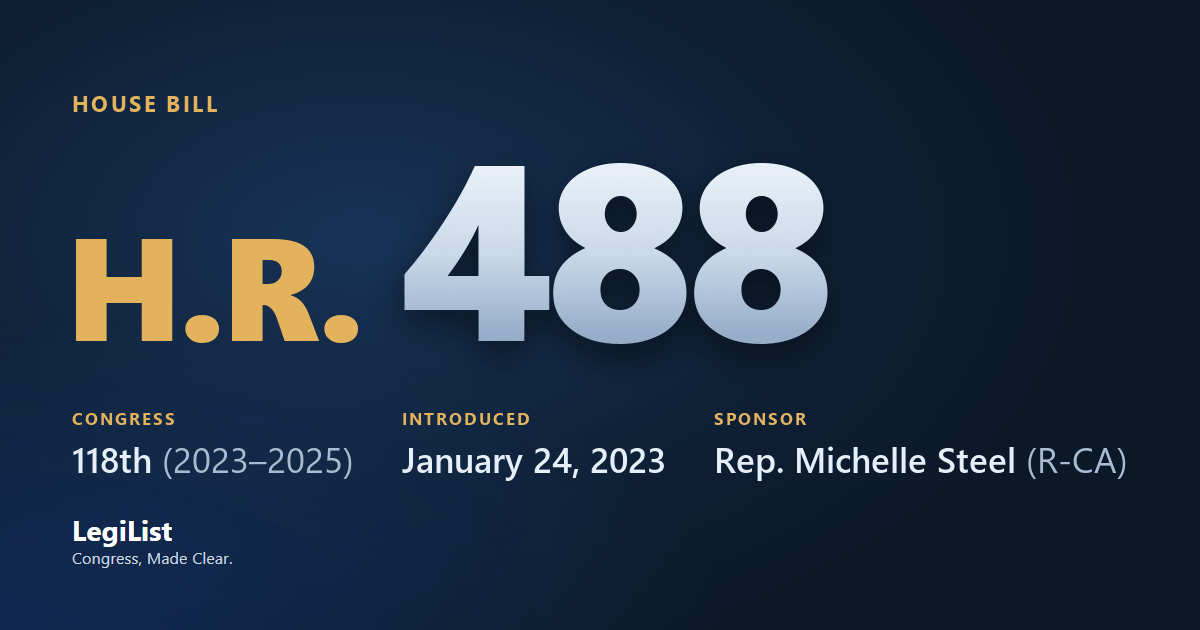
SNOOP Act of 2023
Latest action · Jan 24, 2023 Referred to the House Committee on Ways and Means.
Progress
Where this bill reached, and when. A stage with no date was not reached; one that failed a vote and later carried shows the date it carried.
- IntroducedJan 24, 2023
- Passed HouseNot reached
- Passed SenateNot reached
- To the PresidentNot reached
- Became lawNot reached
Summary
Stop the Nosy Obsession with Online Payments Act of 2023 or the SNOOP Act of 2023
This bill modifies requirements for third party settlement organizations to eliminate their reporting requirement with respect to the transactions of their participating payees unless they have earned more than $20,000 on more than 200 separate transactions in an applicable tax period. A third party settlement organization is the central organization that has the contractual obligation to make payments to participating payees (generally, a merchant or business) in a third party payment network.
This reverses a provision in the American Rescue Plan Act of 2021 that lowered the reporting threshold to $600 with no minimum on the number of transactions.
Cosponsors 10
Members who signed on, in the order they did. Signatures ran from Jan 24, 2023 to Nov 1, 2023; 6 are original cosponsors, there from the day it was introduced.
| Seat | Cosponsor | Signed on | |
|---|---|---|---|
| R-OH | Bill Johnson | Original | Jan 24, 2023 |
| R-TX | Dan Crenshaw | Original | Jan 24, 2023 |
| R-FL | Maria Elvira Salazar | Original | Jan 24, 2023 |
| R-IA | Mariannette Miller-Meeks | Original | Jan 24, 2023 |
| R-TN | Tim Burchett | Original | Jan 24, 2023 |
| R-CA | Tom McClintock | Original | Jan 24, 2023 |
| R-KS | Tracey Mann | Feb 1, 2023 | |
| R-PA | Daniel Meuser | Apr 18, 2023 | |
| R-NC | David Rouzer | Jun 22, 2023 | |
| R-NY | Michael Lawler | Nov 1, 2023 |
Committees 1
Where it was sent and what each committee and subcommittee did with it, in order.
| Chamber | Committee | What it did |
|---|---|---|
| House | Ways and Means Committee | Referred Jan 24, 2023 |
Actions 2
Everything that happened, newest first.
- Jan 24, 2023Introduced in House
- Jan 24, 2023Referred to the House Committee on Ways and Means.
In the Congressional Record 1
Days the Record’s own index lists this bill, newest first, with the pages and the members it names. Pages starting H are the House, S the Senate, E Extensions of Remarks.
| Where | In the Record | Members | Date |
|---|---|---|---|
| House | Debate and remarks H2259 | Michelle Steel R-CA | Apr 10, 2024 |
Research
What has been written about this bill: committee reports, cost estimates, the sponsor’s authority statement, printed hearings and the Congressional Research Service’s work.
Printed hearings 1
Hearings whose printed record names this bill, newest first: hearings on it, and wider hearings where it came up.
| Number | Hearing | Committee | Held |
|---|---|---|---|
| Serial No. 118-34 | MARKUP OF VARIOUS MEASURES91 pages | Foreign Affairs Committee | Jun 21, 2023 |
Related bills 2
Companion bills and other measures the record links to this one.
| Bill | Title | Relationship | Latest action |
|---|---|---|---|
| S 26 | SNOOP Act of 2023 | Identical bill | Jan 23, 2023 |
| HR 6913 | SNOOP Act of 2022 | Reintroduction of | Mar 3, 2022 |
Titles 3
Every title it has carried, official and short, at each stage.
- Official Title as Introduced
- To amend the Internal Revenue Code of 1986 to repeal the amendments made to reporting of third party network transactions by the American Rescue Plan Act of 2021.
- Short Title(s) as Introduced
- SNOOP Act of 2023
- Stop the Nosy Obsession with Online Payments Act of 2023
Subjects
Assigned by the Library of Congress. Policy area: Taxation.
Text 1
Each version as it was printed, newest first.
- Jan 24, 2023Introduced in House
Everything here is as published by Congress: the summary is the Congressional Research Service's, the action wording is the clerks', and the subjects are the Library of Congress's. How far it got is read from the actions themselves, taking the most recent one of each kind, so a bill that failed a vote and later passed is shown as having passed. Records come from this bill on Congress.gov and govinfo.gov; cost estimates are the Congressional Budget Office's, and the hearings are the printed hearings GovInfo publishes, which can appear months after the hearing.