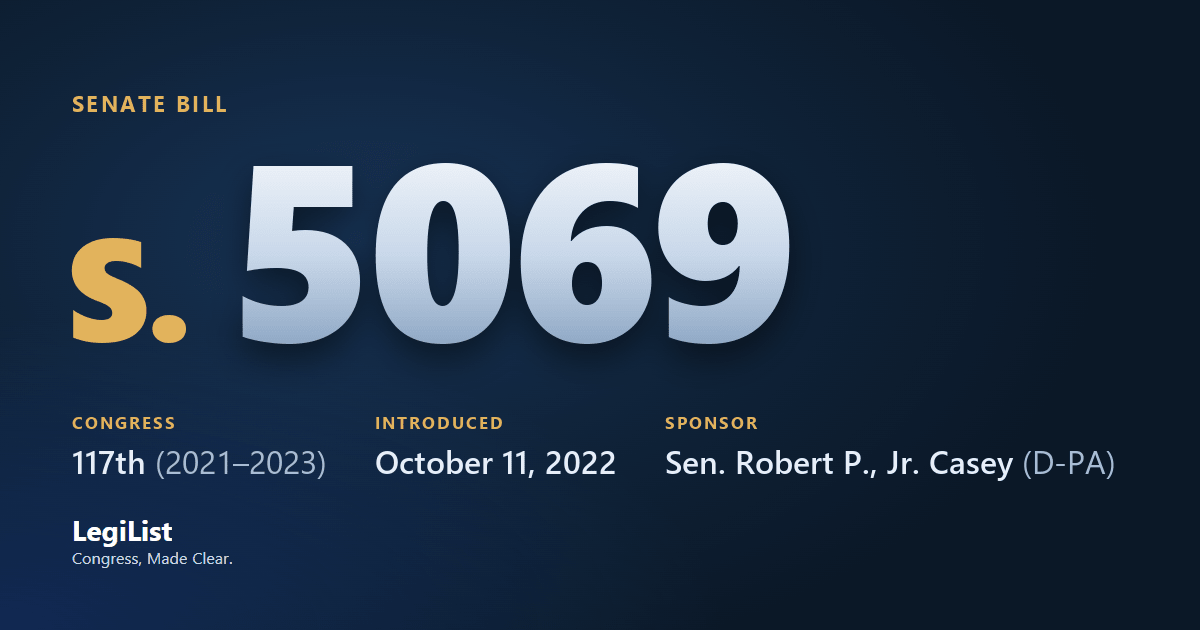
Speak Up to Protect Every Abused Kid Act
Latest action · Oct 11, 2022 Read twice and referred to the Committee on Health, Education, Labor, and Pensions.
Progress
Where this bill reached, and when. A stage with no date was not reached; one that failed a vote and later carried shows the date it carried.
- IntroducedOct 11, 2022
- Passed SenateNot reached
- Passed HouseNot reached
- To the PresidentNot reached
- Became lawNot reached
Summary
Speak Up to Protect Every Abused Kid Act
This bill establishes and modifies certain requirements related to mandatory reporting of suspected and known incidents of child abuse. Specifically, the bill requires the Department of Health and Human Services to provide grants for campaigns to educate the public and for training about (1) state child abuse or neglect laws, and (2) the responsibility to report suspected incidents of such abuse or neglect.
Further, for a state to be eligible for various grants supporting child abuse or neglect treatment and prevention programs, the state must provide assurances that it has mandatory reporting requirements in place for specified individuals who provide services involving children (e.g., health care providers, school personnel, child care employees, and volunteers). States must (1) provide training to these individuals about reporting abuse, and (2) evaluate the effectiveness of the state's reporting requirements.
The bill also revises reporting requirements for child abuse or neglect treatment and prevention grants to include data about changes in the rates of child abuse reporting and child abuse fatalities.
Cosponsors
Members who signed on, in the order they did.
Actions 2
Everything that happened, newest first.
- Oct 11, 2022Introduced in Senate
- Oct 11, 2022Read twice and referred to the Committee on Health, Education, Labor, and Pensions.
Subjects
Assigned by the Library of Congress. Policy area: Families.
Text 1
Each version as it was printed, newest first.
- Oct 11, 2022Introduced in Senate
Everything here is as published by Congress: the summary is the Congressional Research Service's, the action wording is the clerks', and the subjects are the Library of Congress's. How far it got is read from the actions themselves, taking the most recent one of each kind, so a bill that failed a vote and later passed is shown as having passed. Records come from this bill on Congress.gov and govinfo.gov.