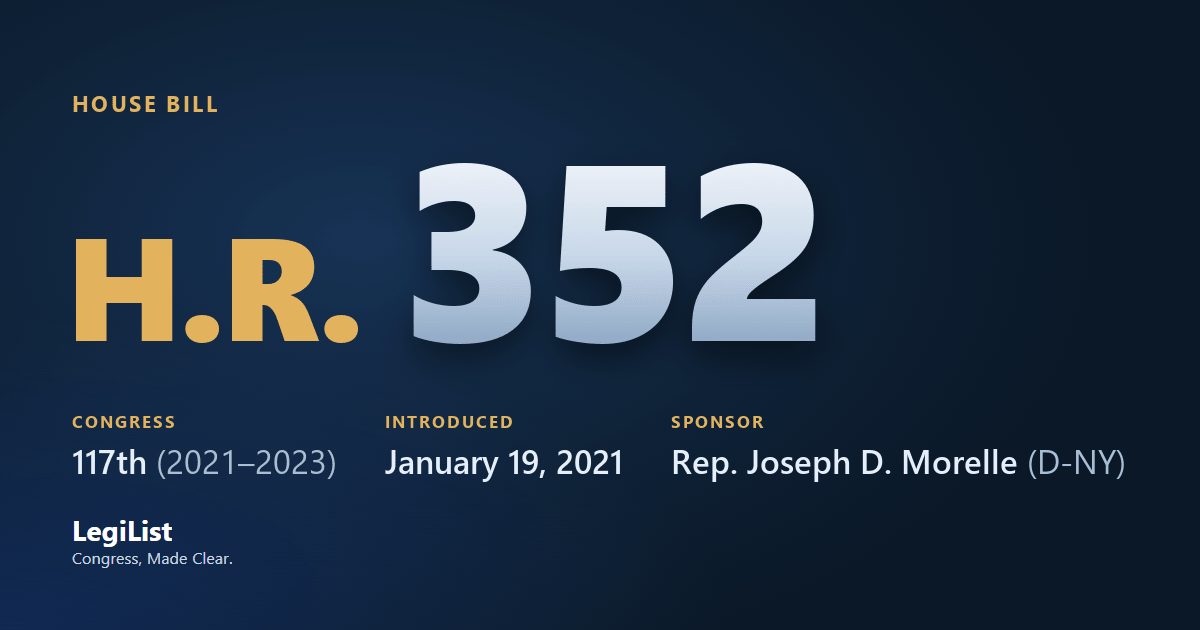
Jobs to Fight COVID–19 Act of 2021
Latest action · Feb 2, 2021 Referred to the Subcommittee on Health.
Progress
Where this bill reached, and when. A stage with no date was not reached; one that failed a vote and later carried shows the date it carried.
- IntroducedJan 19, 2021
- Passed HouseNot reached
- Passed SenateNot reached
- To the PresidentNot reached
- Became lawNot reached
Summary
Jobs to Fight COVID-19 Act of 2021
This bill requires the Department of Labor to award grants to states and other governmental and native American entities to (1) support the recruitment, placement, and training of—and provide employment to—certain individuals seeking employment in COVID-19 (i.e., coronavirus disease 2019) contact tracing and pandemic response positions; and (2) assist with the transition to new employment or education and training of these individuals in preparation for and upon termination of such employment. The employees must be paid at least the required prevailing wage and fringe benefit rates.
In addition, the Centers for Disease Control and Prevention (CDC), in coordination with the Department of Health and Human Services and state, local, tribal, and territorial health departments, must establish and implement a national evidence-based system for COVID-19 testing, contact tracing, surveillance, containment, and mitigation. The CDC shall also award grants or contracts to these entities for such activities and to public entities to implement multilingual and culturally appropriate COVID-19 awareness campaigns.
Cosponsors 1
Members who signed on, in the order they did. All signed on Jan 19, 2021.
| Seat | Cosponsor | Signed on | |
|---|---|---|---|
| D-CA | Mark Takano | Original | Jan 19, 2021 |
Committees 2
Where it was sent and what each committee and subcommittee did with it, in order.
| Chamber | Committee | What it did |
|---|---|---|
| House | Energy and Commerce Committee | Referred Jan 19, 2021 |
| Health Subcommittee | Referred Feb 2, 2021 | |
| House | Education and Workforce Committee | Referred Jan 19, 2021 |
Actions 3
Everything that happened, newest first.
- Feb 2, 2021Referred to the Subcommittee on Health.
- Jan 19, 2021Introduced in House
- Jan 19, 2021Referred to the Committee on Energy and Commerce, and in addition to the Committee on Education and Labor, for a period to be subsequently determined by the Speaker, in each case for consideration of such provisions as fall within the jurisdiction of the committee concerned.
Research
What has been written about this bill: committee reports, cost estimates, the sponsor’s authority statement, printed hearings and the Congressional Research Service’s work.
Constitutional authority
The sponsor’s statement, as printed in the Congressional Record, vol. 167, no. 10, January 19, 2021, page H203.
Related bills 1
Companion bills and other measures the record links to this one.
| Bill | Title | Relationship | Latest action |
|---|---|---|---|
| HR 7649 | Jobs to Fight COVID–19 Act of 2020 | Reintroduction of | Jul 16, 2020 |
Titles 2
Every title it has carried, official and short, at each stage.
- Official Title as Introduced
- To establish an initiative for national testing, contact tracing, and pandemic response, and for other purposes.
- Short Title(s) as Introduced
- Jobs to Fight COVID–19 Act of 2021
Subjects
Assigned by the Library of Congress. Policy area: Labor and Employment.
- Cardiovascular and respiratory health
- Community life and organization
- Computer security and identity theft
- Congressional oversight
- Disaster relief and insurance
- Emergency medical services and trauma care
- Employee hiring
- Employment and training programs
- Federal-Indian relations
- Government information and archives
- Health care coverage and access
- Health information and medical records
- Health personnel
- Health programs administration and funding
- Health promotion and preventive care
- Indian social and development programs
- Infectious and parasitic diseases
- Labor and Employment
- Labor-management relations
- Medical tests and diagnostic methods
- Minority employment
- Minority health
- Public contracts and procurement
- Right of privacy
- Self-employed
- State and local government operations
- Unemployment
- Veterans' education, employment, rehabilitation
- Wages and earnings
- Worker safety and health
Text 1
Each version as it was printed, newest first.
- Jan 19, 2021Introduced in House
Support LegiList
This page is free, carries no paywall, and is built and maintained by one person. If the record here is useful to you, a few dollars keeps it going.
Everything here is as published by Congress: the summary is the Congressional Research Service's, the action wording is the clerks', and the subjects are the Library of Congress's. How far it got is read from the actions themselves, taking the most recent one of each kind, so a bill that failed a vote and later passed is shown as having passed. Records come from this bill on Congress.gov and govinfo.gov; cost estimates are the Congressional Budget Office's, and the hearings are the printed hearings GovInfo publishes, which can appear months after the hearing.