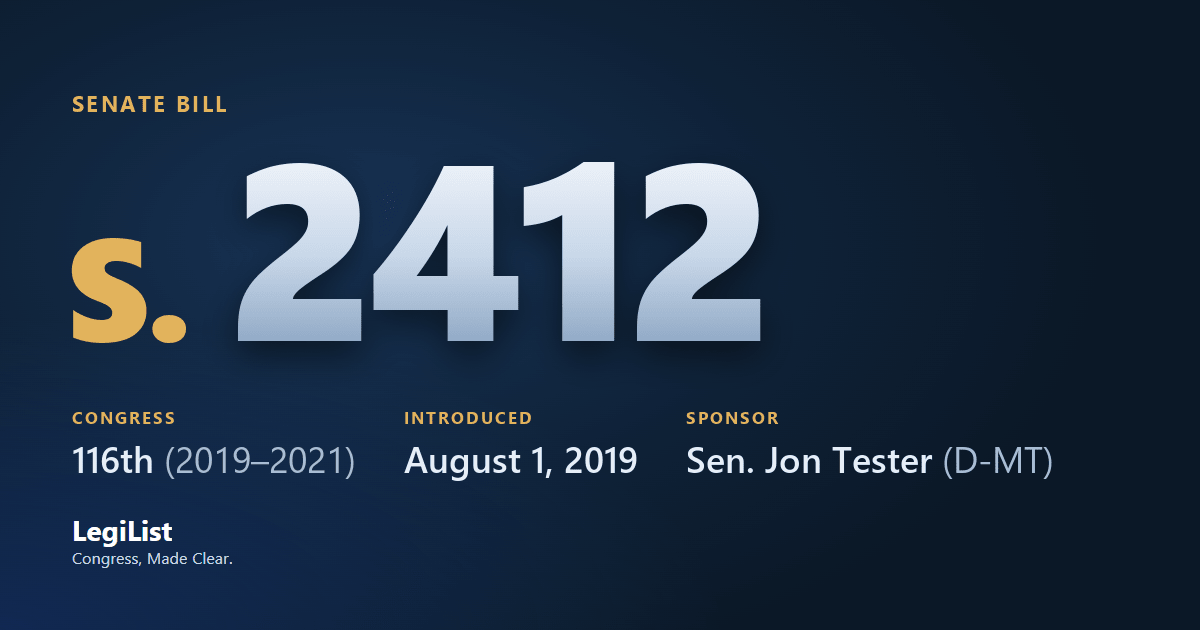
Addiction Treatment Access Act
Latest action · Aug 1, 2019 Read twice and referred to the Committee on Finance.
Progress
Where this bill reached, and when. A stage with no date was not reached; one that failed a vote and later carried shows the date it carried.
- IntroducedAug 1, 2019
- Passed SenateNot reached
- Passed HouseNot reached
- To the PresidentNot reached
- Became lawNot reached
Summary
Addiction Treatment Access Act
This bill provides for Medicare coverage of addiction counselor services that are used to diagnose and treat substance abuse and that would otherwise be covered if provided by a physician, including incidental services, as long as no payment is made to other providers for such services.
Cosponsors 3
Members who signed on, in the order they did. Signatures ran from Sep 9, 2019 to Sep 16, 2019.
| Seat | Cosponsor | Signed on | |
|---|---|---|---|
| R-AK | Dan Sullivan | Sep 9, 2019 | |
| D-NH | Jeanne Shaheen | Sep 16, 2019 | |
| R-AK | Lisa Murkowski | Sep 16, 2019 |
Committees 1
Where it was sent and what each committee and subcommittee did with it, in order.
| Chamber | Committee | What it did |
|---|---|---|
| Senate | Finance Committee | Referred Aug 1, 2019 |
Actions 2
Everything that happened, newest first.
- Aug 1, 2019Introduced in Senate
- Aug 1, 2019Read twice and referred to the Committee on Finance.
Titles 2
Every title it has carried, official and short, at each stage.
- Official Title as Introduced
- A bill to amend title XVIII of the Social Security Act to provide coverage of addiction counselor services under part B of the Medicare program.
- Short Title(s) as Introduced
- Addiction Treatment Access Act
Subjects
Assigned by the Library of Congress. Policy area: Health.
Text 1
Each version as it was printed, newest first.
- Aug 1, 2019Introduced in Senate
Support LegiList
This page is free, carries no paywall, and is built and maintained by one person. If the record here is useful to you, a few dollars keeps it going.
Everything here is as published by Congress: the summary is the Congressional Research Service's, the action wording is the clerks', and the subjects are the Library of Congress's. How far it got is read from the actions themselves, taking the most recent one of each kind, so a bill that failed a vote and later passed is shown as having passed. Records come from this bill on Congress.gov and govinfo.gov; cost estimates are the Congressional Budget Office's, and the hearings are the printed hearings GovInfo publishes, which can appear months after the hearing.