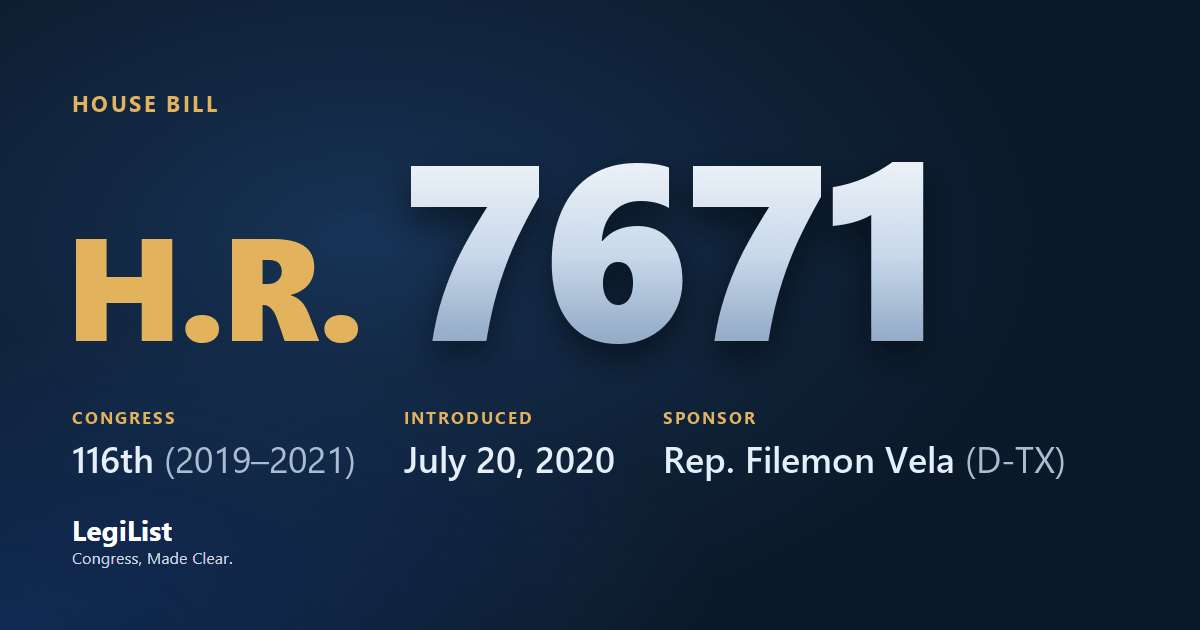
Small Business Comeback Act
Latest action · Jul 20, 2020 Referred to the House Committee on Financial Services.
Progress
Where this bill reached, and when. A stage with no date was not reached; one that failed a vote and later carried shows the date it carried.
- IntroducedJul 20, 2020
- Passed HouseNot reached
- Passed SenateNot reached
- To the PresidentNot reached
- Became lawNot reached
Summary
Small Business Comeback Act
This bill establishes a recovery compensation program whereby the Department of the Treasury shall authorize specified payments to certain small businesses to support their recovery from the COVID-19 (i.e., coronavirus disease 2019) pandemic.
Treasury must appoint a Special Administrator to oversee the recovery compensation program, and the administrator must develop an application form that is simple to file and audit that applicants shall use when seeking recovery compensation. The maximum amount of recovery compensation an applicant may receive shall be the lesser of their average payment for total monthly expenses or $50 million.
Among other requirements, an eligible entity must (1) be in an impaired sector as defined by the administrator; (2) have significant operations in, and a majority of its employees based in, the United States; and (3) continue to pay salaries or wages to employees who tested positive for COVID-19 or were exposed to COVID-19 in the workplace. Allowable uses of recovery compensation include (1) payroll costs; (2) costs related to the continuation of group health care benefits; (3) insurance premiums; (4) paycheck protection loan and economic injury disaster loan repayment obligations; and (5) federal, state, and local tax obligations.
The bill also establishes the Special Inspector General for COVID-19 Recovery Funds, who shall conduct, supervise, and coordinate audits and investigations of the payment of recovery compensation. The bill further establishes the Congressional Oversight Board, which shall oversee the implementation of the recovery compensation program.
Cosponsors 3
Members who signed on, in the order they did. Signatures ran from Jul 20, 2020 to Sep 11, 2020; 1 is an original cosponsor, there from the day it was introduced.
| Seat | Cosponsor | Signed on | |
|---|---|---|---|
| R-TX | Lance Gooden | Original | Jul 20, 2020 |
| D-CA | Grace F. Napolitano | Sep 11, 2020 | |
| D-CT | John B. Larson | Sep 11, 2020 |
Committees 1
Where it was sent and what each committee and subcommittee did with it, in order.
| Chamber | Committee | What it did |
|---|---|---|
| House | Financial Services Committee | Referred Jul 20, 2020 |
Actions 2
Everything that happened, newest first.
- Jul 20, 2020Introduced in House
- Jul 20, 2020Referred to the House Committee on Financial Services.
Research
What has been written about this bill: committee reports, cost estimates, the sponsor’s authority statement, printed hearings and the Congressional Research Service’s work.
Constitutional authority
The sponsor’s statement, as printed in the Congressional Record, vol. 166, no. 127, July 20, 2020, page H3587.
Titles 2
Every title it has carried, official and short, at each stage.
- Official Title as Introduced
- To provide for the establishment of a COVID-19 Small Business Recovery Fund, and for other purposes.
- Short Title(s) as Introduced
- Small Business Comeback Act
Subjects
Assigned by the Library of Congress. Policy area: Commerce.
- Accounting and auditing
- Administrative remedies
- Business expenses
- Business records
- Cardiovascular and respiratory health
- Civil actions and liability
- Commerce
- Congressional operations and organization
- Congressional oversight
- Department of the Treasury
- Disaster relief and insurance
- Economic performance and conditions
- Emergency medical services and trauma care
- Employee benefits and pensions
- Executive agency funding and structure
- Federal officials
- Government information and archives
- Government lending and loan guarantees
- Government studies and investigations
- Health care costs and insurance
- Health care coverage and access
- Infectious and parasitic diseases
- Minority and disadvantaged businesses
- Small business
- Wages and earnings
- Women in business
- Worker safety and health
Text 1
Each version as it was printed, newest first.
- Jul 20, 2020Introduced in House
Support LegiList
This page is free, carries no paywall, and is built and maintained by one person. If the record here is useful to you, a few dollars keeps it going.
Everything here is as published by Congress: the summary is the Congressional Research Service's, the action wording is the clerks', and the subjects are the Library of Congress's. How far it got is read from the actions themselves, taking the most recent one of each kind, so a bill that failed a vote and later passed is shown as having passed. Records come from this bill on Congress.gov and govinfo.gov; cost estimates are the Congressional Budget Office's, and the hearings are the printed hearings GovInfo publishes, which can appear months after the hearing.