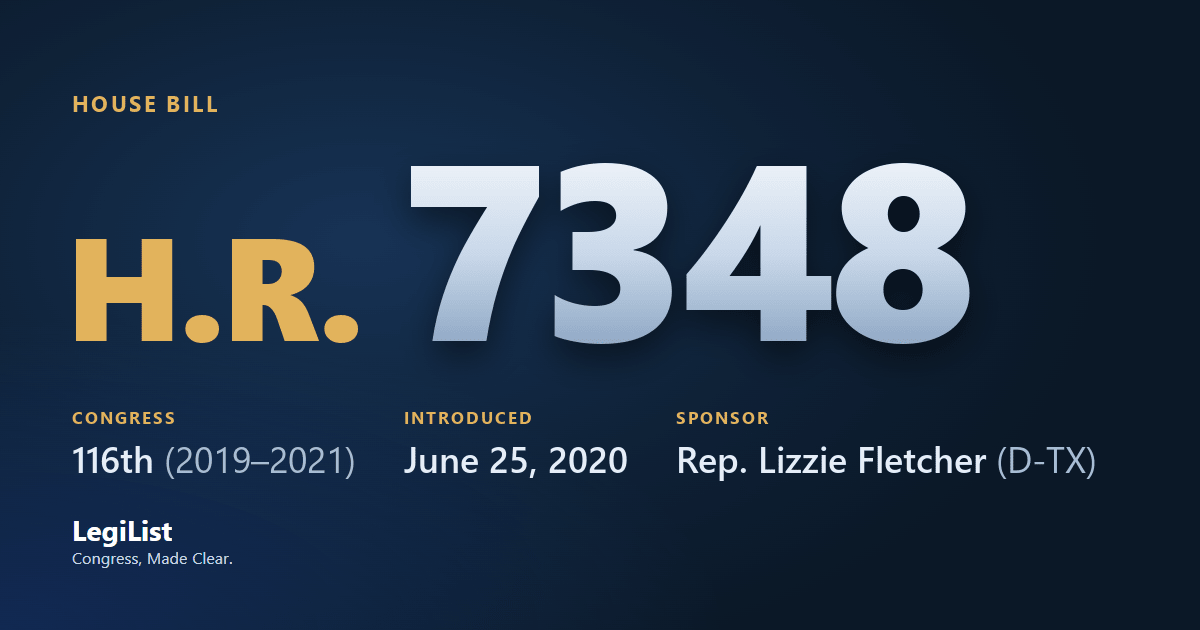
Federal PFAS Research Evaluation Act
Latest action · Jun 25, 2020 Referred to the House Committee on Science, Space, and Technology.
Progress
Where this bill reached, and when. A stage with no date was not reached; one that failed a vote and later carried shows the date it carried.
- IntroducedJun 25, 2020
- Passed HouseNot reached
- Passed SenateNot reached
- To the PresidentNot reached
- Became lawNot reached
Summary
Federal PFAS Research Evaluation Act
This bill requires various studies and reports on the exposure, hazards, and management of perfluoroalkyl and polyfluoroalkyl substances, commonly referred to as PFAS. These substances are man-made and may have adverse human health effects. A variety of products contain the compounds, such as nonstick cookware or weatherproof clothing.
Specifically, the bill requires the Environmental Protection Agency (EPA) to enter into an agreement with the National Academies of Sciences, Engineering, and Medicine (NASEM) to conduct a two-phase study and report on the research and development needed to advance human exposure estimation and toxicity hazard estimation of individual or total PFAS.
The bill also requires the EPA to jointly enter into an agreement with NASEM to conduct a study and submit a report on the research and development needed to advance the understanding of the extent and implications of environmental contamination by PFAS, how to manage and treat such contamination, and the development of safe alternatives.
Finally, the White House Office of Science and Technology Policy must submit an implementation plan for federal PFAS research, development, and demonstration activities, taking into account the recommendations of the NASEM reports.
Cosponsors 2
Members who signed on, in the order they did. All signed on Jun 25, 2020.
| Seat | Cosponsor | Signed on | |
|---|---|---|---|
| R-FL | Bill Posey | Original | Jun 25, 2020 |
| D-MI | Elissa Slotkin | Original | Jun 25, 2020 |
Committees 1
Where it was sent and what each committee and subcommittee did with it, in order.
| Chamber | Committee | What it did |
|---|---|---|
| House | Science, Space, and Technology Committee | Referred Jun 25, 2020 |
Actions 2
Everything that happened, newest first.
- Jun 25, 2020Introduced in House
- Jun 25, 2020Referred to the House Committee on Science, Space, and Technology.
Research
What has been written about this bill: committee reports, cost estimates, the sponsor’s authority statement, printed hearings and the Congressional Research Service’s work.
Constitutional authority
The sponsor’s statement, as printed in the Congressional Record, vol. 166, no. 117, June 25, 2020, page H2516.
Related bills 1
Companion bills and other measures the record links to this one.
| Bill | Title | Relationship | Latest action |
|---|---|---|---|
| HR 7289 | Federal PFAS Research Evaluation Act | Reintroduced Bill | Jul 27, 2022 |
Titles 2
Every title it has carried, official and short, at each stage.
- Official Title as Introduced
- To provide for the National Academies to study and report on a Federal research agenda to advance the understanding of PFAS, and for other purposes.
- Short Title(s) as Introduced
- Federal PFAS Research Evaluation Act
Subjects
Assigned by the Library of Congress. Policy area: Environmental Protection.
- Animal and plant health
- Congressional oversight
- Environmental assessment, monitoring, research
- Environmental health
- Environmental Protection
- Government information and archives
- Government studies and investigations
- Hazardous wastes and toxic substances
- Product safety and quality
- Research administration and funding
- Research and development
Text 1
Each version as it was printed, newest first.
- Jun 25, 2020Introduced in House
Support LegiList
This page is free, carries no paywall, and is built and maintained by one person. If the record here is useful to you, a few dollars keeps it going.
Everything here is as published by Congress: the summary is the Congressional Research Service's, the action wording is the clerks', and the subjects are the Library of Congress's. How far it got is read from the actions themselves, taking the most recent one of each kind, so a bill that failed a vote and later passed is shown as having passed. Records come from this bill on Congress.gov and govinfo.gov; cost estimates are the Congressional Budget Office's, and the hearings are the printed hearings GovInfo publishes, which can appear months after the hearing.