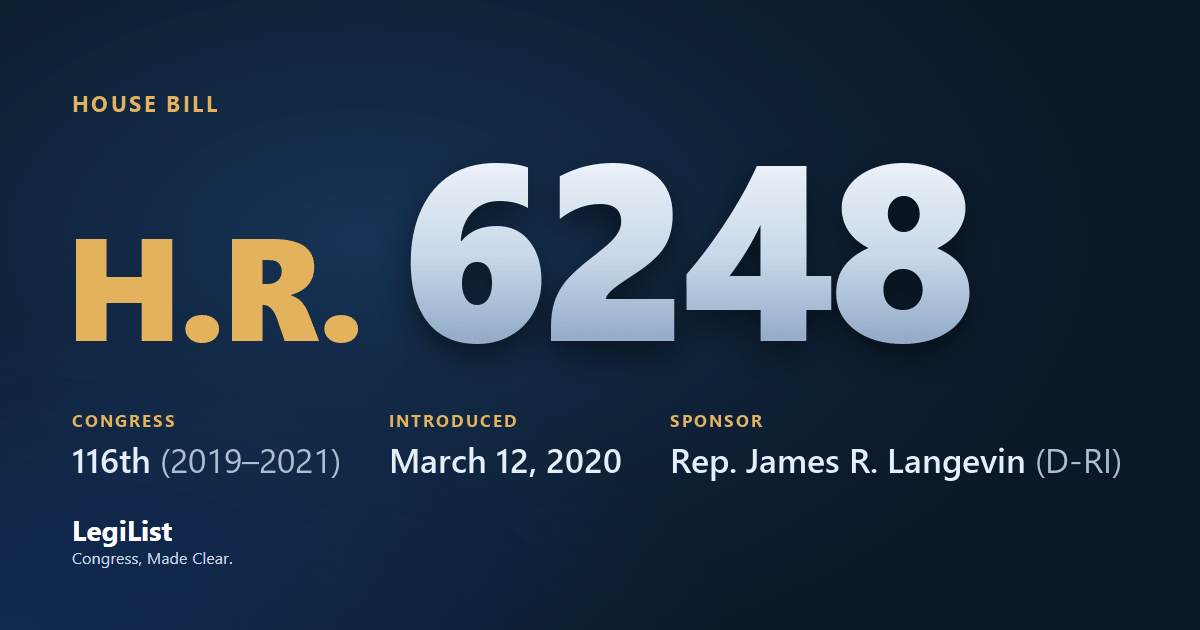
Disability Access to Transportation Act
Latest action · Mar 13, 2020 Referred to the Subcommittee on Highways and Transit.
Progress
Where this bill reached, and when. A stage with no date was not reached; one that failed a vote and later carried shows the date it carried.
- IntroducedMar 12, 2020
- Passed HouseNot reached
- Passed SenateNot reached
- To the PresidentNot reached
- Became lawNot reached
Summary
Disability Access to Transportation Act
This bill expands transportation access for individuals with disabilities.
Specifically, the bill requires the Department of Transportation to
- establish a one-stop paratransit pilot program to develop or expand paratransit programs carried out pursuant to the Americans with Disabilities Act of 1990 (ADA) to prevent long wait times between multiple trips that unduly limit an individual's ability to complete essential tasks;
- issue regulations enforcing guidelines that set forth minimum standards for pedestrian facilities in the public right-of-way;
- implement procedures that allow an individual to submit an ADA complaint by phone, by mail-in form, and online;
- require each public transit provider and contractor providing paratransit services to post certain information for how an individual can file a disability-related complaint;
- file yearly reports of accessibility complaints; and
- create an accessibility data pilot program to assist states and metropolitan or rural planning organizations to improve their transportation planning.
Cosponsors 2
Members who signed on, in the order they did. All signed on Mar 12, 2020.
| Seat | Cosponsor | Signed on | |
|---|---|---|---|
| D-NV | Dina Titus | Original | Mar 12, 2020 |
| R-NY | John Katko | Original | Mar 12, 2020 |
Committees 1
Where it was sent and what each committee and subcommittee did with it, in order.
| Chamber | Committee | What it did |
|---|---|---|
| House | Transportation and Infrastructure Committee | Referred Mar 12, 2020 |
| Highways and Transit Subcommittee | Referred Mar 13, 2020 |
Actions 3
Everything that happened, newest first.
- Mar 13, 2020Referred to the Subcommittee on Highways and Transit.
- Mar 12, 2020Introduced in House
- Mar 12, 2020Referred to the House Committee on Transportation and Infrastructure.
Research
What has been written about this bill: committee reports, cost estimates, the sponsor’s authority statement, printed hearings and the Congressional Research Service’s work.
Constitutional authority
The sponsor’s statement, as printed in the Congressional Record, vol. 166, no. 48, March 12, 2020, page H1671.
Related bills 1
Companion bills and other measures the record links to this one.
| Bill | Title | Relationship | Latest action |
|---|---|---|---|
| HR 1697 | Disability Access to Transportation Act | Reintroduced Bill | Mar 10, 2021 |
Titles 2
Every title it has carried, official and short, at each stage.
- Official Title as Introduced
- To amend title 23, United States Code, to increase accessible transportation for individuals with disabilities.
- Short Title(s) as Introduced
- Disability Access to Transportation Act
Subjects
Assigned by the Library of Congress. Policy area: Transportation and Public Works.
- Access Board
- Administrative law and regulatory procedures
- Aging
- Child care and development
- Congressional oversight
- Department of Transportation
- Disability assistance
- Employment and training programs
- Food industry and services
- Government information and archives
- Health care coverage and access
- Housing supply and affordability
- Pedestrians and bicycling
- Public transit
- Regional and metropolitan planning
- Rural conditions and development
- Social security and elderly assistance
- Transportation and Public Works
- Transportation programs funding
Text 1
Each version as it was printed, newest first.
- Mar 12, 2020Introduced in House
Everything here is as published by Congress: the summary is the Congressional Research Service's, the action wording is the clerks', and the subjects are the Library of Congress's. How far it got is read from the actions themselves, taking the most recent one of each kind, so a bill that failed a vote and later passed is shown as having passed. Records come from this bill on Congress.gov and govinfo.gov; cost estimates are the Congressional Budget Office's, and the hearings are the printed hearings GovInfo publishes, which can appear months after the hearing.