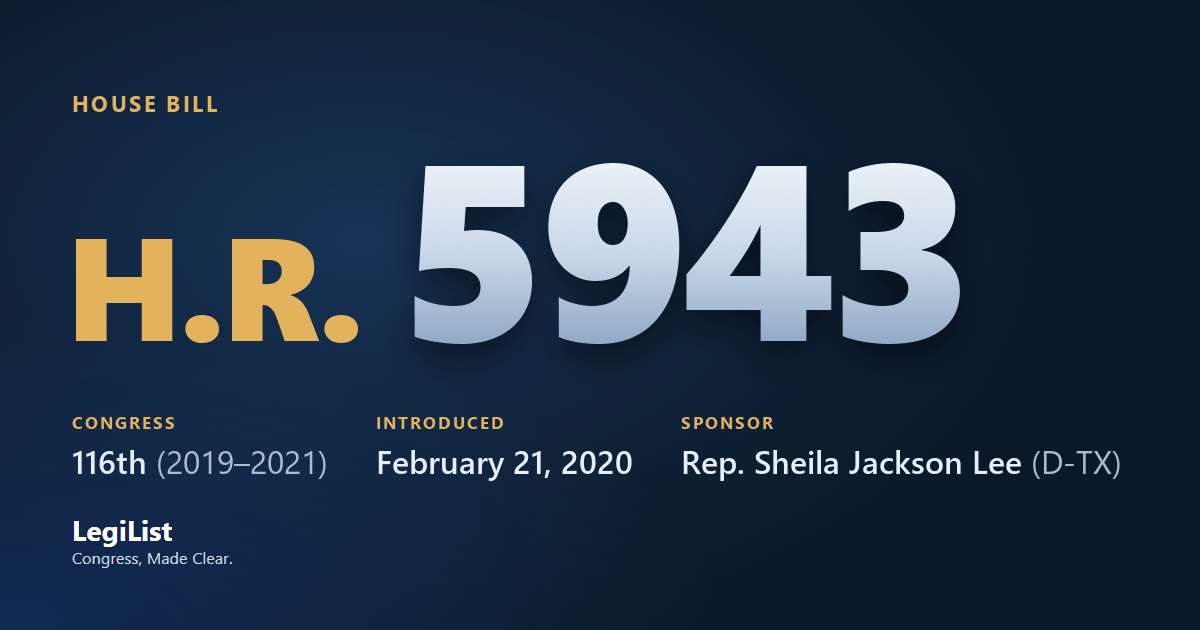
David’s Law
Latest action · Mar 10, 2020 Referred to the Subcommittee on Crime, Terrorism, and Homeland Security.
Progress
Where this bill reached, and when. A stage with no date was not reached; one that failed a vote and later carried shows the date it carried.
- IntroducedFeb 21, 2020
- Passed HouseNot reached
- Passed SenateNot reached
- To the PresidentNot reached
- Became lawNot reached
Summary
David Ray Hate Crimes Prevention Act of 2019 or David's Law
This bill adds hate crime offenses and penalties to the criminal civil rights statute that prohibits interference with federally protected activities. Current law already prohibits and penalizes similar offenses under the criminal civil rights statute that prohibits hate crime offenses.
Additionally, the bill authorizes state and local grants to combat hate crimes committed by juveniles. It also authorizes the Department of the Treasury and the Department of Justice to hire additional personnel to prevent and respond to alleged criminal civil rights offenses involving interference with federally protected activities.
Finally, the bill directs the U.S. Sentencing Commission to study whether it is appropriate to provide a sentencing enhancement for adult defendants who recruit minors to commit hate crime offenses.
Cosponsors
Members who signed on, in the order they did.
Committees 1
Where it was sent and what each committee and subcommittee did with it, in order.
| Chamber | Committee | What it did |
|---|---|---|
| House | Judiciary Committee | Referred Feb 21, 2020 |
| Crime and Federal Government Surveillance Subcommittee | Referred Mar 10, 2020 |
Actions 3
Everything that happened, newest first.
- Mar 10, 2020Referred to the Subcommittee on Crime, Terrorism, and Homeland Security.
- Feb 21, 2020Introduced in House
- Feb 21, 2020Referred to the House Committee on the Judiciary.
Research
What has been written about this bill: committee reports, cost estimates, the sponsor’s authority statement, printed hearings and the Congressional Research Service’s work.
Constitutional authority
The sponsor’s statement, as printed in the Congressional Record, vol. 166, no. 35, February 21, 2020, page H1170.
Related bills 2
Companion bills and other measures the record links to this one.
| Bill | Title | Relationship | Latest action |
|---|---|---|---|
| HR 133 | David’s Law | Reintroduced Bill | Mar 1, 2021 |
| HR 1983 | David's Law | Reintroduction of | May 1, 2017 |
Titles 3
Every title it has carried, official and short, at each stage.
- Official Title as Introduced
- To enhance Federal enforcement of hate crimes, and for other purposes.
- Short Title(s) as Introduced
- David’s Law
- David Ray Hate Crimes Prevention Act of 2019
Subjects
Assigned by the Library of Congress. Policy area: Crime and Law Enforcement.
- Crime and Law Enforcement
- Criminal procedure and sentencing
- Department of Justice
- Department of the Treasury
- Firearms and explosives
- Fires
- Government employee pay, benefits, personnel management
- Hate crimes
- Juvenile crime and gang violence
- Law enforcement administration and funding
- Law enforcement officers
- Violent crime
Text 1
Each version as it was printed, newest first.
- Feb 21, 2020Introduced in House
Support LegiList
This page is free, carries no paywall, and is built and maintained by one person. If the record here is useful to you, a few dollars keeps it going.
Everything here is as published by Congress: the summary is the Congressional Research Service's, the action wording is the clerks', and the subjects are the Library of Congress's. How far it got is read from the actions themselves, taking the most recent one of each kind, so a bill that failed a vote and later passed is shown as having passed. Records come from this bill on Congress.gov and govinfo.gov; cost estimates are the Congressional Budget Office's, and the hearings are the printed hearings GovInfo publishes, which can appear months after the hearing.